The technical part of a large group photo is straightforward: get enough depth of field, get high enough, and shoot more frames than you think you need. The hard part is that thirty adults will not stand still, cannot hear you, and will start drifting away after about four minutes.
So the real skill is compression. Everything below is aimed at getting a sharp, well-lit frame of a large group inside ten minutes, because at minute eleven you are photographing an increasingly small group.
Get above them, even by two feet
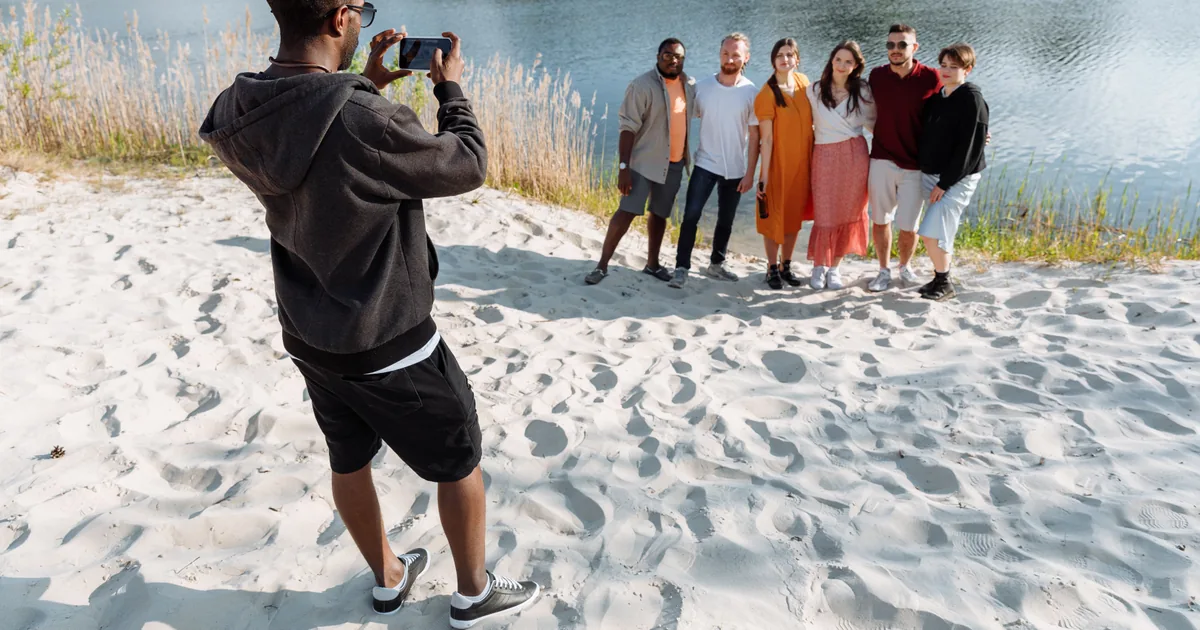
The single biggest improvement to any group photo is elevation. From eye level, the back row is hidden behind the front row and everyone in the middle is a floating head. From four feet up, every face is visible and the group compresses into a tidy block.
You do not need much. A step ladder gets you there, and a folding two step is the most useful thing in a wedding photographer's boot. Failing that: a low wall, a bench, a staircase, the third step of a church entrance, the raised edge of a fountain. Scout for one when you scout the venue, because you will not find it while forty people wait.
Shooting slightly down also fixes the two things everyone dislikes about group photos of themselves. Chins look better and the group appears to be looking up and engaged rather than squinting.
If you genuinely cannot get elevated, use the terrain instead: put the group on a slope facing you, or stagger them on steps.
Build rows, not a crowd
Arrange people before you touch the camera, and do it out loud with your hands. The pattern that works for any group over about twelve:
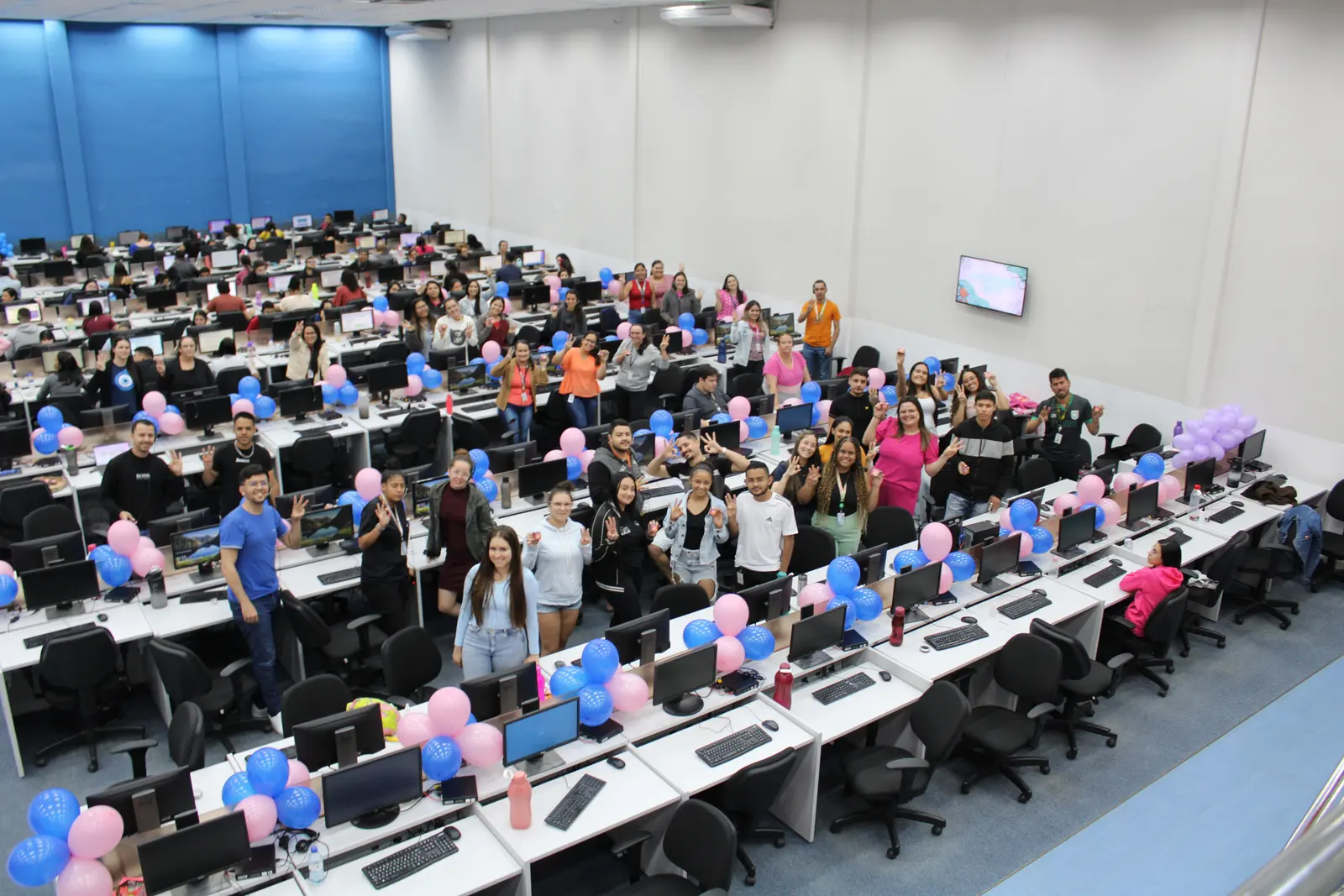
- Front row seated or kneeling, if the ground allows it
- Second row standing, filling the gaps between the heads in front
- Third row standing on something, or simply the tallest people
- Nobody directly behind anybody
Say "everyone take half a step to your left so you can see me" rather than explaining the gap principle. If they can see your lens, the lens can see them.
Two arrangement notes that matter more than they sound. Bring the outside edges of the group forward slightly, into a shallow curve, so the group is roughly equidistant from the camera and you are not fighting depth of field on the ends. And close the gaps: tell people to touch shoulders. A group with a foot between each person reads as a crowd of strangers and takes twice the frame width, which means a wider lens and worse distortion at the edges.
The settings, and why f/8 is not automatic
The default advice is f/8 and forget it. That is close but it costs you light you may need, so it helps to know where the number comes from.
Depth of field has to cover the front row to the back row, which for three rows of people is about six to eight feet. At 50mm and 20 feet away, f/5.6 gives you comfortably more than that. At 85mm from the same distance it does not, and you need f/8 or f/11.
- Two or three rows, 35 to 50mm: f/5.6 is plenty
- Four or more rows, or a longer lens: f/8
- Very large groups where you are far back: f/8 to f/11 and more light
Focus a third of the way into the group, on the eyes of someone in the second row, not the front row. Depth of field extends further behind the focus point than in front of it, so focusing on the front row wastes a third of it on the grass.
Shutter speed 1/250 or faster. This is not about motion, it is about blinks and about the person in row three who turns to talk to someone.
Then shoot six to eight frames with a deliberate rhythm, counting out loud between them. In a group of thirty, the odds of a single frame with nobody blinking are poor, and the fix is a head swap in post, which is fast if you have frames shot seconds apart from an identical position. Use a tripod for anything above twenty people for exactly this reason: identical framing makes the swap trivial.
Light: find open shade or turn them away from the sun
Direct midday sun on a large group produces squinting, hard shadows under every brow, and a bride glowing white next to a groom in shadow. Move them.
Best to worst, in practice:
- Open shade with an unobstructed view of the sky. The side of a building, the shadow of a large tree with no dappling.
- Backlit, with the sun behind the group, exposing for faces and letting the background go bright.
- Overcast. Genuinely easy, just watch that the sky does not blow out behind them.
- Front lit at low sun. Works at golden hour, produces squinting at any other time.
Watch for dappled light above everything else. Sunlight through leaves puts hard bright spots on random faces and is close to unfixable across forty people. A uniform shadow is worth walking sixty feet for.
If you have to add light for a group this size, a single speedlight will not do it. You need a bare bulb strobe or two flashes at a distance, and even then you are lifting shadows rather than lighting the group. In practice, moving the group is faster and better than lighting them, which is the opposite of the advice for a single subject in harsh sun.
Hold their attention, because you have about ninety seconds
Get their eyes with your voice, not by waving. Two things work reliably:
Tell them exactly when you will be finished. "Three photos, then you are free." People will hold a pose for a known duration and will not hold one for an unknown one.
Then give them something to react to on the last frame. Ask them to shout the name of the couple, or count down from three and take the photo on two, then take another on one when everyone laughs at the trick. The second one is usually the best photograph of the set, and it is the only reliable way to get a natural expression out of forty people at once.
Never say "cheese", and never take a serious frame last. Finish on the one that makes them laugh, because that is the one they leave feeling good about.
Ten minutes, in order
At a wedding, this whole sequence sits inside the family formals, which have their own list and running order. For a reunion, a corporate group, or a team photo, run it like this:
- Pick the spot and the elevation while people are still arriving
- Set exposure on a volunteer standing in the right place
- Bring the group in and build the rows, largest at the back
- Close the gaps, curve the ends forward
- Six to eight frames, with a beat between each
- The laugh frame
- Release them, then shoot the smaller sub-groups
Shooting the big group first is not negotiable. Everyone is present, patient, and hasn't found a drink yet. Do the sub-groups first and you will spend fifteen minutes reassembling the whole set from three different rooms, which is the same mistake that turns an event shoot into a chase.
One frame of forty people is also the single most-ordered print from any event, usually by people who were in it. Deliver it in its own section of the gallery, and if your platform lets you give extended family or colleagues their own guest access, as Xposure's galleries do, you stop being the person emailing the same JPEG to eleven people.