Barcelona has a light problem in the best sense: the sun is strong, the buildings are pale, and midday flattens everything. It also has a crowd problem, and the two combine so that the most photographed spots are worst exactly when most people visit them.
Here is where to go and when, with the Gaudí sites handled honestly.
Bunkers del Carmel, at sunrise
Concrete platforms from the Civil War on a hill above the city, with a 360 degree view over Barcelona to the sea. The best panorama in the city and it is free.
Sunrise is the answer. Sunset is spectacular and extremely busy, and access has been restricted at night in the past because of noise complaints from the neighbourhood below. It is a climb, so allow half an hour from the metro.
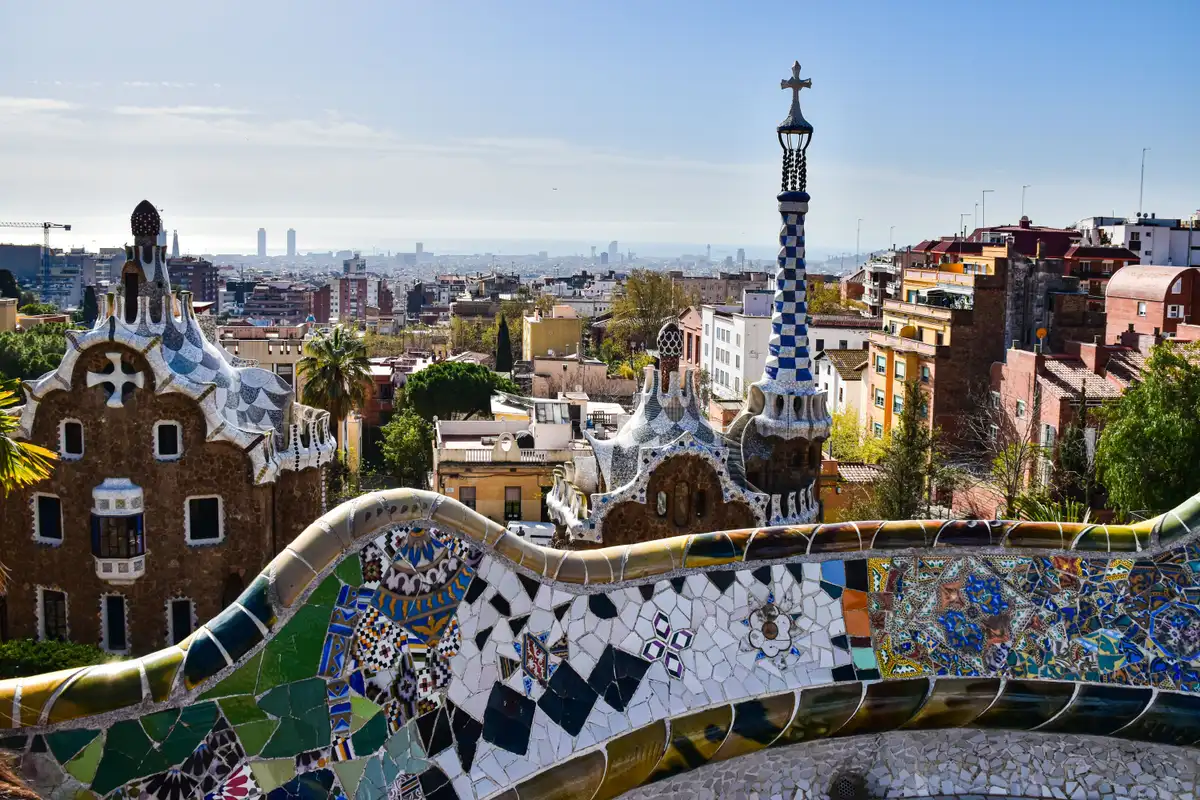
Park Güell, and which part is free
The famous mosaic terrace and the gingerbread pavilions are inside the ticketed Monumental Zone, and slots sell out in high season. Book in advance.
The rest of the park, the woodland paths, the viaducts, the columns and stone arcades, is free and photographs beautifully with almost nobody in it. For portraits, the free areas are honestly better: the light through the stone colonnades in the morning is the thing to shoot.
Casa Batlló and Casa Milà, from the street
Both are Gaudí at his strangest, and both have interiors worth the ticket. From the outside, Casa Batlló's scaled facade reads best in late afternoon light when the ceramic catches colour, and it is worth crossing to the far pavement with a longer lens rather than shooting up from underneath.
Note that professional and commercial photography inside these buildings requires permission and is often licensed separately.
Sagrada Família, from the parks
Do not stand at the base. The two ponds in Plaça de Gaudí and Plaça de la Sagrada Família give you the whole basilica with a reflection, which is the frame that works.
Sunrise gives you the eastern Nativity facade lit and the park nearly empty. Inside, the light through the stained glass peaks mid-morning for blues on the west side and late afternoon for reds and oranges on the east.
Gothic Quarter, all morning
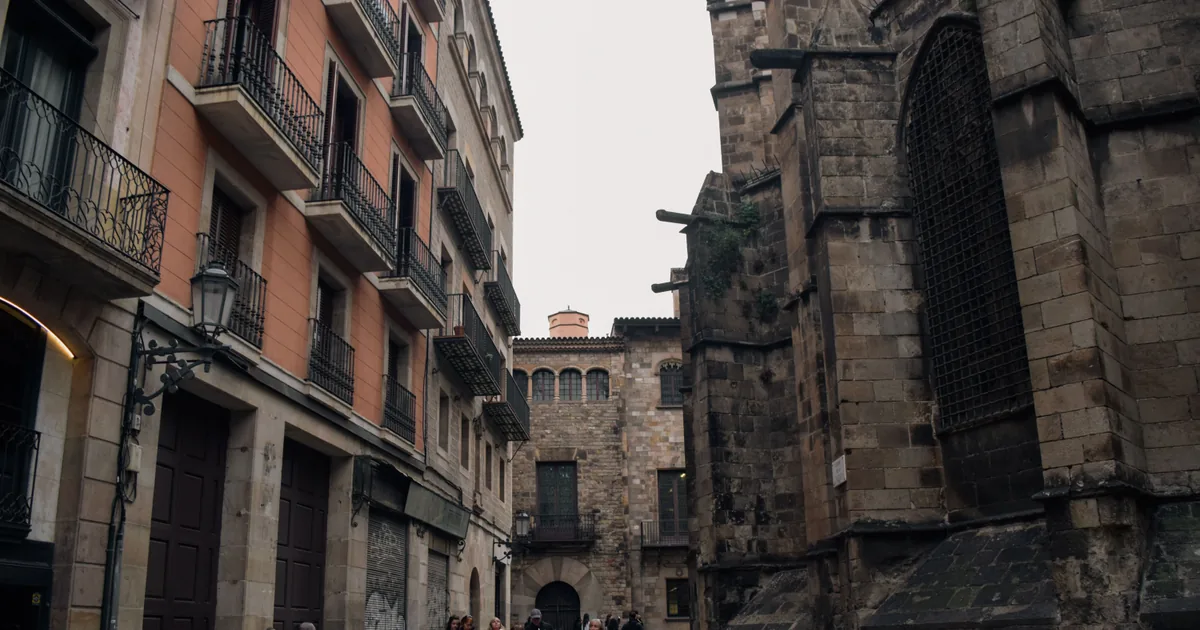
Narrow medieval streets, stone, and shafts of light that cut down between the buildings. Carrer del Bisbe's bridge is the famous frame, and it is worth arriving by eight to have it.
Better in practice: get lost. Plaça de Sant Felip Neri, the small squares, the laundry, the doorways. This district is at its best on an overcast day when the contrast drops and you can actually expose for both stone and sky.
El Born and Santa Maria del Mar
Quieter than the Gothic Quarter, similar architecture, better cafés, and fewer people in every frame. The area around the basilica and Passeig del Born is a practical portrait location for that reason.
Barceloneta and the beach at dawn
Wide sand, the W Hotel, and fishermen. The beach faces roughly southeast, which makes this a sunrise location, and at 6.30am in summer it is genuinely calm before the city arrives.
Hospital de Sant Pau
Modernist pavilions, mosaics, and gardens, and consistently the most underappreciated site in the city. Far fewer visitors than the Gaudí houses, a much larger site to work in, and detail everywhere. If you have one ticket to buy, this is arguably it.
Parc de la Ciutadella
The cascade fountain, palms, and open lawns. The practical family session choice: shade, space, toilets, and a lake. Late afternoon light through the trees does most of the work.
Montjuïc, for the view and the geometry
The Magic Fountain, the National Art Museum steps, the Olympic ring, and the Mies van der Rohe pavilion for clean modernist lines. The cable car up gives you the port from above.
Sunset from the museum terrace looks back over the whole city, and it is far less crowded than the Bunkers.
Practical notes
Crowds are the real constraint. Almost everything on this list works before 9am and struggles after 11. If you can only shoot in the middle of the day, shift to the Gothic Quarter and El Born where the streets are in shadow, or work indoors.
Commercial shoots need permission at ticketed sites, and Barcelona has been tightening rules around organised photography in busy public areas. A handheld camera is fine. A model, a stylist, and a light stand at Park Güell is not.
Watch your bag. This is a city where cameras get lifted from café tables, and the standard advice about not putting a strap over a chair back genuinely applies.
The light is harder than northern Europe. Between May and September the sun is high and unforgiving from mid-morning, which makes the technique for shooting in strong overhead sun more useful here than another location on a list. Plan sessions for the first two hours of the day or the last two, and treat everything in between as scouting time, which is most of what separates good and bad session planning.
The locations on a map
- Bunkers del Carmel: sunrise, and it is a climb
- Park Güell: book the Monumental Zone, or shoot the free areas
- Casa Batlló: late afternoon, from the far pavement
- Plaça de Gaudí, Sagrada Família: sunrise, for the pond reflection
- Carrer del Bisbe: by eight or not at all
- Santa Maria del Mar, El Born: quieter than the Gothic Quarter
- Barceloneta beach: sunrise, faces southeast
- Hospital de Sant Pau: the most underrated site in the city
- Parc de la Ciutadella: late afternoon, family sessions
- MNAC, Montjuïc: sunset from the terrace
Along the same coast, Lisbon does viewpoints and tiles rather than modernism, and its light is arguably the cleanest in Europe.