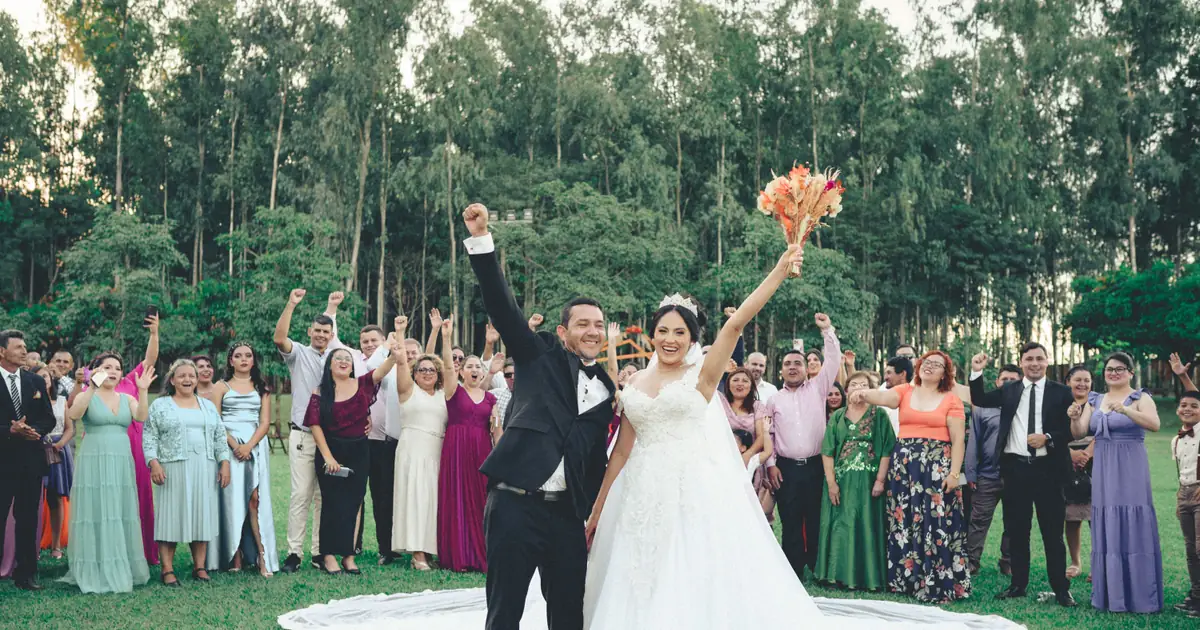
Family formals are the part of a wedding day that most often runs long, and it is never the photography that slows it down. It is the fifteen minutes spent shouting "has anyone seen the groom's uncle" across a churchyard while ninety guests drift towards the bar.
A good family photo list is short, ordered so that people can leave, and agreed before the day. Twelve to fifteen groupings takes about twenty minutes. Twenty five groupings takes fifty, and the light will be gone.
The standard list, in the order to shoot it
Build it largest to smallest, so every group you finish releases people back to the drinks instead of making them wait. This covers the vast majority of weddings:
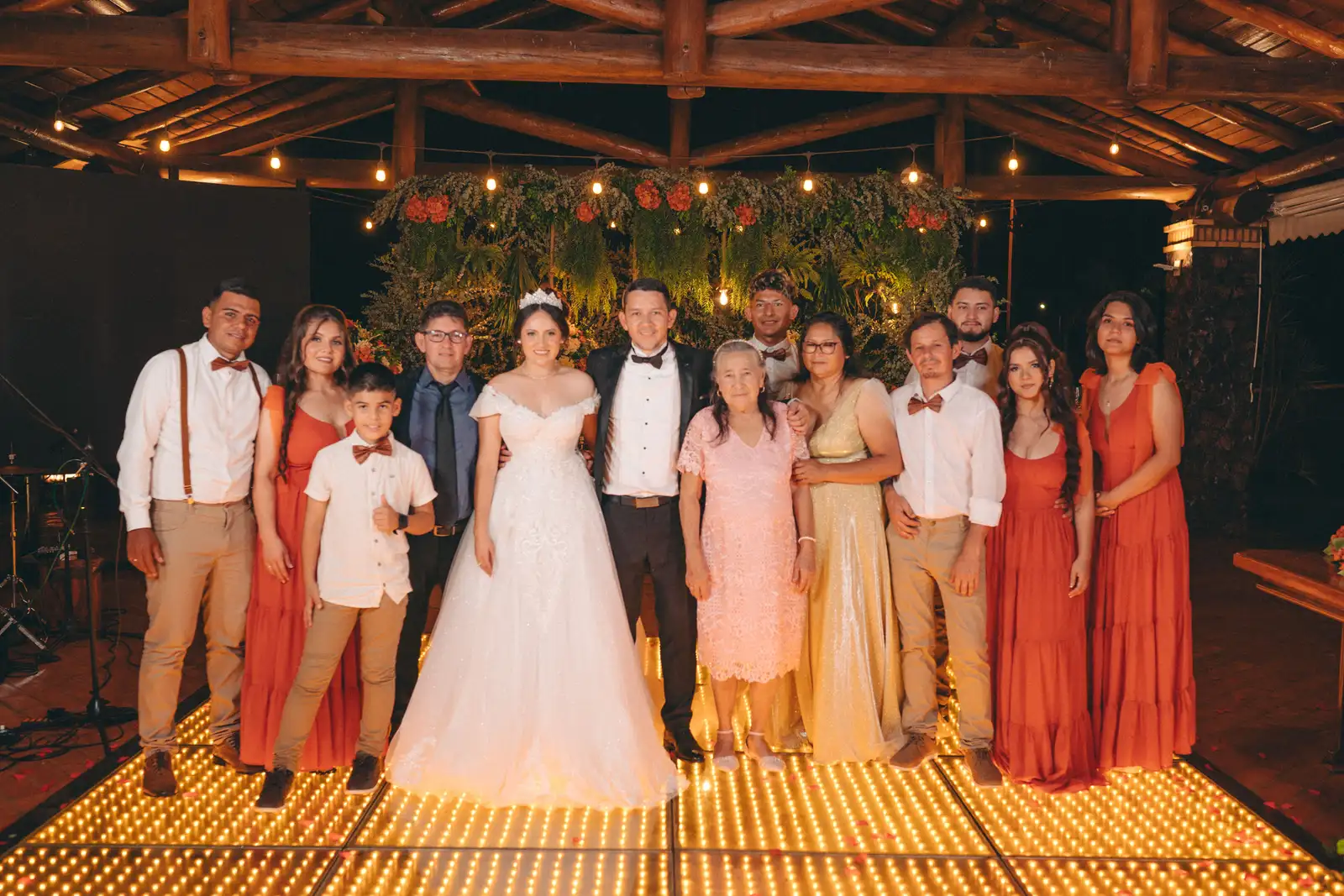
- Couple with both full families together (the big one, get it while everyone is still in the room)
- Couple with partner A's whole family
- Couple with partner A's parents and siblings
- Couple with partner A's parents
- Couple with partner A's grandparents
- Couple with partner A's siblings
- Repeat 2 to 6 for partner B
- Couple with the wedding party, all together
- Couple with each side of the wedding party
- Couple alone, two or three frames, before you release the group
Dismiss grandparents and small children first, always. They are the people who find standing around hardest, and they are also the ones a family will most want to have got right. Shoot them second or third, then send them to sit down.
Get the list from the couple, not from a template
Send your standard list to the couple four to six weeks out and ask them to edit it rather than write one. Given a blank page, couples produce either three lines or forty. Given a list to cut, they produce something usable in ten minutes.
Ask for full names, not relationships. "Couple with Sue and Dave" is useless when you are calling names across a garden. You want "Couple with Sue Ackroyd (mother of the bride) and Dave Ackroyd (stepfather)" because in twenty minutes you will be reading it aloud off your phone to strangers.
This is the same principle as the rest of your pre-shoot paperwork: specific questions get specific answers, and vague ones get you a sentence about how they want it to feel natural.
Ask the awkward question in writing
Divorced parents are the single most common reason a family shoot goes wrong, and you cannot improvise a solution while forty people watch. Put the question in the form, in a neutral sentence:
"Are there any family members who should not be photographed in the same group? Anything you tell me here stays between us and I will handle it on the day without drawing attention to it."
That gets you honest answers because it gives them a reason to be honest. Then build the list so that separated parents each get their own set of groupings, and never schedule them back to back, because the handover is the visible moment. Put a grandparent group in between and nobody notices.
Same treatment for a recent bereavement, an estranged sibling, or a parent who is unwell and cannot stand for long. Knowing in advance turns a scene into a logistics detail.
Delegate the calling, and name the person
You cannot shoot and round people up at the same time. Ask the couple to nominate one person from each family who is loud, sociable, and knows everyone by sight. Not the maid of honour, who has other jobs. An aunt is usually perfect.
Send that person the list the week before and ring them the morning of the wedding if you can. Their job is exactly one thing: read out the next two groups so the following one is already forming while you shoot the current one. That single overlap is what turns a fifty minute formals session into a twenty minute one.
Tell them where to stand too, next to you and slightly behind, so their voice travels the same direction people are already looking.
Where to put them, and when
Pick the location during your walk around, before the ceremony, and tell the person calling names where it is. You want open shade with an even background, no dappled light through trees, and the sun behind the group rather than in their eyes if you are working outdoors.
Timing matters more than the spot. The realistic window is immediately after the ceremony, while everyone is in one place and nobody has found the bar. Leave it until after the drinks reception and you will spend the time extracting people from conversations. If the schedule genuinely does not allow it, the wedding timeline needs fixing rather than the list.
Announce it at the end of the ceremony if the officiant will let you, or have the couple mention it in the order of service. People who know it is coming stay put.
The settings and the frames
Shoot at f/5.6 to f/8 for anything above four people so the back row is sharp, and focus on the front row's eyes. Keep your shutter at 1/200 or faster: someone in a group of twelve is always mid-blink, and slow shutters compound the problem.
Take three frames of every grouping, minimum, with a beat between them. Not because the composition changes but because blinks do, and a head swap in post is five minutes you would rather not spend. For groups above ten, get slightly elevated if you can, even a single step, so the back row is not hidden.
For the technical side of anything above about fifteen people, the larger group problem is genuinely different work and worth its own approach.
Every extra grouping on the list costs you ninety seconds of shooting and four minutes of finding people.
Deliver them so nobody asks twice
Family formals generate more reprint requests than any other part of a wedding, usually from someone who was not at the wedding at all. Two things make that painless.
Cull them separately and label them clearly, so the couple's mother can find the one with her side of the family without scrolling through eight hundred frames of the dancefloor. A gallery with a folder or a section per group does this for you.
Then decide who can see them. Xposure galleries let you hand out a separate guest PIN alongside the client's own, so extended family can browse the group shots and buy the ones they want without touching the couple's selections or downloads. It saves the couple becoming the distribution service for forty relatives.
The list itself is the whole job. Get it agreed at six weeks, cut it to fifteen lines, hand it to a loud aunt, and the part of the day everyone dreads takes less time than the speeches. Turn up without one and you will shoot the same twelve groups anyway, just badly, in worse light, over three times as long.