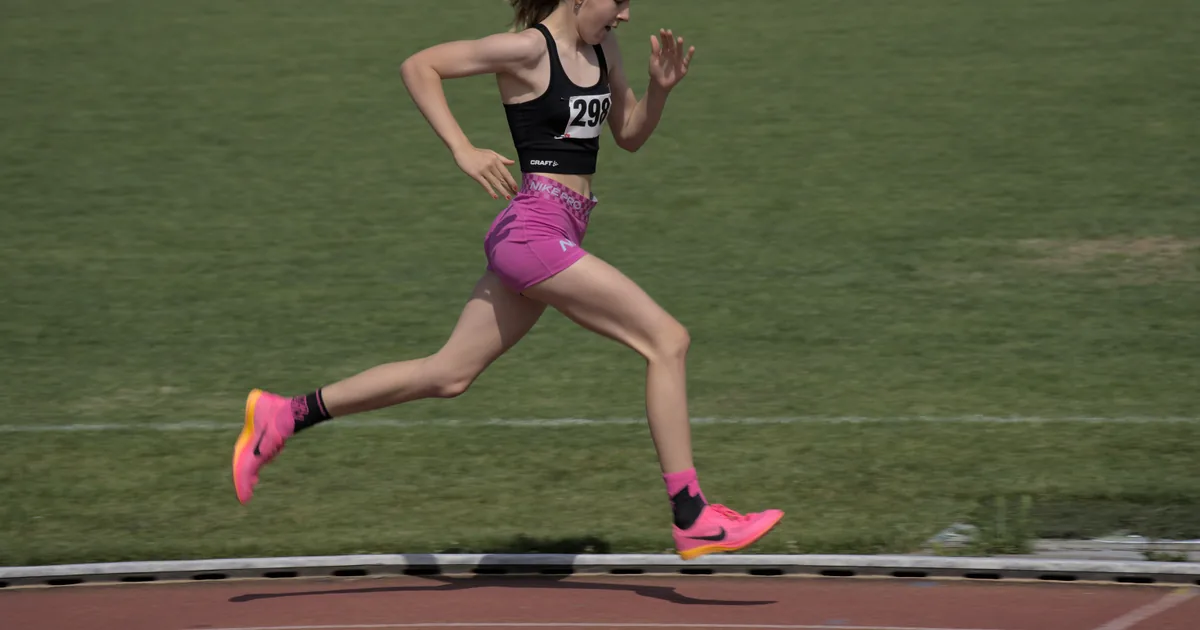
Start here and adjust: shutter 1/1000, aperture as wide as the lens goes, auto ISO with a high ceiling, continuous autofocus, and the fastest burst your camera has. That combination covers football, rugby, athletics, and most outdoor sport in daylight, and it is the setup to default to when you arrive somewhere new.
Everything below is why those numbers, and what changes when the light gets worse, which indoors it always does.
Shutter speed is the only setting that matters first
Sport is a shutter speed problem before it is anything else. The rest of the exposure exists to serve it.
What you need, by subject:
- 1/500: the floor for anything. Walking pace, warm ups, posed team shots.
- 1/1000: running athletes, football, rugby, most field sports. This is the default.
- 1/1600: fast limb movement, a tennis serve, a bat or racquet swing, a sprinter's legs.
- 1/2000 and above: motorsport, cycling at speed, anything where a wheel or a ball needs to be frozen mid-flight.
Shoot in shutter priority if you are new to this. It is not a lesser mode, it is the mode that matches the problem: you fix the one variable that must not move and let the camera solve the rest. Set 1/1000, set auto ISO with a maximum of 6400, and concentrate on where the action is instead of on your exposure.
Manual with auto ISO is the same thing with more control, and it is where most people end up: you set shutter and aperture, the camera moves ISO to compensate as players run from sun into shadow. Full manual is the wrong choice outdoors on a day with moving cloud.
Autofocus is what separates keepers from bin
More sports frames are lost to focus than exposure. Three settings do the work:
Continuous autofocus. AF-C on Nikon and Sony, AI Servo on Canon. Single-shot focus locks once and is useless for a moving subject.
Back button focus. Move focus off the shutter button and onto the rear AF-ON button. It lets you hold focus tracking with your thumb continuously while you fire the shutter in bursts, and it stops the camera refocusing on a defender who crosses in front of you at the moment you press. This takes a week to get used to and then you will never go back.
The right AF area. Wide or full-area tracking works well on modern bodies with subject detection, and badly on older ones, where it grabs the nearest high-contrast thing, usually a line marking or the crowd. On an older camera use a small zone group and keep it on the athlete yourself.
Turn on animal or human subject detection if your camera has it. On a body from the last four or five years it is genuinely better than you are at holding an eye in a crowded frame.
Then use burst, and use it in short controlled runs of five or six frames rather than holding the button down for twenty. Long bursts fill the buffer, and the camera locking up for four seconds while it writes to the card is precisely how you miss the try. This is one of the few situations where card write speed genuinely matters rather than being a spec sheet argument.
Aperture, and why the long lens is the real cost
Shoot wide open, f/2.8 on a fast telephoto or f/5.6 on a consumer zoom. You want the light, and the shallow depth of field separates the athlete from a background of parked cars and advertising boards, which is most of what makes a sports photo look professional.
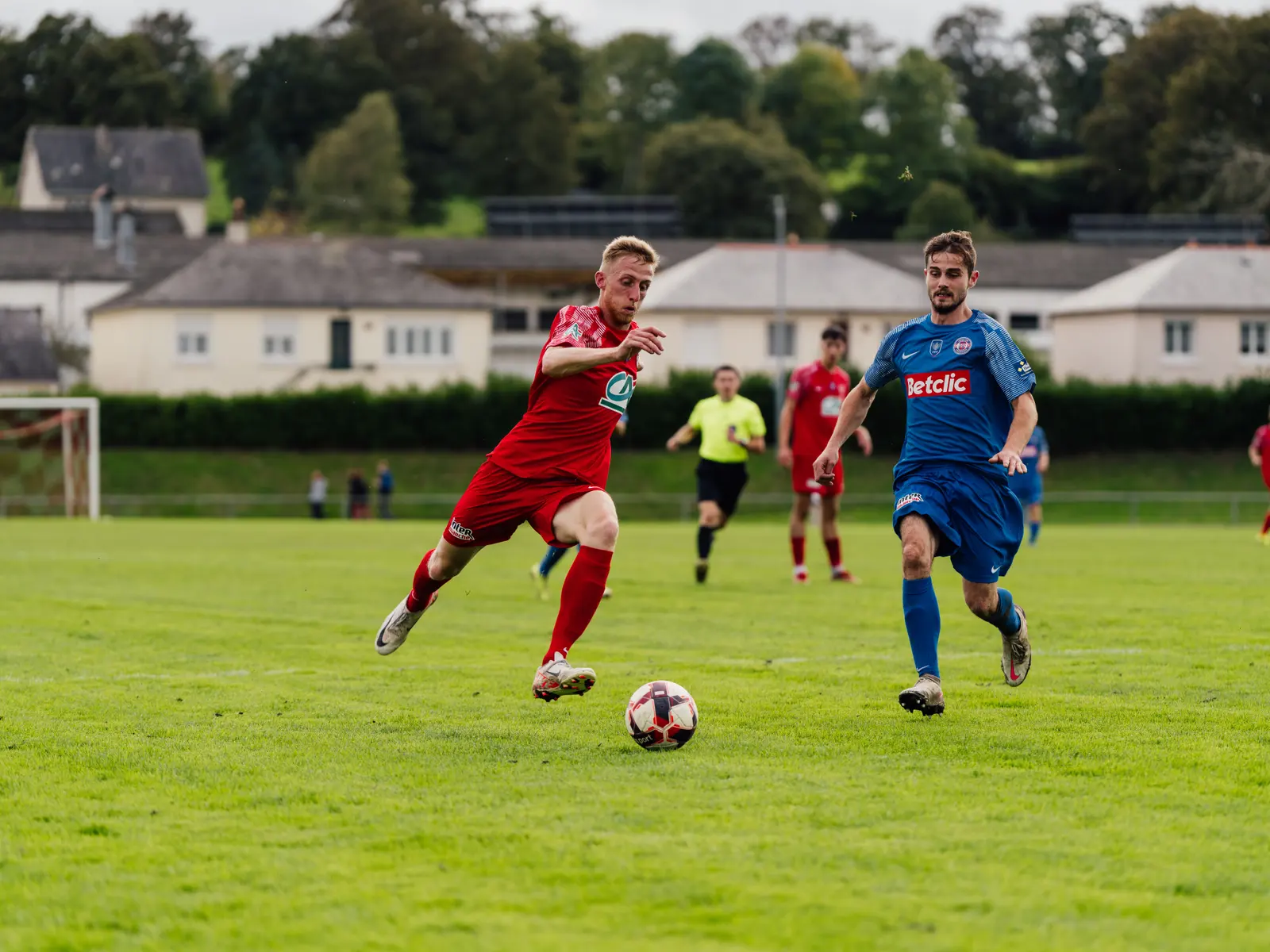
The uncomfortable truth about this genre is that the lens decides your ceiling. A 70-200mm f/2.8 is the workhorse and covers most field sports from the touchline. A 300mm or 400mm is what you need for the far side of a full-size pitch. Those are expensive, and there is no settings trick that substitutes for reach.
Two honest workarounds. Rent for the specific fixture rather than buying, which for a one-off is a fraction of the cost. Or get closer: youth and amateur sport lets you stand on the touchline where a 70-200 is plenty, which is one reason starting there makes sense.
A monopod rather than a tripod, if the lens is heavy. It takes the weight, it lets you pan freely, and it is allowed in venues where tripods are not.
Indoors and under floodlights, everything gets harder
A school sports hall is four stops darker than an overcast afternoon outside, and this is where beginners lose faith in their camera.
What changes:
- ISO 6400 becomes normal, and 12800 is often the honest answer. A sharp noisy frame beats a clean blurred one, and denoise handles the rest.
- Shutter cannot drop below 1/500 even though the exposure is begging you to. This is the discipline that matters most indoors.
- Aperture must be f/2.8 or wider. A kit zoom at f/5.6 cannot do indoor sport at a usable shutter speed. This is the situation where the lens is not optional.
- Set a custom white balance. Sports hall and floodlight lighting is often ugly greenish or orange, and it flickers, which brings its own problem.
That flicker is worth knowing about. Cheap LED and older fluorescent lighting pulses at mains frequency, so consecutive frames in a burst come out at different brightnesses and colours. Most recent cameras have an anti-flicker or flicker reduction setting that times the shutter to the pulse. Turn it on for any indoor sport, and if your camera lacks it, avoid electronic shutter, which makes it much worse.
Where to stand, which decides the photo
Settings get you a sharp frame. Position gets you a good one.
Shoot from low. Kneeling or sitting at the touchline puts you at the athletes' eye level and throws the background further out of focus. Standing gives you the view every parent already has.
Shoot into the sun rather than with it behind you, if you can manage the exposure, because backlit sport separates beautifully from the background. Failing that, keep the sun behind your shoulder.
Position for the action, not the ball. Anticipate where the play is going and point there. The photographers getting the best frames at any fixture are the ones watching the game rather than the viewfinder.
And know your sport's moments: the finish line, the throw-in, the scrum, the celebration afterwards. The celebration is very often the picture that sells, which is the same instinct that makes the frame after the moment worth waiting for in completely different work.
A card and battery routine
Sport generates more frames per hour than any other kind of photography. A single football match can be 2,000 frames.
Two habits. Take more cards than you think and swap at half time rather than mid-play. And shoot raw plus a small JPEG if you are delivering the same evening, which is normal in this genre: the JPEGs let you send a first set within an hour while you edit the rest properly, and fast turnaround is most of what gets you booked for the next fixture.