Copenhagen gives photographers two things in unusual quantity: colour, in the painted harbour houses and the design-conscious modern buildings, and light, since a June evening here holds usable colour until nearly eleven at night.
The trade is winter, when the sun barely clears the rooftops. Both are worth planning around.
Nyhavn, before eight
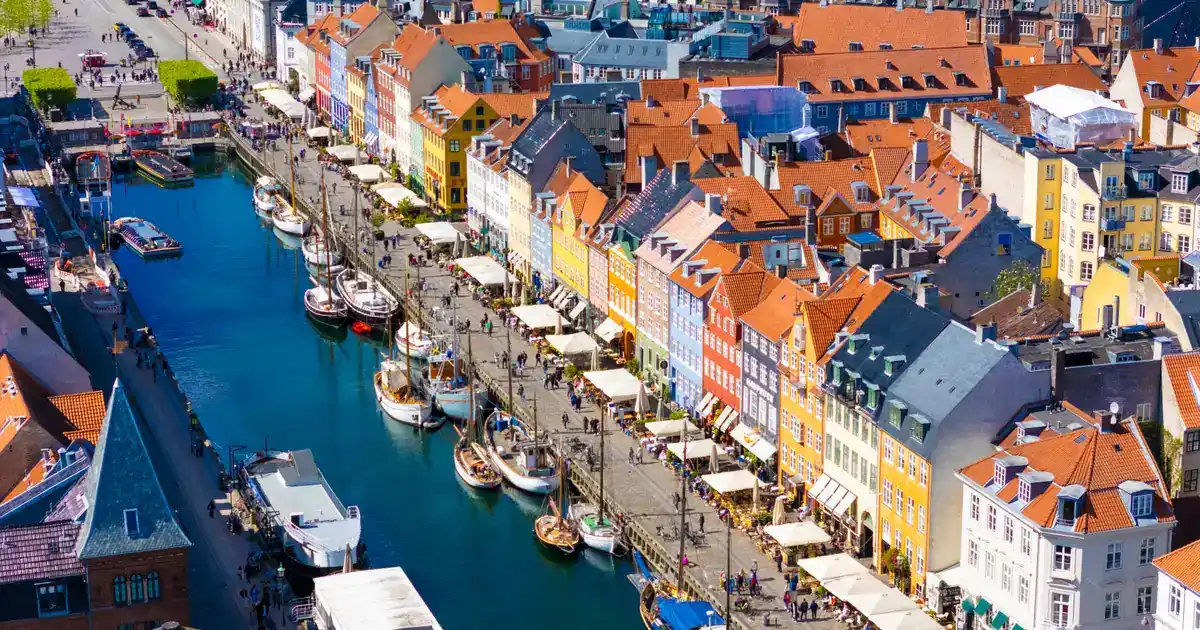
The painted townhouses along the old harbour, with wooden boats moored in front. The most photographed view in Denmark, and by mid-morning you are shooting the back of a crowd.
Go early. The houses face roughly south, so the sun lights them through the middle of the day, but the reflections in the still water are a morning thing.
Nyboder, for colour without the crowd
Rows of low ochre-yellow terraced houses built as naval barracks, geometric and almost empty of people. The best alternative to Nyhavn and a far better portrait location, since you can actually work there.
The Round Tower and the rooftops
A seventeenth century observatory with a spiral ramp instead of stairs, and a view over the old town's tiled roofs and green copper spires. The ramp itself is the more interesting photograph.
Christianshavn canals
Houseboats, cobbles, and the black spiral spire of Vor Frelsers Kirke rising behind. Quieter than Nyhavn and photographs the same material with more calm. Climb the church spire's external staircase for the best classic view of the city.
Superkilen, in Nørrebro
An urban park with a black and white striped square, a red rubber plaza, and graffiti. Graphic, modern, and completely unlike the rest of the city. The best location here for anything fashion or editorial.
The Black Diamond and the harbour front
The angular black glass library on the water, and the modern buildings around it. Blue hour, with the interior lit through the glass.
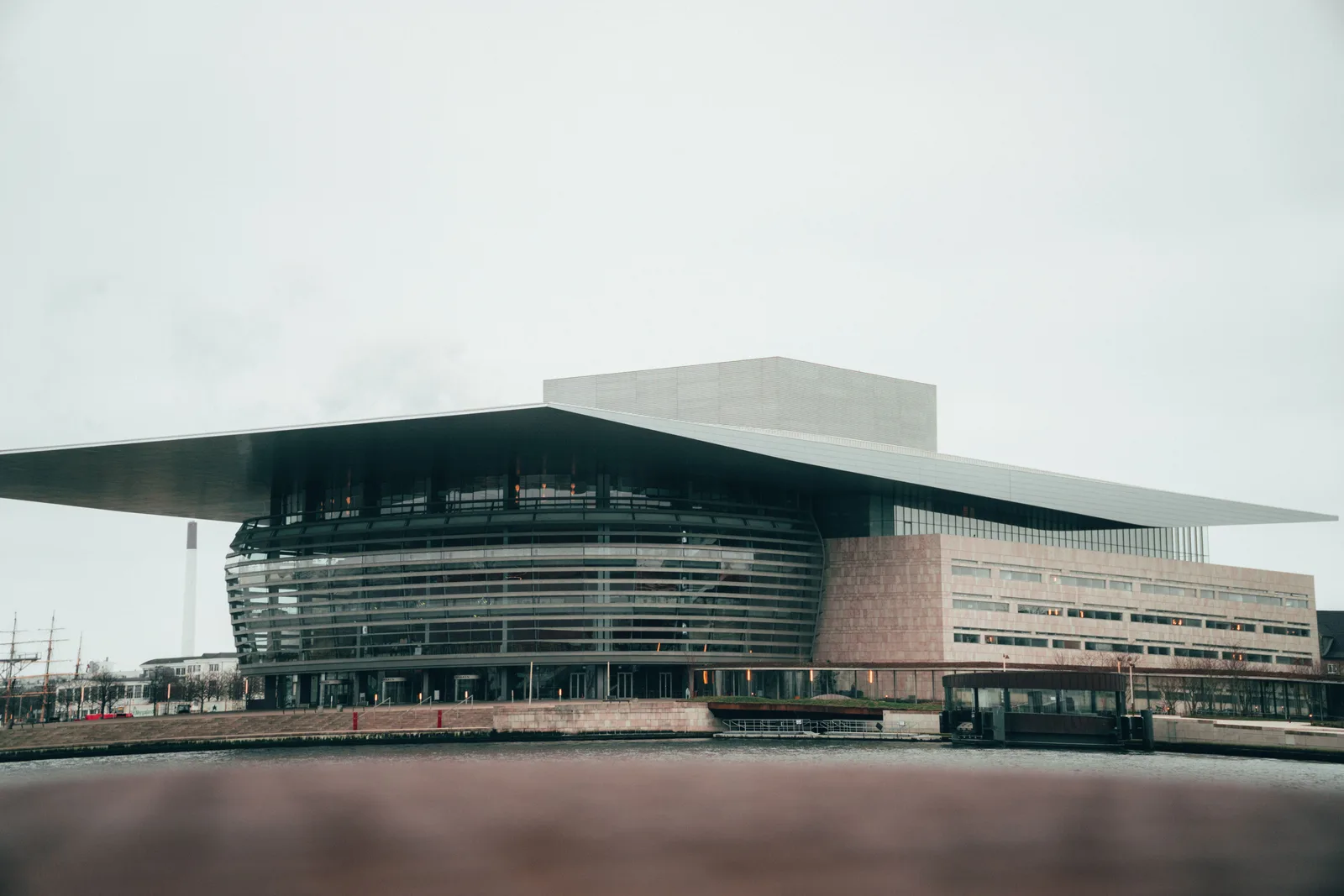
Across the harbour, the Opera House and the sculptural CopenHill power station with a ski slope on the roof give you the contemporary side in one walk.
Amalienborg and Frederik's Church
The four palaces around an octagonal square, with the marble church dome closing the view. The change of guard at noon is the obvious frame; the better one is the square empty at first light with the dome centred.
Kastellet, for the star fort
A working seventeenth century fortification with grass ramparts, a windmill, and red barracks buildings. Green, geometric, quiet, and the best place in the city for a walk with a camera and no plan.
The Little Mermaid, briefly
Small, crowded, and disappointing in person, and you will be asked why you did not photograph it. Go early, use a long lens from the side, include the harbour behind, and move on to Kastellet next door, which is fifty metres away and far better.
Ørestad and the modern edge
Twenty minutes on the metro: the 8 House, the Mountain Dwellings, and the tiered concrete of the newer districts. Strong lines, few people, and it works in flat grey light, which is what you will often be given here.
Practical notes
The summer light is enormous. In June, golden hour runs from about nine until past ten in the evening, and sunrise is before half past four. Plan sessions late and expect to lose the middle of the day to hard high sun.
Winter is the opposite. The sun rises after eight thirty and sets before four, which means the good light lands during working hours and the whole day is effectively golden hour, or grey.
Rain and wind are common, and the city photographs well in both. Wet cobbles and the reflections in the harbour are worth going out for, which is the general argument for shooting in bad weather.
Bikes are everywhere and they do not stop. Do not compose from a cycle lane.
Commercial shoots at ticketed sites need permission, and drone use over the city is restricted.
The locations on a map
- Nyhavn: before 8am for the reflections
- Nyboder: any time, yellow terraces
- Rundetaarn: the ramp and the rooftops
- Vor Frelsers Kirke: spiral spire, city view
- Superkilen: graphic, midday friendly
- The Black Diamond: blue hour
- Amalienborg: first light, empty square
- Kastellet: ramparts and windmill
- CopenHill: modern, strong lines
- 8 House, Ørestad: metro out, flat light is fine
For a North American city with the same water-and-modern-architecture mix on a much bigger scale, Chicago is the obvious comparison.