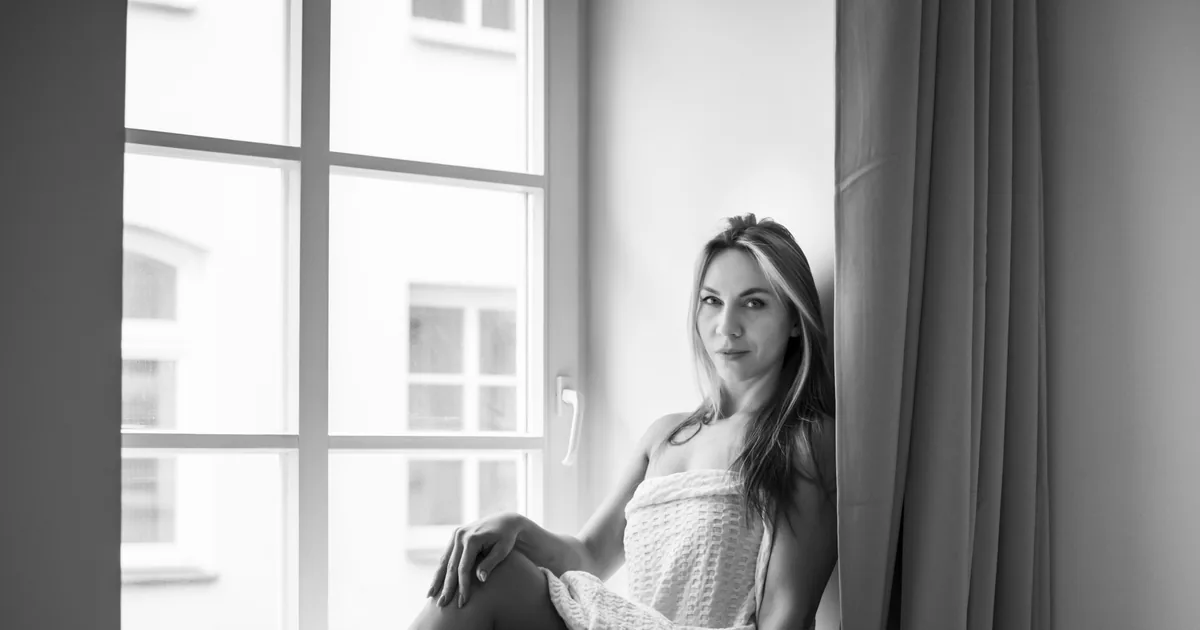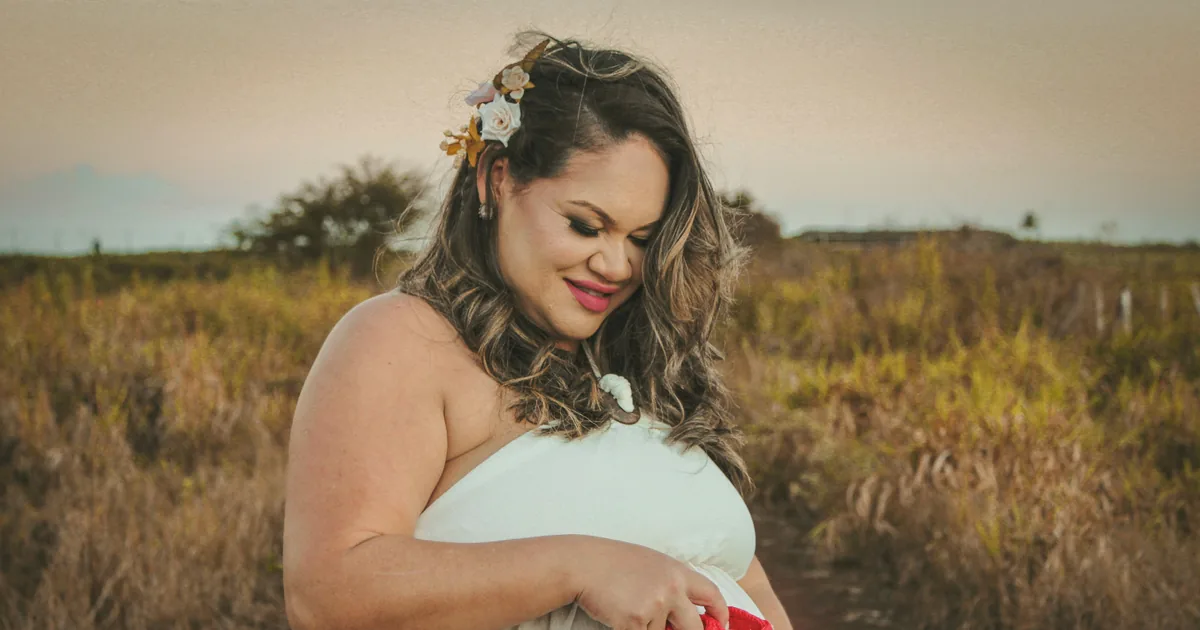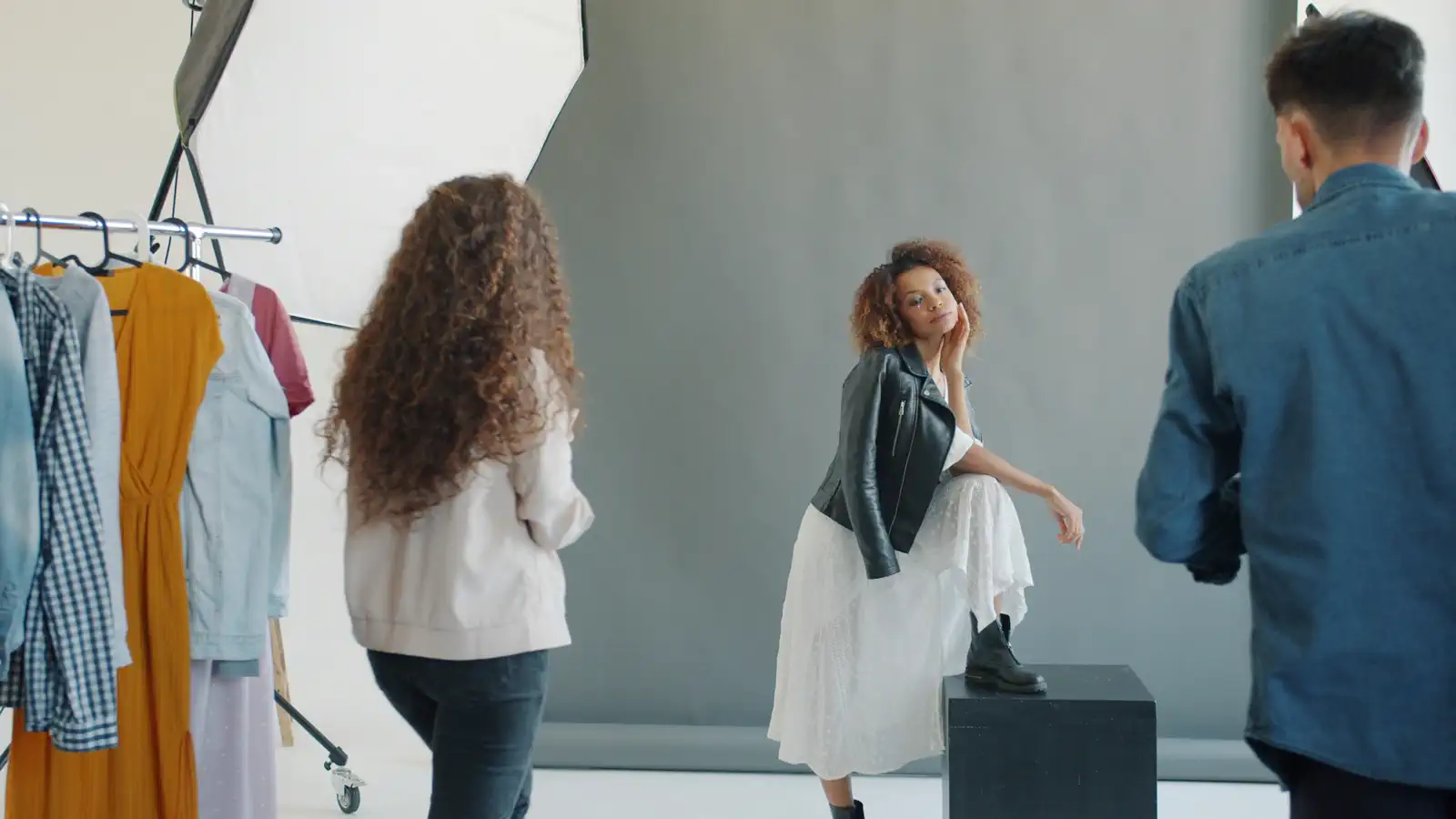
Almost nobody is comfortable in front of a camera. The couple you are shooting on Saturday, the family who booked a session for their reunion, the small business owner who needs a headshot: most of them have not been photographed properly since their wedding, if ever, and they are quietly terrified. They will tell you they are "not photogenic," which is never true. What they mean is that nobody has ever shown them what to do with their hands.
That is the job. A big part of portrait photography is not lighting or lenses, it is making an ordinary nervous person feel safe enough to look like themselves. Get that right and mediocre light still gives you a keeper. Get it wrong and the best gear in the world gives you forty photos of someone bracing for impact. Here is how to direct real people who feel awkward, so your portraits read as relaxed instead of stiff.
Talk first, shoot second
The single biggest mistake new photographers make is lifting the camera too soon. The client walks up, still catching their breath from parking, and the first thing that happens is a lens in their face. Of course they freeze.
Spend the first few minutes with the camera down and around your neck. Ask them about the drive, the kids, the reason for the shoot. You are not making small talk to be polite, you are doing real work: you are letting their shoulders drop and letting them get used to your voice. By the time you raise the camera they should already feel like they are talking to a person, not performing for a machine.
People do not relax because you tell them to relax. "Just be natural" is the most useless direction in photography. They relax because you gave them something specific to do and something else to think about.
Give the hands a job
Ask someone to stand there and do nothing and you will watch their hands turn into a problem they do not know how to solve. Hands flat against the thighs, fingers splayed, arms hanging like they belong to someone else. The fix is almost always to give the hands a task.
- Something to touch. A hand in a pocket with the thumb out, a hand resting on the opposite arm, fingers brushing a jawline or the back of a neck. Contact gives the hand a reason to exist.
- Something to hold. A jacket over the shoulder, a coffee, a prop that fits the story of the shoot. Objects absorb nervous energy that would otherwise show up as tension.
- Something to do with a partner. In couples work, have them hold hands, fix a collar, whisper something. Interaction beats posing every time because it turns the attention away from you.
Never let a hand point straight at the lens. The back of a hand is elegant, the palm and knuckles head-on are not. Small rule, huge difference.
Direct with actions, not adjectives
Telling someone to "look happy" produces a grimace. Telling them to "look confident" produces a person clenching their jaw. Adjectives ask people to manufacture an emotion on command, which nobody can do. Actions produce the same emotion honestly, as a side effect.
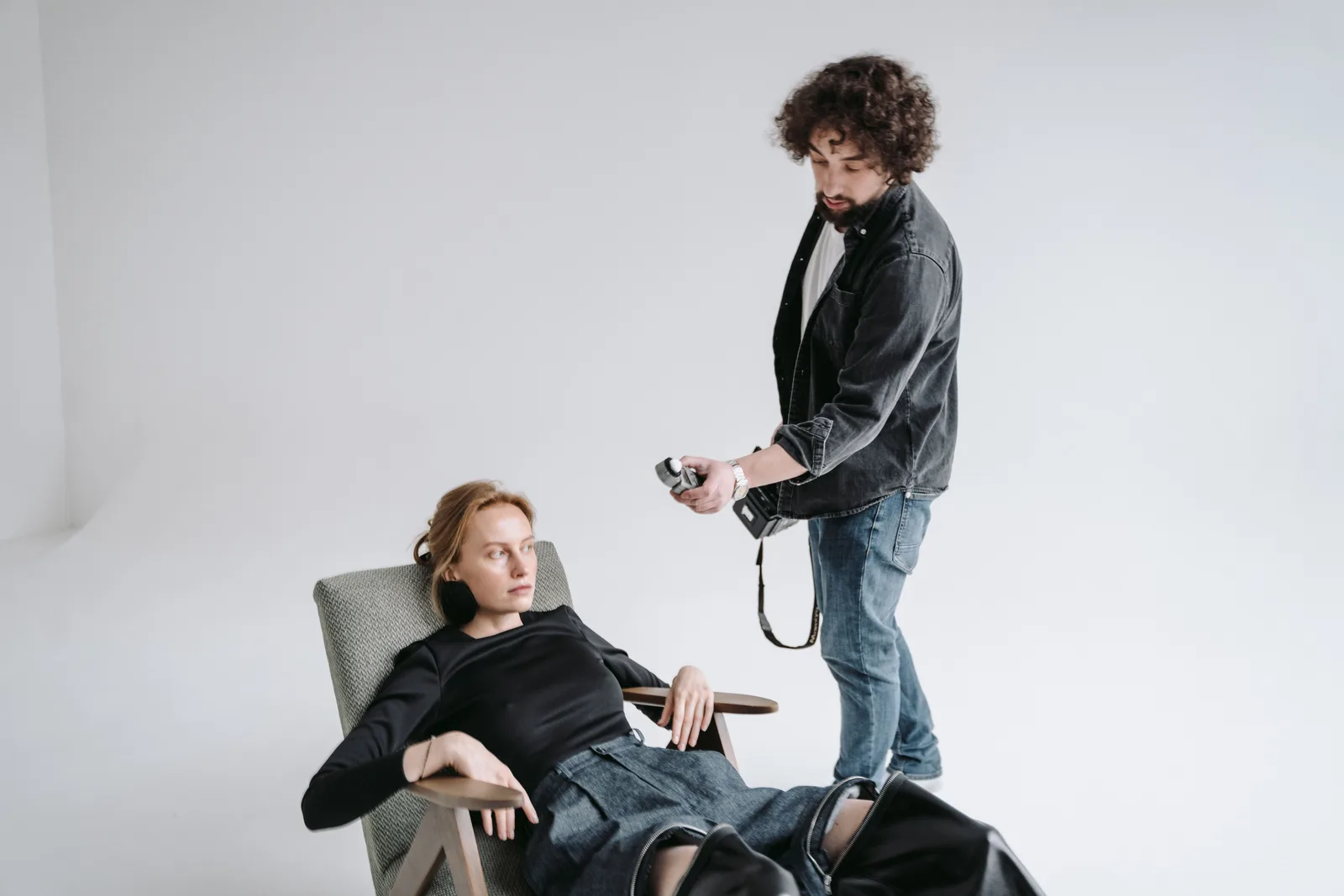
Instead of asking for a feeling, ask for a small physical thing and let the expression follow. "Walk toward me slowly and stop when I say." "Look off to the window, then back to me on three." "Lean your weight onto your back foot." "Give your partner a squeeze." A person doing a real action wears a real expression. That is where natural photos come from: motion, not held poses.
Learn a few flattering fundamentals cold
You cannot direct what you do not understand, so a handful of universal principles should be automatic for you, applied without thinking so your attention stays on the person.
Weight goes on the back foot, which pops the front hip and stops people looking planted. Chin comes slightly forward and down, which sounds wrong and looks right, because it defines the jaw and kills a double chin for every body type. Create a gap between the arms and the torso so the person does not read as wider than they are. Turn shoulders slightly off axis rather than squaring them to the camera. None of this is about making someone look like something they are not. It is about photographing them on their best day.
Show, do not just tell
When a direction is not landing, stop describing it and do it yourself. Stand in front of them, drop your own weight onto your back foot, tuck your own chin, show the exact tilt of the head you want. It feels ridiculous the first few times. It also works instantly, because a person can copy a shape far faster than they can decode a sentence about angles. You will look a little silly. Your photos will look a lot better.
Keep shooting through the reset
The best frame is almost never the one where they are holding the pose. It is the half second after you say "great, relax," when they exhale and laugh and stop performing. So do not stop shooting at that moment. Fire through it. Crack a joke and catch the real smile that follows, not the posed one that came before it. Photograph the in-between and you will fill a gallery with the expressions your clients actually want to see, the ones that look like them on a good day.
Reassure them with the back of the camera
Nervous clients spiral when they have no idea whether it is going well. Ten minutes in, turn the screen around and show them one frame you know is strong. The change is immediate. They see proof that they do not look ridiculous, they trust you a notch more, and that trust shows up as ease in every frame after. Do not overdo it and turn the session into a slideshow, but one well-timed "look at this one" is worth more than any pep talk.
The relaxed gallery is where the work pays off
Directing people well does not end when the shutter stops. The reason clients book you again, and send their friends, is that they open the finished gallery and see themselves looking easy and happy rather than braced and stiff. That relaxed, natural set is the whole product. Deliver it somewhere clean and calm where the photos are the only thing on the screen, the way a portfolio built on Xposure presents them, and the feeling you worked so hard to create in the session carries all the way through to the moment they hit download.
You do not need models. You need a calm voice, a few reliable directions, and the patience to talk before you shoot. Master that and the most anxious person who ever walked into your studio will leave convinced, for once, that they are photogenic after all.
Half of that confidence is decided before anyone arrives, in what they chose to wear, which is why sending a short styling guide at booking does more for a family session than any prompt you use on the day.
The genre where this matters most is the one where the client is 21, wearing a gown that does not fit, and being watched by their entire family, which is most of the work in a graduation session.
The genre where the stakes are highest is boudoir, where the same directing skills sit on top of a consent and privacy process that has to be right before a camera comes out.