Boudoir is the genre where the photography is the easy part. One window, a soft light, a bed, and a long lens will produce good frames. What decides whether a session works is whether a client who has never been photographed like this before feels safe enough to relax, and whether you have handled the privacy side well enough that they never regret booking.
Get those two right and this is some of the most rewarding portrait work available, with clients who order prints and albums at rates no other portrait genre approaches. Get them wrong and you have created a problem for someone that lasts longer than the photographs.
Consent is a process, not a signature
The release you sign at the start is the paperwork. The consent that matters is the running conversation during the session, and it works because you build it in deliberately.
Three habits that do most of the work:
- Ask before every change. "Would you be comfortable trying this on the bed?" rather than "lie on the bed." A question can be declined; an instruction is harder to refuse when someone already feels exposed.
- Never touch the client. Demonstrate the pose on yourself, or use precise words. If a strap needs moving, ask them to move it.
- Give them an exit at every stage. "We can stop any time and you owe me nothing for the frames we have already taken" said once at the start changes the whole dynamic, and almost nobody uses it.
Say at the beginning that they can ask to delete any frame at any point, and mean it. Deleting a photo in front of a client costs you nothing and buys the rest of the session.
Get the usage question in writing, separately
This is the paperwork detail that separates photographers who do this properly from ones who end up in a genuinely serious situation.
Your standard contract covers the shoot and the delivery. Boudoir needs a second, separate document about publication, and it should be opt-in rather than opt-out, with granular choices:
- May the images be shown on the photographer's website?
- On social media?
- In a printed portfolio shown to prospective clients in person?
- Faces included, or crops only?
- With or without any identifying detail, such as a tattoo or a wedding ring?
Have them tick each one individually and sign. Then, crucially, ask again after they have seen the gallery, because consent given before a session is consent given in the abstract. Someone who agreed to social media in January may feel differently about a specific photograph in March, and the professional answer is that their answer in March is the one that counts.
Assume every client is a no until they have specifically said yes to that image. Where usage terms belong in the wider paperwork is covered in what to put in a photography contract, but the publication release is a separate signature, not a clause.
Run the pre-session conversation properly
The consultation matters more here than in any other genre, and 20 minutes on a call covers it:
Ask what they like about themselves and what they would rather not emphasise. People answer this honestly if you ask it plainly, and it tells you where to put the light and which poses to skip. Ask whether the photos are for them or for someone else, because the answer changes the tone of the whole session. Ask about scars, surgery, tattoos, and whether they want them included or hidden, since assuming either way is a mistake.
Then set the practical expectations: what to bring, that hair and makeup takes 90 minutes, that the session is two hours and they will feel awkward for the first fifteen minutes of it, and that this is normal and everyone does.
Telling a client in advance that the first fifteen minutes will feel strange is the most useful sentence in the entire consultation. It converts the awkwardness from a sign that something is going wrong into a stage they were told to expect.
Light it softly and stand further back
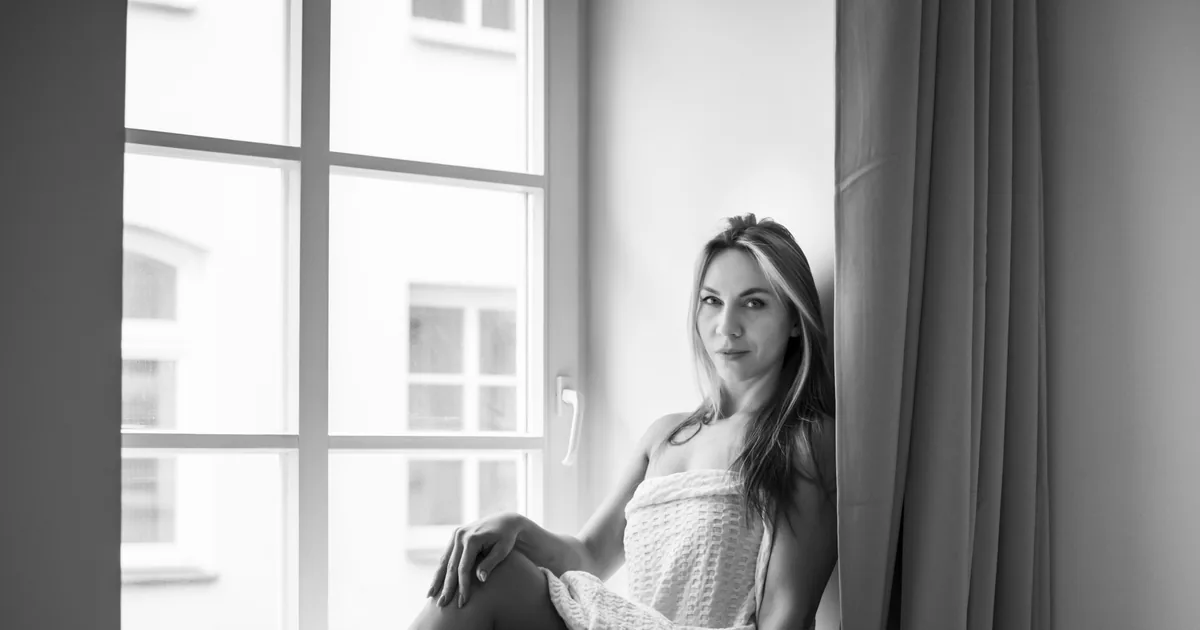
One large window with a sheer curtain is the classic boudoir light for a reason: it is soft, it wraps, and it is flattering across almost every body type. Put the client parallel to the window rather than facing it, and let the shadow side fall away.
Practical starting points:
- 85mm or 105mm rather than a 35mm. Distance is flattering and, more importantly, it puts physical space between you and the client, which changes how the room feels
- f/2 to f/2.8, focused on the near eye
- A reflector on the shadow side, close, held low
- Shoot from slightly above for most poses, which is more flattering and gives the client a familiar, comfortable angle to look up into
For artificial light, a single strip box high and to one side, feathered so the edge of the light falls across the body, does almost everything. Hard, direct light is a stylistic choice that works beautifully and is not where to start.
Direct constantly, and show them the back of the camera
Silence reads as disapproval when someone is nervous and half dressed. Keep talking. Not compliments about their body, which land awkwardly, but direction and feedback about the photograph: "that is working", "chin down slightly toward me", "hold that".
Show them a frame early, within the first ten minutes, on the back of the camera. Almost every client is braced for the photo to look bad, and seeing one good one resets the session entirely. This is the same principle as posing anyone who feels awkward, just with the stakes raised.
Give continuous small instructions rather than asking them to pose. "Point the toe", "press your hip into the mattress", "breathe out". People who are given something to do stop worrying about how they look while doing it.
Treat the files as confidential, because they are
This is where a lot of otherwise careful photographers get sloppy.
- Never send images by email or a public link. Deliver into a password-protected gallery, and set an expiry
- Do not back up boudoir sessions to a shared or family computer, or to a cloud folder that syncs to a phone that other people pick up
- Turn off any automatic social sharing that touches your import folder
- Delete the files on an agreed schedule, and say what it is. Many boudoir photographers keep images for 12 months and then remove them permanently. Whatever you choose, tell the client
- Never leave a boudoir gallery on your screen in a coffee shop or a client meeting
A PIN on the gallery is the minimum, and a second PIN for a partner is worth having so the client can share the photos with the person they were made for without handing over their own access. Xposure galleries support a separate guest PIN alongside the client's own for exactly that kind of split, and can be set to block downloads entirely if a client would rather nothing left the browser.
The general rule about how long to keep client galleries online should be shorter here, and it should be the client's decision rather than your storage policy.
Price it as a two hour experience
Boudoir sessions commonly run $400 to $900 for the session fee, with hair and makeup included or offered as an add-on, and the majority of the revenue arriving afterwards in albums and prints. Clients who book this rarely want twelve digital files and nothing physical.
Charge the session fee up front. Cancellation rates are higher than in other genres, usually from nerves rather than anything else, and a paid session is one someone talks themselves into rather than out of.
Then deliver quickly and privately, and let the client decide what happens next. The most common mistake beginners make is treating a boudoir gallery like a portfolio opportunity. It is the client's photograph first, for as long as they want it to be, and the portfolio is whatever they later agree to give you.