The thing that stops most part time photography businesses is not gear, talent, or even finding clients. It is that a client emails at 11am on a Tuesday and you reply at 7pm, by which point they have booked someone else. Weekends are the easy part. The business runs on weekdays, and weekdays are spoken for.
Everything below is organised around that constraint. Plan for roughly one shooting slot a weekend and six to eight editing hours a week, price for the fact that you have very few slots, and automate the weekday half so that a full time job is not a disadvantage your clients ever notice.
Check your employment contract before your first invoice
Do this first, because it is the one thing that can end the plan rather than delay it. A lot of contracts have a clause about outside work, and a smaller number have one about intellectual property that is written broadly enough to be alarming. Most employers are fine with weekend photography and want to be told, some require written permission, and a few in law, finance and government have real restrictions.
Ask, in writing, before you take money. Getting a one line yes from HR costs you nothing, and it removes the scenario where a hobby that pays becomes a disciplinary conversation.
Pick the genre that fits the hours you have
The genre decides whether this works at all, and the deciding factor is when the work happens:
- Weddings. Saturdays, and one wedding can consume the following three evenings of editing. Works part time, but two a month is the realistic ceiling alongside a job.
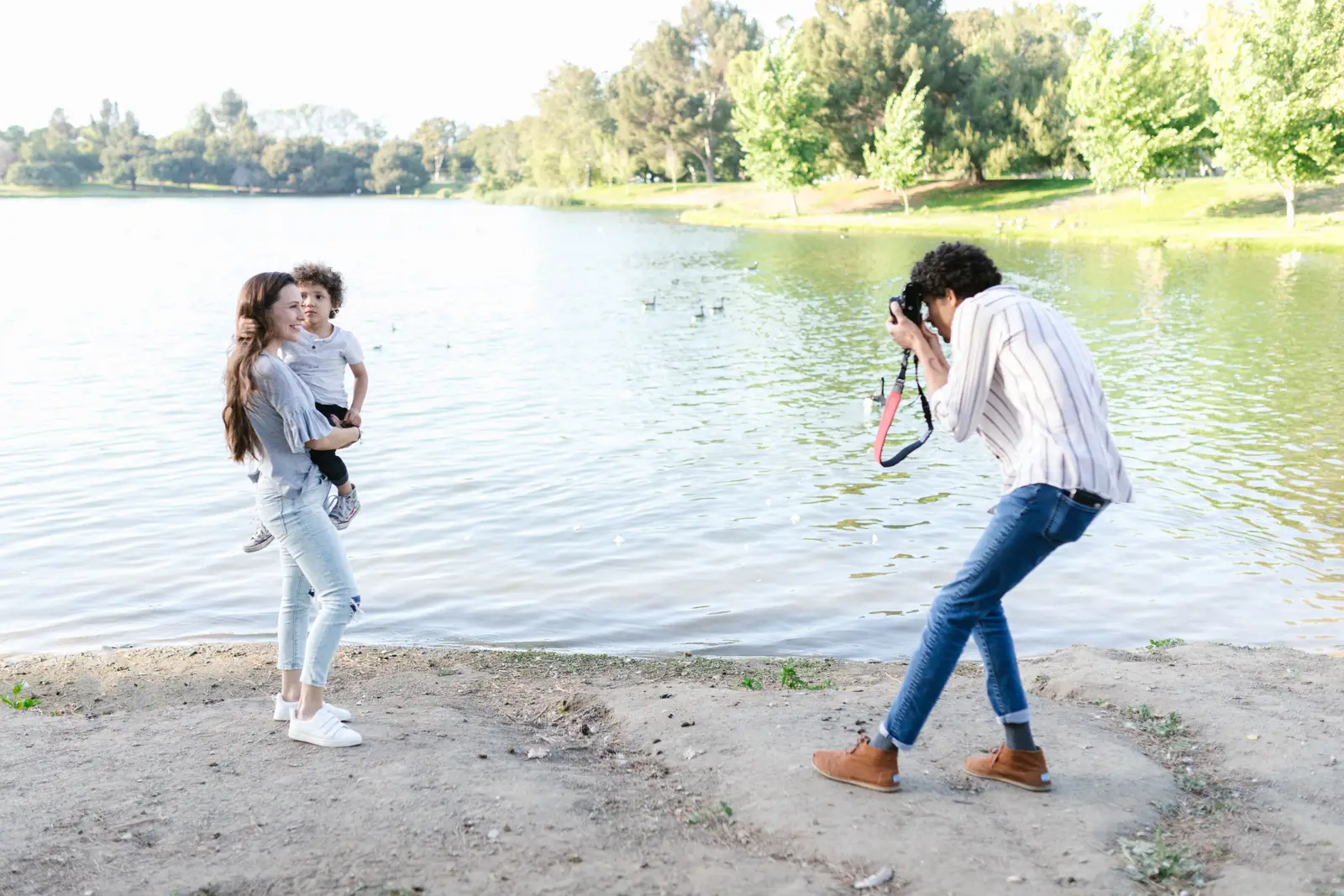
- Family and couples sessions. The best fit. An hour at golden hour on a Saturday or Sunday, six to eight hours of editing, done.
- Mini session days. Also a good fit, because they concentrate a month of revenue into one Saturday. They also go wrong easily, so read how to price them before you run one.
- Real estate. A bad fit, and worth saying plainly. Listings are shot on weekday mornings and delivered the next day, and there is no version of that which fits around an office job.
- Corporate headshots and events. Weekday work, so only viable if your job has flexible hours or you are using leave for it.
Pick one and get good at it. Trying to be available for all of them means being reliably available for none, and availability is most of what a part time photographer is judged on.
Charge more than the full timers, not less
The instinct is to discount because it is "just a side thing". It is exactly backwards. You have maybe 40 shooting slots in a year against a full timer's 150, your costs per booking are higher because you cannot spread them, and your scarce weekday hours are worth more, not less.
Price so that 40 slots is worth doing. If a session takes eight hours all in once you count the drive, the shoot, the culling, the edit and the emails, then a $250 session is paying you about $20 an hour before costs and tax, which is not worth a Saturday away from your family. Put your real numbers through the effective hourly rate calculator and set the price from that, not from what the person down the road charges.
Cheap part timers are also the reason the niche has a reputation problem, and the clients they attract are the ones who will leave you the moment someone cheaper appears.
Set a turnaround you can hit in your worst week, not your best
Full time photographers deliver in two weeks. Do not promise that. Promise three or four, put it in the contract, and then deliver in two when the week goes well. Under-promising is the single easiest advantage available to a part time photographer, because the complaint clients actually make is about silence and slippage, not about waiting.
The same applies to reply times. "I answer enquiries within 24 hours" is a promise you can keep from a lunch break. "I usually reply straight away" is one that will break in the first busy month at work.
Automate the weekday half of the job
This is where a part time business is won. Every weekday task a client can complete without you needs to be possible without you:
- A booking page where they pick a package, pick a date from your real availability, sign the contract and pay the deposit. That turns the Tuesday 11am enquiry into a confirmed booking while you are in a meeting.
- Saved reply templates for the four emails you send most. The ones worth writing once are the enquiry reply, the pre-session guide, the delivery email and the review request.
- A questionnaire sent automatically on booking, so the session details arrive without a phone call you cannot take.
- Galleries that clients can access, favourite from and download themselves, because "can you resend the link" is the most common weekday interruption in this business.
Each of these saves ten minutes. Ten minutes is the difference between answering at lunchtime and answering after dinner.
Do the admin in one weekday evening, and the editing in one block
Two hours on a Wednesday for invoices, enquiries, bookkeeping and social. Four to six hours across the weekend for editing. That is the shape that survives a demanding job, and the reason it survives is that neither task is allowed to leak into every evening.
Keep the setup costs low while you find out whether you enjoy the business rather than the photography. What a working setup actually costs is $2,500 to $6,000, and about a third of it is not camera gear. Get the insurance early, though, because a venue will ask for it and it is cheaper than people expect.
Know the number that means you can leave
Going full time is not a feeling, it is a threshold. A reasonable one: your photography income has covered your essential outgoings for six consecutive months, you have six months of expenses saved, and you have bookings on the calendar for the next four months rather than hopes.
Until then, part time is not a lesser version of the business. It is the version where a slow February does not matter, which is exactly the safety net that lets you charge properly and turn down the clients who are wrong for you. Work out what the full time version would actually pay you before you hand in notice, because the gap between $60,000 of bookings and what lands in your account is the whole decision.
The businesses that make the jump are the ones that were already run like businesses at 40 sessions a year: contracts signed before the deposit, deposits taken before the date is held, galleries delivered on the day promised. Get the weekday half running itself now, and going full time becomes a question of volume rather than a question of rebuilding everything while you are busier than you have ever been.