Corporate event work pays $250 to $450 an hour with a two or three hour minimum, $1,500 to $2,500 for a half day, and $2,500 to $4,500 for a full day conference. Multi-day events with a second shooter and same-day delivery run $6,000 and up. Those numbers hold up in most cities, and they are noticeably higher than consumer event work for one reason: the images are being used commercially, by a company with a marketing budget.
The other difference is who you are working for. At a wedding the client is in the room and will tell you what they think. At a conference the person paying is often a marketing manager who is not there, and what they need is a set of images that fills a landing page, a recap email, and a year of social posts. Shoot for the guests and you will deliver 600 photographs of people holding drinks that nobody uses.
Quote by the day, with usage written into the number
Hourly is how these enquiries arrive and half day and full day is how you should answer, because a three hour event still costs you a full afternoon once travel, setup and the edit are counted (the hourly rate you quote is not the rate you earn). A two hour minimum is standard and non negotiable.
What belongs in the quote:
- The coverage block, with a start and end time
- Number of photographers
- Delivery: how many edited images, in what timeframe
- The licence, which is the part people forget
That last line matters more here than anywhere else in your business. A company photographing its own conference will use those images in advertising, in recruitment, and on a website for years. Include a clear licence for owned channels in the quote and price paid advertising separately, which is exactly how usage rights should be structured. If you quote the same day rate you charge a private client and hand over unlimited commercial use, you have undercharged twice over.
Ask the five questions that decide the whole shoot
Send these before you quote, not after you arrive:
- What are the images for? A recap email, next year's event page, the annual report, and a press release all need different frames.
- Who must be photographed by name? Speakers, sponsors, the CEO, the award winners. Get a list with photographs attached, because you cannot recognise a VP from a name.
- What is the run of show? Not a rough idea, the actual schedule with times.
- Are there logos or sponsor boards that must appear in shot?
- Who is my contact in the room, and what is their mobile number?
The sponsor question is the one that separates photographers who get rebooked from those who do not. Sponsors pay for visibility, the marketing team has to prove they got it, and a photograph of a full room with the sponsor board clearly legible is worth more to your client than the best candid you take all day. The general event checklist covers the rest of the logistics, and corporate work is that plus a stakeholder list.
Shoot the shot list first, and the atmosphere second
There is a set of images that has to exist, and it should be secured early rather than hoped for:
- The empty room set up, before anyone arrives, with the branding visible
- Registration and arrivals, which is where the good candid interaction is
- Each speaker on stage, wide with the screen legible and tight with a gesture
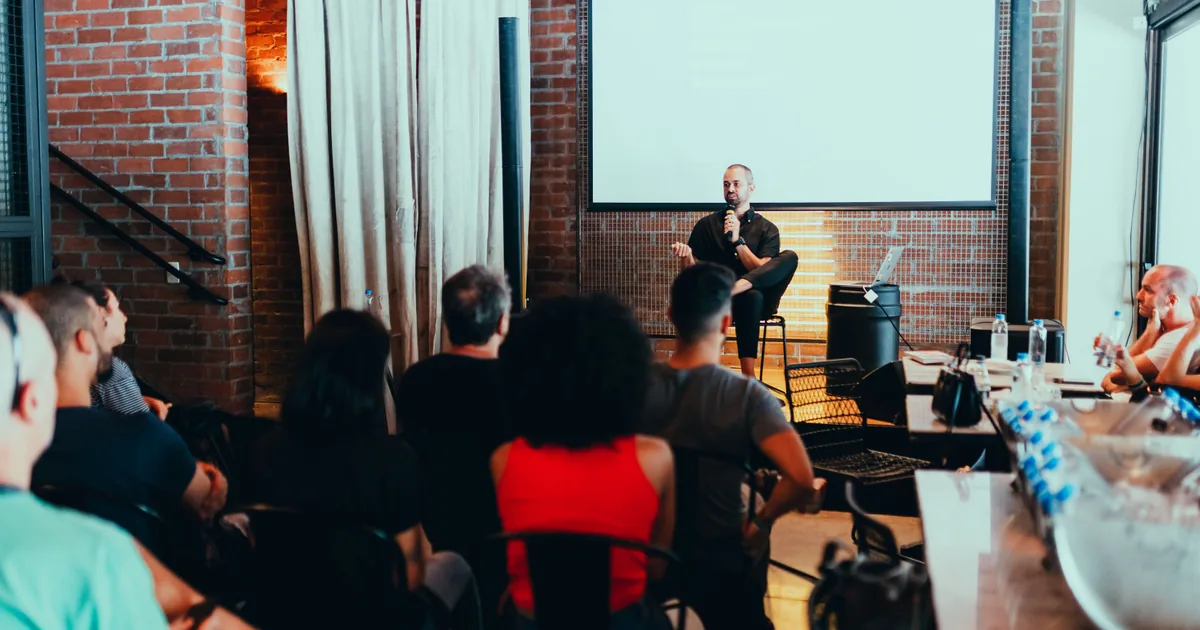
- The audience from behind the speaker, looking engaged and looking full
- Any award, handshake, or cheque presentation, shot twice
- Networking and breakout sessions, real conversations rather than posed groups
- Sponsor boards, signage, catering, and the room dressing
- A clean group shot if there is any moment the whole room is together
Shoot the empty room the second you arrive. It takes eight minutes, it is the image most likely to be used on next year's event page, and it becomes impossible the moment the first guest walks in.
For the stage, aim for the moment of gesture rather than the moment of speech. Everyone looks unflattering mid-word. Wait for the hand movement and the mouth closed, shoot in bursts, and get a clean frame where the presentation slide behind them is readable.
Make a hotel ballroom look intentional
Corporate venues are lit badly and consistently: dim tungsten uplighting, a bright stage, ceilings too high to bounce off and a colour cast you did not choose.

What works in practice. Shoot at f/2.8 with your shutter no lower than 1/160 for handheld people shots, and let the ISO go where it needs to go, because a sharp image at 6400 beats a clean blurred one. Bounce flash off a wall to your side rather than the ceiling when the ceiling is 30 feet up, and dial it down so it fills rather than announces itself. Set a custom white balance in the room before guests arrive, because mixed tungsten and LED will otherwise leave you correcting 600 frames one at a time.
During the presentations, kill the flash entirely. Nobody will ask you to stop and everybody will notice. Stage light is usually enough at 3200 to 6400 ISO, and the same principles apply as working a dark reception with the volume turned down.
Deliver in tiers, and deliver the first tier the same day
Corporate clients need images while the event is still relevant. A gallery arriving in three weeks is a gallery that missed the recap email and the news cycle.
The structure that gets you rebooked:
- 20 to 30 images by that evening, edited quickly, sent as a link the social team can use immediately
- The full edited set within five business days, in a gallery with downloads enabled
- Web sized and full resolution versions, because the design team will ask for both and asking later costs you an email round trip
Name the files usefully. acme-summit-2026-keynote-042.jpg is findable in a year.
IMG_4821.jpg is not, and the marketing manager searching for it in eleven
months is the person who decides whether you get booked again.
Ship it as a proper gallery link rather than a shared drive folder or a WeTransfer that expires in a week, because a corporate client will come back for those files repeatedly and long after any transfer link has died. That is the whole problem with how most photographers deliver, and it is more acute here than anywhere else.
Invoice like a supplier, because that is what you are
Corporations pay on terms, usually 30 days, sometimes 60, and often only against a purchase order number. Ask whether a PO is required before the event rather than after you invoice, get the finance contact's email, and put your payment terms on the quote.
Do not expect a deposit from a large company, because their systems frequently cannot process one. Do expect it from a 12 person startup, where the risk is genuinely different, and where the same rules as chasing any unpaid client will eventually apply.
The most valuable thing you leave with is not the fee. It is a marketing contact who now has a photographer they trust, at a company that runs four events a year and needs headshots for the whole team every January.