You need a model release when you want to use a recognisable person's image to promote something, which includes promoting your own business. You do not need one to take the photograph, to sell prints of it to the person in it, or to publish it as journalism or art in most jurisdictions.
That distinction confuses people because it cuts across ownership. You own the copyright the moment you press the shutter. What a release gives you is something different: permission to use that person's likeness commercially, which is a right that belongs to them and which no amount of copyright ownership replaces.
The line is commercial use, not publication
The test in most places is whether the photograph is being used to sell, endorse, or advertise something.
Needs a release:
- Your website's homepage, portfolio page, and social media, because those advertise your services
- Stock photography of any kind
- A client's advertising, packaging, or brochure
- A print sold to a third party as a product
Usually does not need a release:
- Editorial and news photography
- Fine art displayed or sold as art, in most jurisdictions
- Photographs delivered to the client who commissioned them, for their own personal use
- Anyone who is genuinely unrecognisable, including crowd scenes where no individual is the subject
The one photographers most often get wrong is the second item in the first list. Putting a client's family session on your Instagram is a commercial use, because the purpose is to attract other clients. Their contract may already cover it, but only if you put a clause in it.
Note that this is jurisdiction-dependent, and increasingly so. In the EU and UK, data protection law applies to identifiable people in photographs regardless of the commercial test above, which is a separate reason to have written permission on file. Take the local specifics from a lawyer in your country rather than from a blog, including this one.
What a release must contain to be worth anything
A release that omits any of these is decorative:
- Identification of the parties. The photographer's name and business, the subject's full name and contact details
- Identification of the images. A date and a description of the session, rather than "all photographs ever taken", which is the kind of overreach that makes a release easier to challenge
- The scope of the grant. What may be done with the images: advertising, web, print, social media, third party licensing
- Territory and duration. "Worldwide, in perpetuity" is standard for stock and often unnecessary elsewhere. Narrower is easier to get signed
- Consideration. Something given in exchange, which may be payment, free images, or the session itself. In many jurisdictions a promise with nothing given in return is weak, so name what they received even if it is "the photographs from this session"
- A statement that the subject is of age, or the signature of a parent or guardian
- Signature and date
Two useful additions. A line stating the images may be altered or cropped, since subjects occasionally object to editing rather than use. And an email address, because you will need to reach this person in three years when a client asks for a licensed image and you need to check the terms.
Under 18 means a parent signs, every time
A minor cannot give a valid release. A parent or legal guardian signs, and the form should name the child and the adult and state the relationship.
Two practical points that catch people out. A grandparent, an aunt, or a teacher is not a legal guardian, and a school does not have the authority to release photographs of pupils to a commercial photographer for marketing use, whatever the school office tells you. And in some jurisdictions a minor can disaffirm a release when they reach adulthood, so treat images of children in commercial campaigns as a genuinely higher risk category and get advice for anything significant.
For ordinary family portrait work, this comes down to one tick box on your contract asking whether you may share images of their children, and respecting the answer. Most families say yes. The ones who say no usually have a specific reason.
Property releases are a separate thing
A model release covers people. A property release covers recognisable private property used commercially: a distinctive house, an interior, a boat, and in some places an identifiable pet.
The one that reaches most working photographers is real estate and interiors. If you photograph a home for an estate agent and later want the images in your own portfolio or licensed to a magazine, the homeowner's permission is a separate question from the agent's. Ask at the time, when everyone is cooperative, not eighteen months later.
Venues are the other common case. Some wedding venues, museums, and public landmarks restrict commercial photography by contract or by ticket condition, which is a licensing question rather than a release, but it bites in the same way. This overlaps with who owns the photos once someone pays you, which is the question clients ask and this is the question you should be asking.
Get it signed at the shoot, digitally, in two minutes
The hardest release to obtain is the one you decide you need six months later. People move, change email addresses, and are considerably less enthusiastic about signing a form for a photograph they have already got.
Build it into the booking instead. For commissioned client work, put the sharing permission in the contract as a tick box, so it is signed at the same moment as everything else. For models, second shooters, and styled shoots, have a one-page release ready as a form on your phone and get it signed before you shoot, not after.
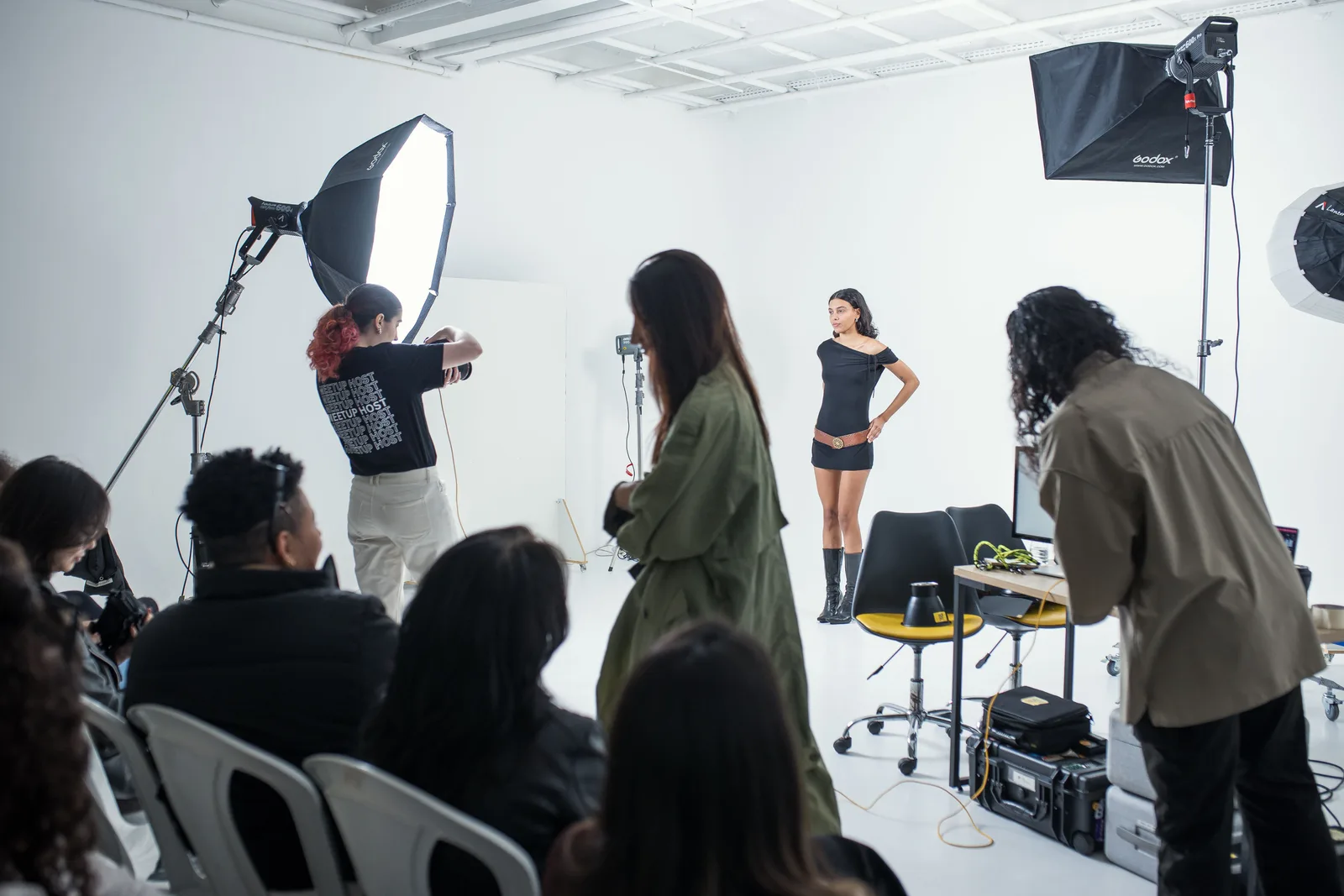
For a styled shoot with several people involved, collect one from every identifiable person on the day, including the makeup artist who stepped into a frame. Missing one is how a whole set becomes unusable for the vendors who expected to use it.
Xposure booking contracts use reusable templates with fields that fill themselves in and are signed electronically at checkout, so a permission tick box lives in the same document as the deposit rather than in a folder of scanned PDFs you have to search through later.
Keep them findable, or you may as well not have them
A signed release you cannot locate is worth nothing at the moment it matters, which is when a licensing enquiry arrives with a deadline.
Store them attached to the job, not in a general folder. Name the file with the date and the subject's name. Keep a simple index of who signed what and for how long, particularly if you licence work commercially, because the question you will be asked is "may we use it in a campaign in Germany until 2029", and the answer lives in clause four of a document from three years ago.
Keep them as long as you keep the images. A release that expired while you were still using the photograph is one of the more avoidable problems in this business, and it is closely related to the habit of deciding how long you keep anything at all rather than letting it accumulate by default.