Florence is small, which is its advantage and its problem. Everything worth photographing is inside a walkable centre, and so is everybody else. The city holds perhaps two hours of good photographic conditions a day in summer, at either end, and the rest is a crowd in hard light.
Plan for the two hours and it is one of the most rewarding cities in Europe.
Piazzale Michelangelo, at sunrise not sunset
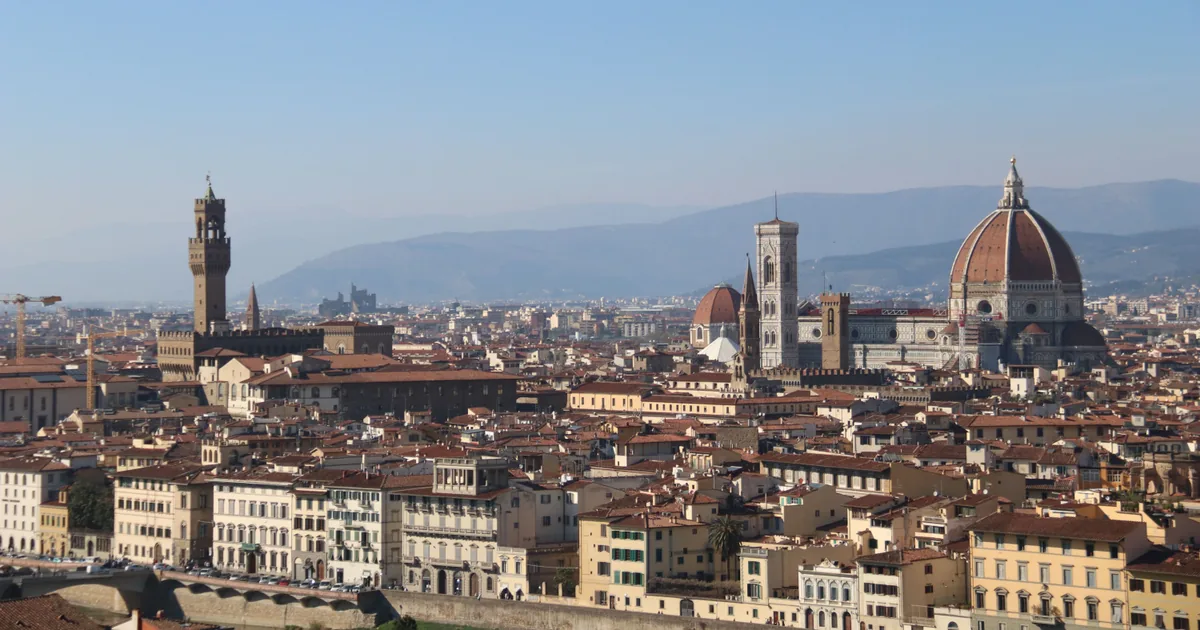
The classic panorama: the whole city, the Duomo, the Arno and its bridges. Every guide sends you here for sunset, which is why there are three hundred people on the wall.
Go at sunrise instead. The light comes from behind you and lands directly on the cathedral facade and the terracotta roofs, which is better than the backlit version, and there will be a handful of runners rather than a crowd.
San Miniato al Monte, five minutes higher
Keep walking uphill from Piazzale Michelangelo and you reach a Romanesque church with a terrace, a cemetery, and a view that is arguably better and reliably emptier. The facade in marble geometry is worth photographing in its own right.
Ponte Vecchio, from Ponte Santa Trinita
You cannot photograph the Ponte Vecchio from the Ponte Vecchio. The frame is from the next bridge downstream, with the shops hanging over the water and the hills behind.
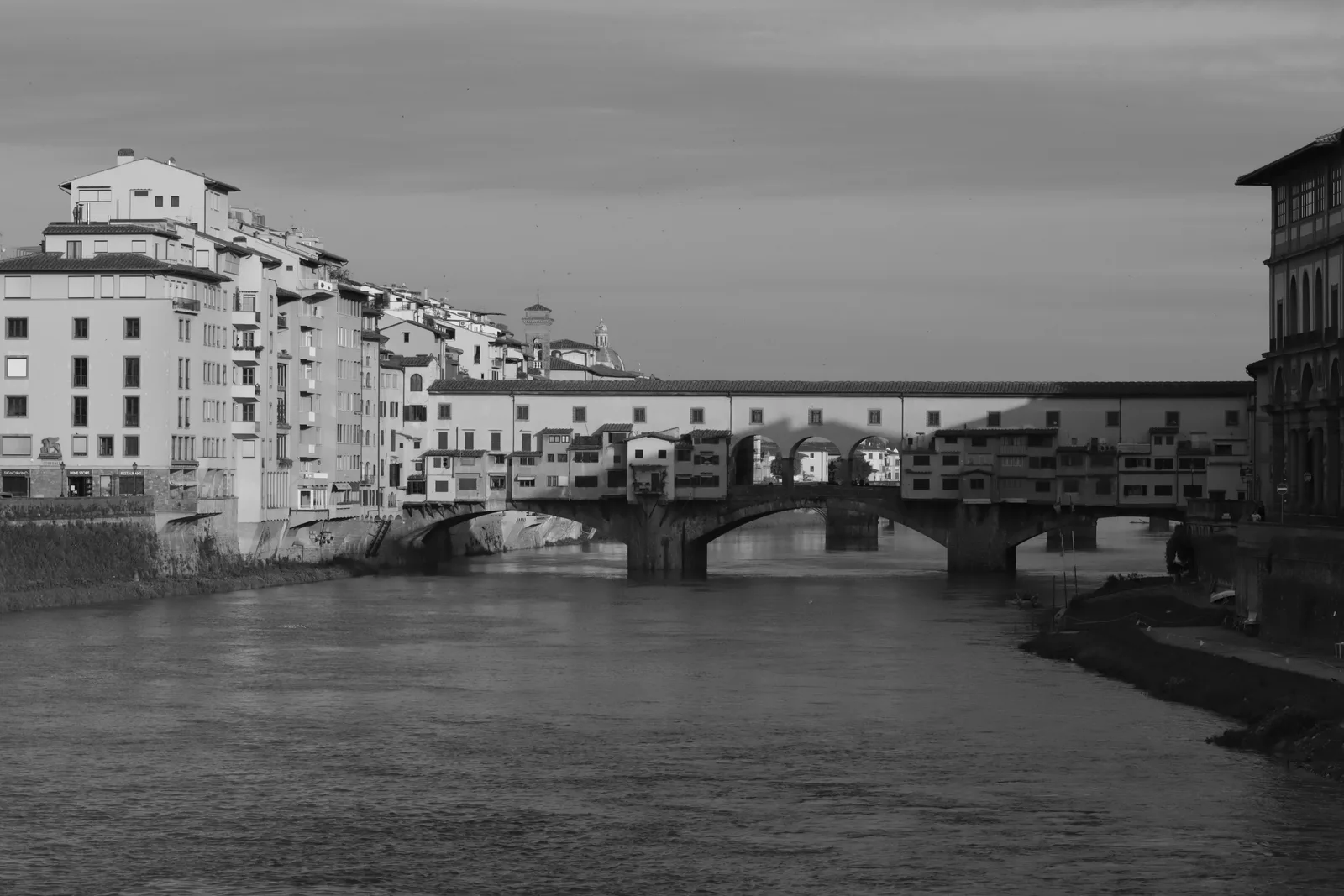
First light, when the river is still and the stone goes gold, or blue hour when the lamps come on. Midday it is flat and full of people.
The Duomo, from above and from the side
The cathedral is too large and too hemmed in to photograph well from the square. Two better options.
From above: the climb up Giotto's bell tower gives you the dome itself at eye level, which is the shot. The dome climb gives you the city but not the dome. Both need tickets booked in advance.
From the side streets: Via dello Studio and Via dei Servi frame the dome at the end of a narrow street, which turns it into a subject rather than a wall.
Piazza della Signoria and the Loggia dei Lanzi
Open-air sculpture under an arched loggia, usable in almost any light because it is covered. The Palazzo Vecchio's tower is the vertical that anchors the square.
Very early morning is the only time the square is quiet.
The Uffizi corridor and the Arno arches
The narrow courtyard of the Uffizi, with its repeated columns and the arch at the end framing the river, is one of the strongest graphic compositions in the city. Shoot straight down the middle at dawn.
Boboli Gardens and Bardini Garden
Formal gardens behind the Pitti Palace: cypress avenues, statues, and terraces looking back over the city. Bardini, smaller and less visited, has a wisteria tunnel that is spectacular for about three weeks in April and lovely the rest of the year.
Both are ticketed and both are far more comfortable than the streets in summer, with shade and space to work.
Oltrarno, all day
Across the river: workshops, artisans, narrow streets, and Piazza Santo Spirito. This is where Florence still feels like a working city rather than an exhibit, and the streets are shaded enough to shoot through the middle of the day.
Best portrait neighbourhood in the city for exactly that reason.
Fiesole, for the wider view
Twenty minutes by bus into the hills. Roman ruins, a small town square, and a view over the whole Arno valley with Florence in the middle of it. The escape route when the centre is unworkable, and the sunset from here is what people imagine when they imagine Tuscany.
Practical notes
Tickets and slots. The dome, the bell tower, the Uffizi, and the Accademia all run timed entry and sell out. Book before you travel.
Tripods are restricted in most museums and inside the cathedral complex, and organised commercial shoots in the historic centre can require authorisation. Handheld work is unproblematic.
Churches ask for covered shoulders and knees, and many prohibit photography inside entirely or ban flash. Check at the door.
Summer is brutal. July and August bring high sun, no shade in the squares, and peak crowds, and the useful photographic day runs from 6am to about 9am. Autumn and winter are far better for photographers: lower sun for longer, fewer people, and the same buildings.
The pattern that works here is simple. Shoot the viewpoints and the river at first light, use the Oltrarno and the covered loggias through the middle of the day when the overhead sun is at its least useful, then go up to Fiesole or back to San Miniato for the evening. Two locations a day and a long lunch is the honest schedule, and picking the hour for each location is what separates a good set of photographs from a hot afternoon in a queue.
The locations on a map
- Piazzale Michelangelo: sunrise, not sunset
- San Miniato al Monte: five minutes higher, reliably emptier
- Ponte Santa Trinita: first light or blue hour, for the Ponte Vecchio
- Giotto’s Campanile: book ahead, the dome at eye level
- Piazza della Signoria: the loggia works in any light
- Uffizi courtyard: dawn, straight down the middle
- Bardini Garden: ticketed, quieter than Boboli
- Piazza Santo Spirito, Oltrarno: shaded streets through the middle of the day
- Fiesole: sunset over the valley, twenty minutes by bus
An hour and a half away by train, Venice is the extreme version of this: a city that is either empty and extraordinary at dawn or a crowd with a canal behind it.