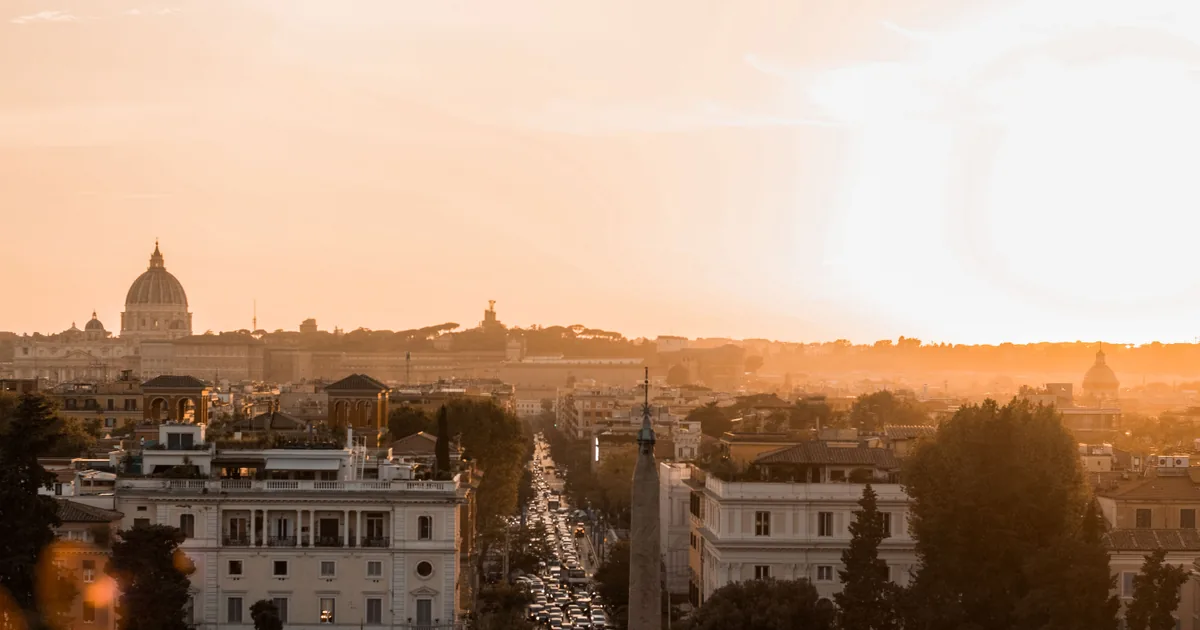
Rome rewards the early riser more than almost any city in Europe. The same piazza that is impossible at eleven is empty and gold at half past six, and the light bouncing off ochre plaster in the first hour of the day is the thing people are actually trying to photograph when they come here.
The list below is ordered so you could walk most of it across two mornings.
Via Piccolomini, for the dome that shrinks
An optical trick worth the taxi. Standing at the top of this street west of the Vatican, St Peter's dome appears enormous at the end of the road. As you drive or walk towards it, the dome appears to get smaller. Almost nobody who is not a photographer knows about it.
A long lens, 100mm or more, exaggerates the effect. Early morning, with the sun behind you.
The Aventine Keyhole, first thing or not at all
The keyhole in the Knights of Malta gate frames St Peter's dome down an avenue of hedges. It is a genuinely lovely image and there is a queue for it from mid morning until evening.
Practical reality: you are shooting through a keyhole, handheld, with people waiting behind you. Tripods are not welcome. Arrive at sunrise, and have your settings decided before you put your eye to it.
Giardino degli Aranci, thirty seconds away
The orange garden on the Aventine, with a terrace looking across the whole city towards St Peter's. Sunset is spectacular and busy. Sunrise is quiet and the light comes from behind you, which is better for portraits anyway.
Gianicolo terrace, for the whole city
The best panorama in Rome, and high enough that the view holds together. Sunset is the obvious slot. Blue hour, twenty minutes later, is the better photograph, when the domes and the streetlights come on and the sky still has colour.
Ponte Sant'Angelo at dawn
Bernini's angels, the castle behind, and the river. This is a sunrise location: by nine there are cars, tour groups, and hawkers. Shoot along the line of statues with a longer lens to stack them, then turn around for the castle wide.
Colosseum from Via Nicola Salvi
The postcard angle without standing in the middle of the traffic. Early morning gives you clean light on the facade and, for a short window in summer, sun coming through the upper arches.
Alternative: the terrace above the Monti steps, or from the Oppian Hill park just across the road, which is where the elevated view comes from.
Trevi Fountain, before 7am
There is no other advice. At any other hour it is a crowd with a fountain somewhere behind it. At six in the morning there might be ten people, and the light comes over the buildings and lights the sculpture directly.
Piazza Navona and the surrounding lanes
The piazza itself is best at first light or after dark. What actually holds up better in photographs is the lattice of small streets around it: Via del Governo Vecchio, the ivy, the workshops, the washing. That is where a portrait session should spend its time.
Trastevere, all morning
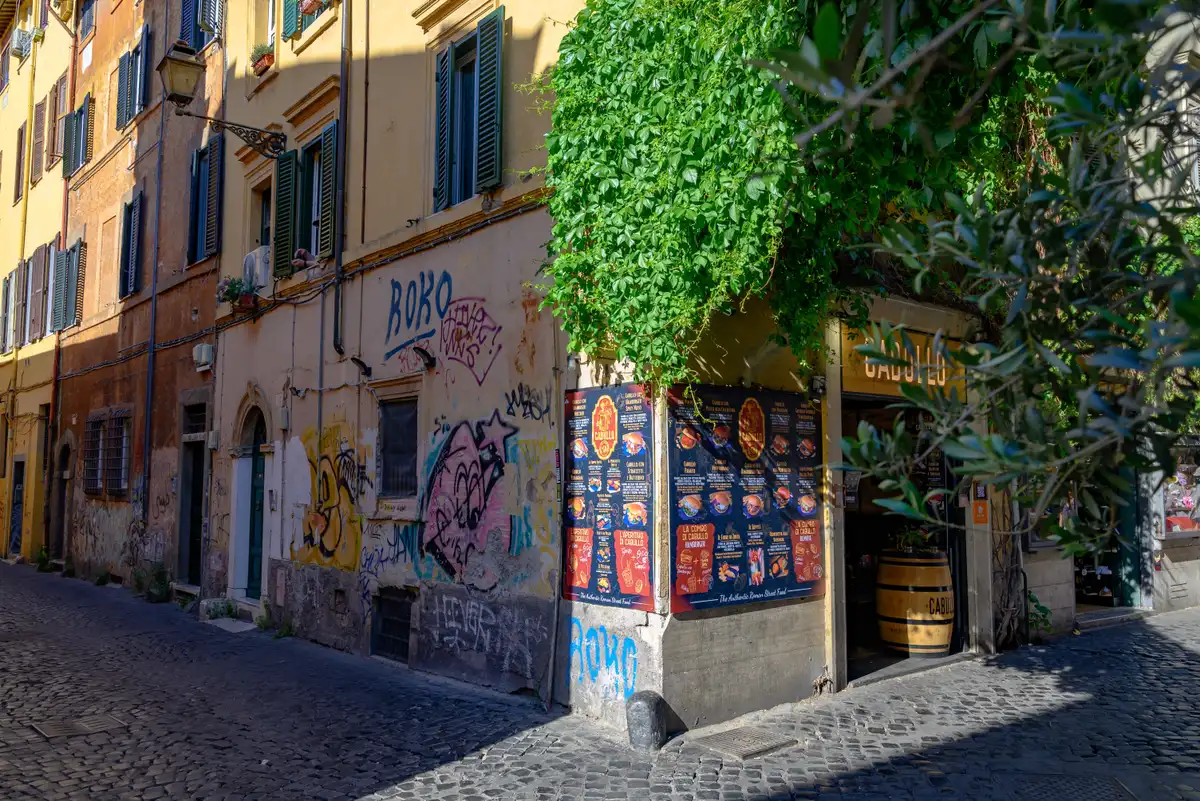
Cobbles, ochre walls, ivy, and small piazzas. The most reliable neighbourhood in the city for portraits because the streets are narrow enough to stay in open shade well into the day, so you are not fighting hard sun.
Piazza di Santa Maria in Trastevere early, then wander. Sunday mornings are the quietest.
Quartiere Coppedè, for something nobody expects
A small district north of the centre, built in the 1920s, part art nouveau, part medieval fantasy, with a frog fountain and an arch covered in ironwork. It looks like nowhere else in Rome and it is almost empty.
Worth the metro ride specifically because your set of Rome photographs will otherwise look like everyone else's.
EUR, for fascist-era geometry
The Palazzo della Civiltà Italiana, the square colosseum, with its repeating arches, plus the wide modernist avenues around it. Strong, graphic, and a completely different register from the historic centre. Good in hard light, which makes it a genuine midday option when everything else has gone flat.
Villa Borghese and the Pincio terrace
Parkland, pines, and a terrace overlooking Piazza del Popolo. The practical choice for a family session: shade, space, toilets, and a view all in one place.
Rules worth knowing before you shoot
Tripods and professional gear draw attention. Handheld cameras are fine almost everywhere. Setting up a tripod inside archaeological sites, the Vatican Museums, and many churches is restricted or prohibited, and monopods are often treated the same way.
Commercial and professional shoots on public land can need authorisation. Rules differ by site and change, and archaeological areas run their own permit systems. If you are shooting a paid session at a monument, check the current requirements with the site rather than relying on a blog post.
Drones are effectively out in the historic centre.
Churches: cover shoulders and knees, no flash, and if a service is happening, put the camera down.
Getting the most out of two mornings
Group the list geographically. The Aventine, keyhole, and orange garden are one walk. Trastevere and the Gianicolo are the next. The centre, from the Colosseum through Navona to Trevi, is a single early loop if you start before seven.
Then stop shooting at ten and go and have breakfast. The light between ten and four in a Roman summer is brutal and the streets are full, and it is better to shoot at the hours that suit the location than to fight it. If midday is all you have, the techniques for harsh overhead sun matter more here than the address you chose.
The locations on a map
- Via Niccolò Piccolomini: long lens, morning, the shrinking dome
- The Aventine Keyhole: sunrise, handheld, no tripod
- Giardino degli Aranci: sunrise beats sunset here
- Gianicolo terrace: blue hour, whole city
- Ponte Sant’Angelo: dawn, before the tour groups
- Colosseum from Via Nicola Salvi: early morning light on the facade
- Trevi Fountain: before 7am or not at all
- Piazza Navona: first light, then the lanes around it
- Piazza di Santa Maria in Trastevere: all morning, open shade
- Quartiere Coppedè: nearly empty, unlike anywhere else
- Palazzo della Civiltà Italiana, EUR: hard light suits it, a real midday option
- Pincio terrace, Villa Borghese: family sessions, shade and a view
North of here, Florence compresses the same problem into a smaller centre, where the viewpoints and the river carry the good light and the squares fill by nine.