Milan is the least obviously photogenic of the major Italian cities and one of the most interesting to photograph, because it is a working city rather than a museum. The material here is modern architecture, industrial conversions, and the specific quality of light that hits pale stone in a northern Italian winter.
Here is where to go, and when.
The Duomo roof, at opening
The cathedral from the square is difficult: too big, too busy, and in shadow for much of the day. The photograph is on the roof, among the spires and flying buttresses, with the city beyond.
Book the first entry slot. By mid-morning the terraces are full and the light is overhead. Early, you get long shadows across the marble and the Madonnina above you with clean sky behind.
From the square itself, shoot the facade in late afternoon when the sun comes round to light it, or at blue hour with the floodlights on.
Galleria Vittorio Emanuele II
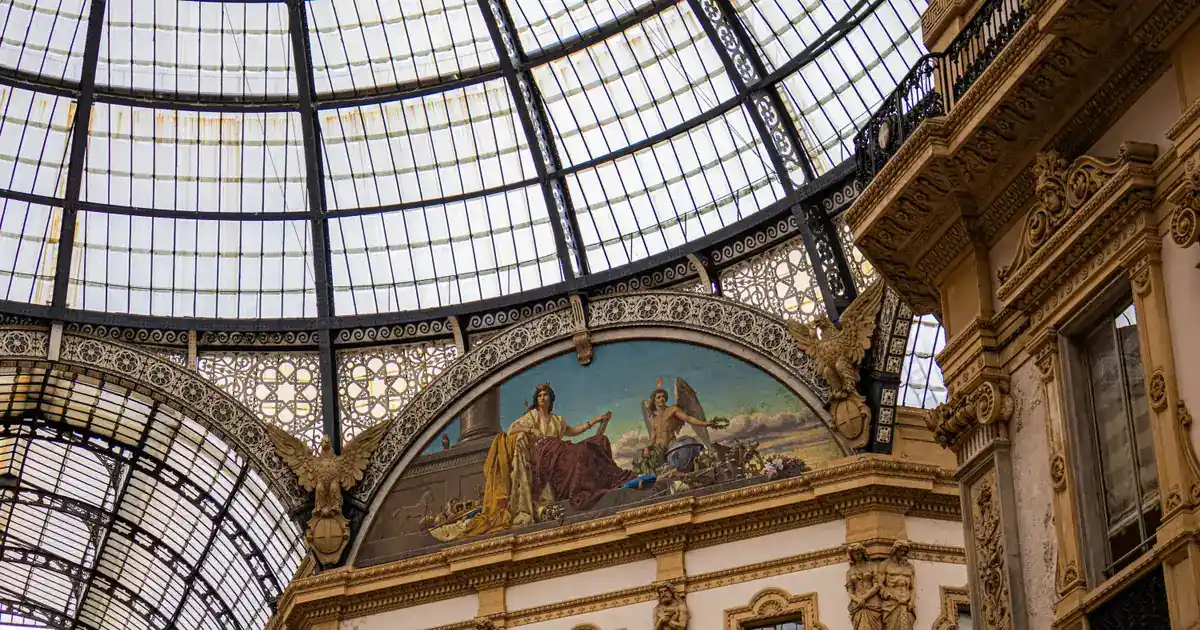
The glass-roofed arcade beside the Duomo: iron, mosaic floors, and a central octagon. Shoot straight up for the dome, or down the length of the arcade with a wide lens.
It is busy from mid-morning to late evening. Sunday at eight in the morning is the quietest it gets, and the light coming through the glass at that hour lands in shafts on the floor.
Bosco Verticale and Porta Nuova
The residential towers covered in trees, and the glass district around them. The best modern architecture photography in Italy, and it works in hard light because the shapes are graphic.
Shoot from the raised walkway in Piazza Gae Aulenti, which also gives you a circular fountain plaza with the towers reflected. Blue hour is excellent here, when the offices light up.
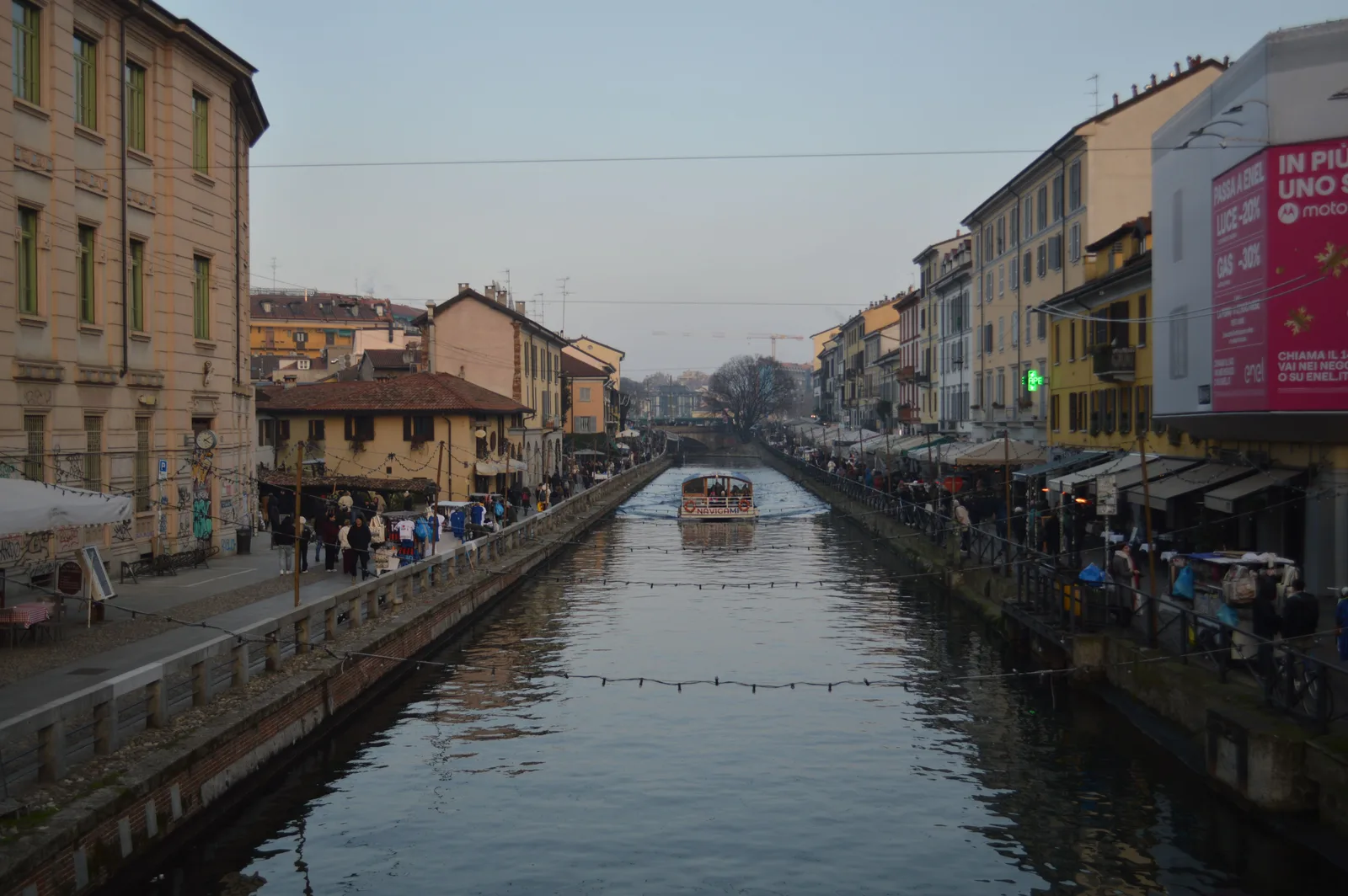
Navigli, at dusk
The canal district in the south of the city: two waterways lined with bars, balconies, and iron footbridges. Sunset and the hour after are when it comes alive, with lights reflecting in the water.
Shoot along the canal rather than across it, so the perspective carries.
Cimitero Monumentale
An enormous nineteenth century cemetery filled with sculpture, mausoleums, and art nouveau memorials, and one of the most extraordinary photographic locations in the city. Free to enter.
Overcast light suits it. Be quiet and respectful, and check the rules on professional equipment before turning up with a tripod.
Fondazione Prada and the Torre
A former distillery converted into a gallery complex by Rem Koolhaas, including a building covered entirely in gold leaf. Sharp modern geometry, unusual colour, and a tower with a rooftop view over the south of the city.
Excellent midday location, because most of the material is either shaded or so graphic that hard light helps.
Sforza Castle and Parco Sempione
The castle's courtyards give you scale and symmetry, and the park behind is the practical choice for a family session: shade, lawns, a fountain, and the Arco della Pace at the far end.
The arch at sunset, shot from the park side, is the frame worth walking for.
Brera, all day
The old artists' quarter: narrow streets, ivy, shuttered facades, and the botanical garden hidden behind the academy. Shaded for much of the day and the best portrait neighbourhood in the centre.
Via Fiori Chiari and the streets around it, early, before the restaurants set out tables.
San Bernardino alle Ossa
A small chapel decorated with human bones, and unlike anything else in the city. Dark, so a fast lens and a high ISO, and photography rules can change, so check at the door and be respectful about it.
Central Station
Monumental fascist-era architecture at enormous scale, with vaulted iron and glass over the platforms. The exterior staircases and the arrivals hall both give you strong graphic frames, and it is one of the few interiors in the city where nobody minds a camera.
The rooftops and the terraces
Milan is flat, so height is rare and valuable. The Duomo terraces, the Torre at Fondazione Prada, and the various rooftop bars around the centre are the options. On a clear winter day after rain, the Alps are visible on the northern horizon, which is the single best reason to shoot this city in January rather than August.
Practical notes
August is closed. A large part of the city shuts for the summer holidays and the centre empties. That is either ideal or useless depending on whether you want streets or street life.
Winter light is the good light. Low sun through the middle of the day, crisp air after rain, and the mountains visible. Summer brings haze, high sun, and heat, which is when the shade and backlight approach stops being optional.
Fashion Week and the design fair transform the city twice a year: full hotels, temporary installations everywhere, and a genuine street photography opportunity.
Commercial shoots at the Duomo complex and inside galleries require permission, and the cathedral roof has rules about tripods. Handheld work in the streets is unproblematic.
Plan around the metro rather than walking, since this city is more spread out than the historic centres of Rome or Florence, and two locations plus a stop for coffee is a full session. Then pick the hour deliberately, because in a modern city the light does even more of the work than it does among old stone.
The locations on a map
- Duomo rooftop terraces: first entry slot
- Galleria Vittorio Emanuele II: Sunday at eight is the quietest
- Piazza Gae Aulenti: blue hour, Bosco Verticale reflected
- Navigli: dusk, shoot along the canal
- Cimitero Monumentale: overcast, free entry
- Fondazione Prada: a genuine midday location
- Arco della Pace, Parco Sempione: sunset from the park side
- Brera: early, before the tables go out
- San Bernardino alle Ossa: dark, fast lens, check the rules
- Milano Centrale: nobody minds a camera
For a different European register entirely, Barcelona pushes the same light problem harder, with high sun from mid-morning and shaded medieval streets as the answer.