Dublin is a low city with big weather, which means the sky does most of the work in any photograph taken here. Learn to include it deliberately and the place photographs beautifully. Ignore it and you get grey.
Here is the list, with what each spot needs.
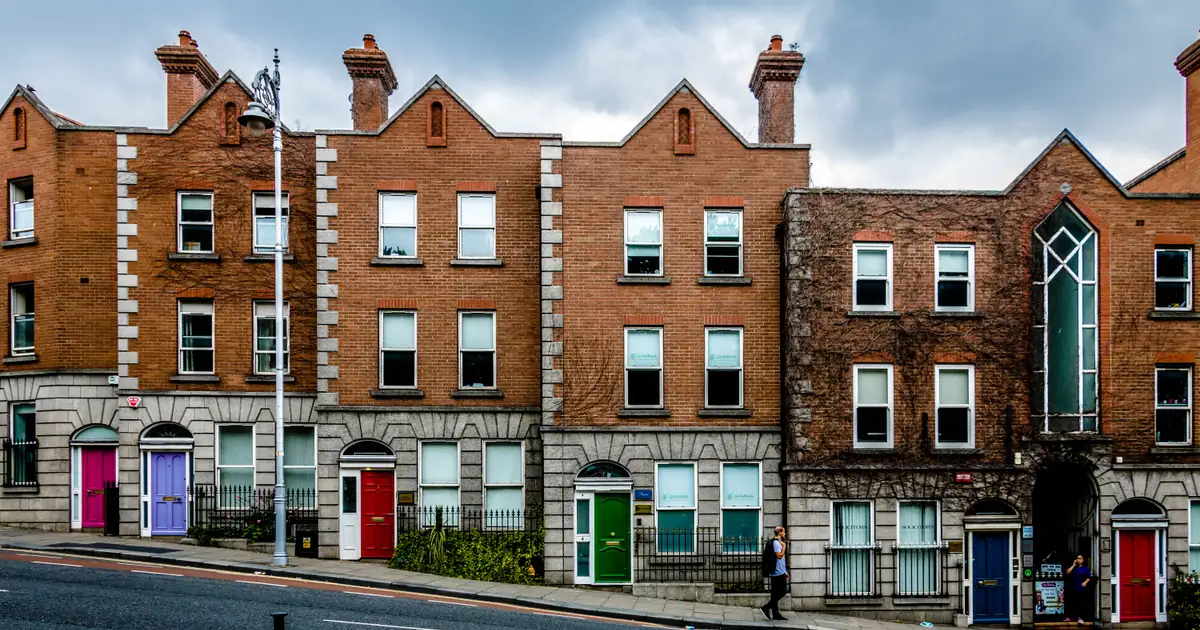
The Georgian doors, on Merrion Square and Fitzwilliam Street
The painted doors with fanlights above them are the visual shorthand for the city, and Merrion Square's south side has the best run of them. Shoot straight on, in flat light, so the colour reads clean and the door is square in the frame.
Overcast is ideal. Direct sun creates reflections in the gloss paint and a hard shadow line from the door case.
Trinity College and the Long Room
The cobbled front square with the campanile is the classic, best early before the tour groups arrive. The Old Library's Long Room, with its barrel ceiling and stacked shelves, is one of the great interiors in Europe.
Photography rules inside vary and the library has been undergoing conservation work in recent years, so check what is currently accessible before you build a visit around it.
Ha'penny Bridge and the Liffey at blue hour
The white cast iron footbridge over the river, lit at dusk. Shoot from the quays on either side with a long enough exposure to smooth the water, or from Millennium Bridge for the curve of the arch against the buildings.
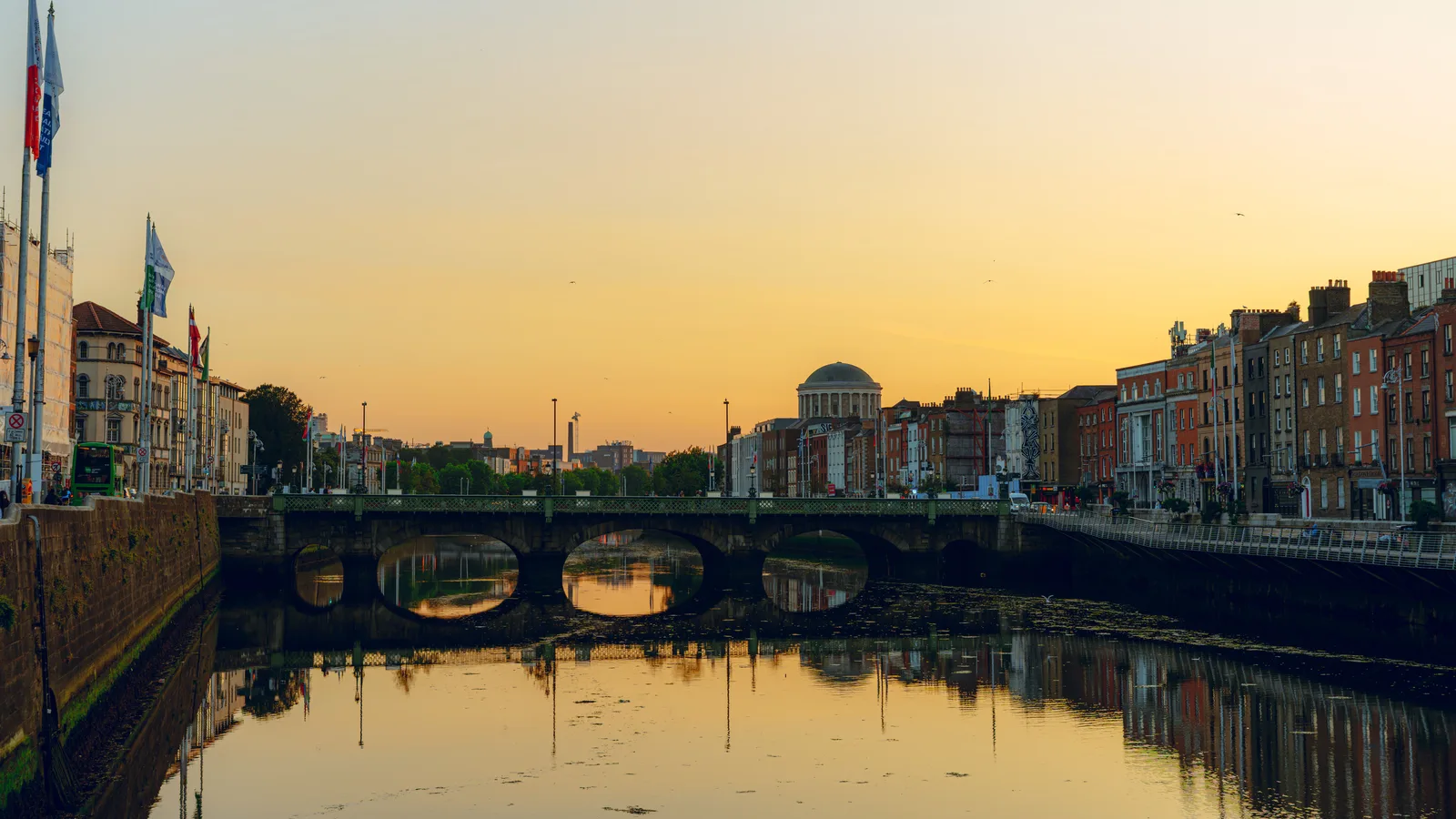
The river runs east to west, so both sunrise and sunset give you light straight down it, which is unusual and useful.
Temple Bar, early morning only
Coloured facades, flower baskets, and cobbles. It is a photograph at 7am and a crowded pub district from lunchtime onward. Go early or accept that the frame will include a stag party.
Grand Canal Dock and the docklands
Modern Dublin: glass buildings, the theatre with its red poles, a marina, and the Samuel Beckett Bridge shaped like a harp. This is the part of the city that photographs well at blue hour, when the offices light up and reflect in the water.
Best contrast to the Georgian material, and worth including for exactly that reason.
St Stephen's Green and Iveagh Gardens
Central parkland with a lake, bridges, and mature trees, and the practical choice for a family session because there is shade, space, and a playground.
Iveagh Gardens behind it is a hidden formal garden with a cascade and far fewer people, which makes it better for portraits.
The Docklands boardwalk and the Jeanie Johnston
The tall ship moored on the north quays and the famine memorial figures nearby. Sombre, distinctive, and best in hard side light or in rain.
Portobello and the Grand Canal locks
Tree-lined canal walk, locks, and swans, running through the south of the city. Golden hour along here is the calmest light Dublin offers, and it is minutes from the centre.
Howth, for cliffs and a harbour
Half an hour on the DART. A working fishing harbour, seals, a lighthouse, and a cliff walk with views back across the bay. Late afternoon light on the west-facing harbour, or early morning on the cliffs.
The best single day trip for a photographer based in the city.
Poolbeg and Sandymount Strand
The red and white striped chimneys and the wooden lighthouse at the end of the Great South Wall, with the whole bay around you. Sandymount Strand at low tide is a vast reflective flat, which is one of the best portrait locations in Ireland at sunset.
Check the tide before you plan a session there, because at high tide there is no beach at all.
Practical notes
The weather changes constantly, and the useful response is to keep shooting. Rain is an advantage in a city like this: wet cobbles, reflections in the Liffey, and the ten minutes of light after a shower are the best conditions available.
Include the sky. Dublin's skies are dramatic in a way its architecture mostly is not. A composition that gives two thirds of the frame to cloud usually beats one that crops it out.
Long summer evenings. In June the light lasts until well after ten at night, which makes late golden hour sessions possible in a way they are not further south, and December gives you the opposite problem, with the sun down by four. Checking the actual times rather than assuming matters more at this latitude than almost anywhere else on the continent.
Commercial shoots in parks and at heritage sites can require permission, and Trinity College has its own rules for professional photography on campus. Handheld work in the streets is unproblematic.
Two locations per session is the honest limit here, and the city is small enough that a Georgian street and a canal walk can be twenty minutes apart on foot.
The locations on a map
- Merrion Square: flat light, Georgian doors
- Trinity College: early, before the tours
- Ha’penny Bridge: blue hour from the quays
- Temple Bar: 7am only
- Grand Canal Dock: blue hour, modern Dublin
- Iveagh Gardens: portraits, hidden and quiet
- Jeanie Johnston tall ship: hard side light or rain
- Portobello, Grand Canal: golden hour along the locks
- Howth Harbour: late afternoon, or cliffs at dawn
- Sandymount Strand: low tide only, check the times
- Poolbeg Lighthouse: the whole bay around you
If you are heading east, London runs on the same short windows, with the added complication that a good share of the best locations sit on privately owned land.