Paris has the opposite problem to most cities. There are too many good locations, they are all photographed constantly, and the difference between a postcard and a photograph is almost entirely about what time you arrive.
Here are the spots worth your morning, with the practical detail that decides whether the shot works.
Trocadéro, at sunrise, for the Eiffel Tower
The view everyone wants, and at 7am in summer you can have it nearly to yourself. By nine there are hundreds of people and a queue for the centre of the terrace.
Shoot from the upper terrace for the full symmetrical view, then walk down toward the fountains for a lower angle with the tower rising behind. A 35mm handles the whole tower with a couple in the frame. A 24mm distorts them at the edges.
Rue de l'Université, for the tower between the buildings
Around number 5, the tower appears at the end of the street framed by Haussmann facades, which turns it into a backdrop rather than a monument. Much more intimate than Trocadéro and far better for portraits.
It is a residential street. Go early, keep the pavement clear, and do not set up a light stand in the road.
Pont Alexandre III, for ornate and golden
Gilded statues, lamp posts, and the Invalides dome behind. Shoot from the steps down on the riverbank for a low angle with the bridge arching overhead, which is the frame that separates it from the standard tourist shot.
Late afternoon light hits the gold. Wedding and engagement shoots cluster here at sunset, so expect company.
Palais Royal, for the striped columns
Daniel Buren's black and white columns in the courtyard, geometric and graphic, and they work in flat light because the pattern carries the image. Good for fashion-leaning portraits.
The gardens behind, with their arcades and clipped trees, are quieter and give you a completely different second location within thirty metres.
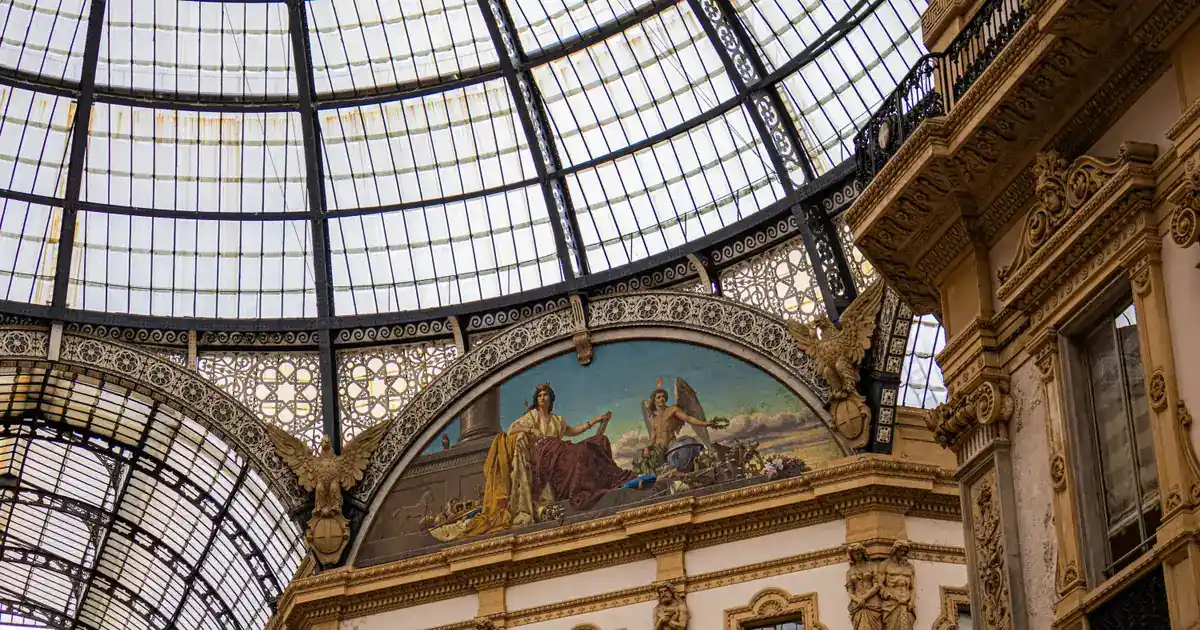
Galerie Vivienne, for a covered mosaic arcade
A nineteenth century passage with mosaic floors and glass roof, useful on a wet day when the outdoor list collapses. It is small and dim, so plan on a wide aperture and a higher ISO than you expect.
Same category, different mood: the other covered passages around the second arrondissement are far less photographed and just as good.
Montmartre and Rue de l'Abreuvoir
The cobbled street with the pink house at the bend is the shot, and it is on every itinerary in the city. Go at sunrise or accept a crowd.
Better idea: shoot the surrounding streets instead. The steps, the ivy, the laundry, and the views down over the rooftops from Rue Saint-Vincent do more for a set of photographs than the one famous corner. Finish at the top of the Sacré Coeur steps just before sunset, looking out over the city.
Rue Crémieux, with a caveat
The pastel terrace that appears in every Paris photo guide. It is also a small residential street whose residents have campaigned for years to stop being an Instagram backdrop, and there are signs asking people to be considerate.
If you go, go quietly, go early, do not shoot a full session with equipment, and leave when asked. There are plenty of other colourful streets in the city that do not involve standing outside somebody's kitchen window.
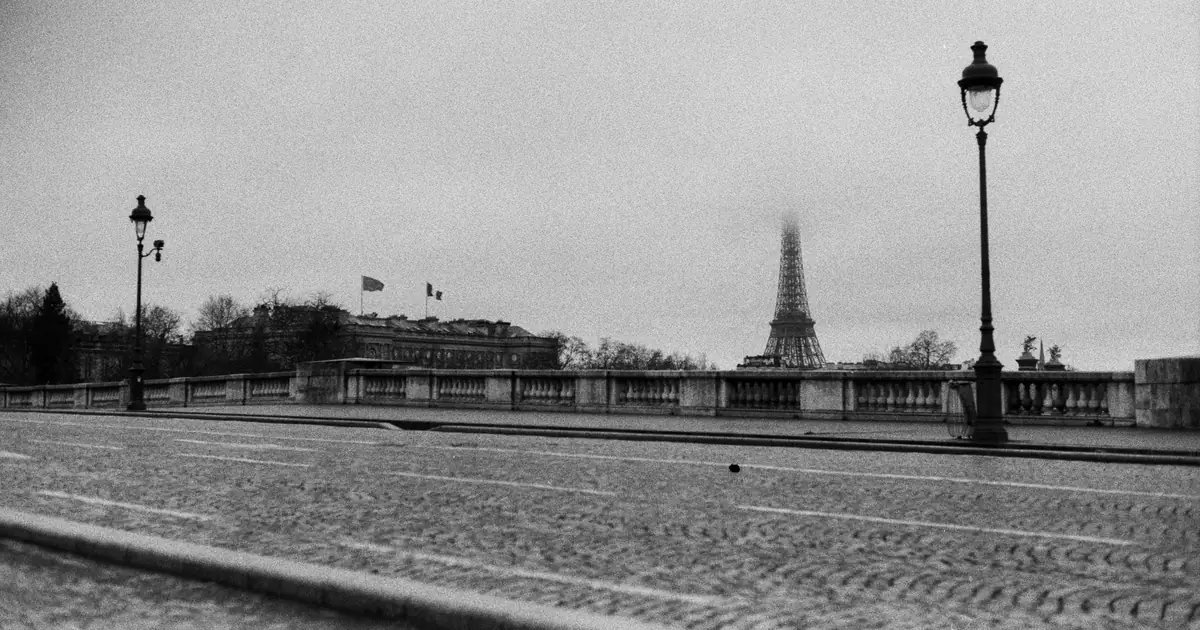
Pont de Bir-Hakeim, for the tower through the ironwork
The two-tier bridge with the metro running above, and the tower framed through the columns. A long lens compresses the repeating arches into a tunnel. Traffic crosses the lower deck, so watch where you stand.
Jardin du Luxembourg, for calm green Paris
Chairs, gravel, the fountain, and space to work without crowding. The most practical family session location in central Paris, because there are toilets, a playground, and shade in the same place, which matters more than aesthetics when someone is four years old.
Île de la Cité and the Seine quays at blue hour
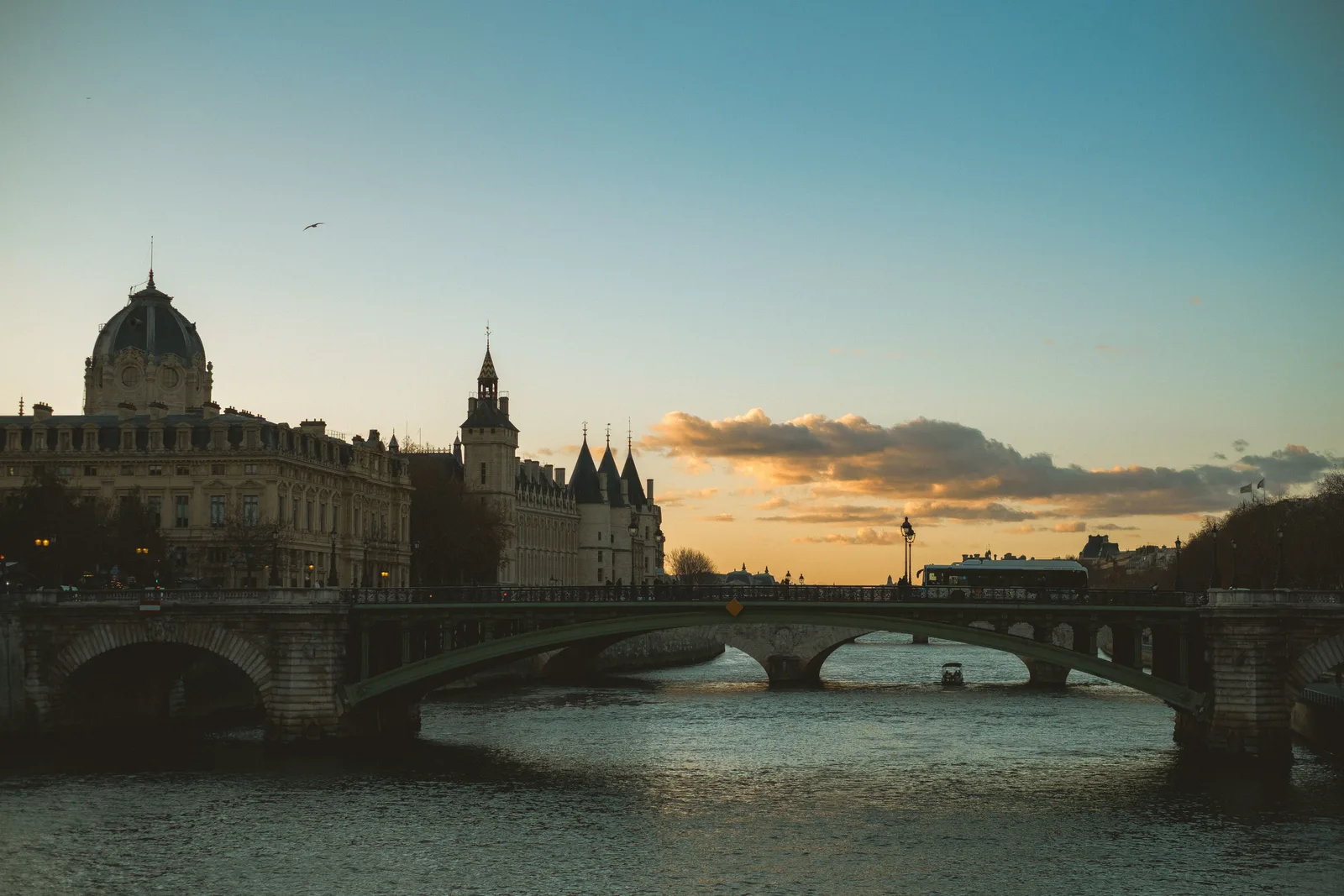
Walk the lower quays between Pont Neuf and Pont Marie about twenty minutes after sunset. The bridge lights come on, the water goes still, and the city stops looking like a monument and starts looking like a place people live.
Musée Rodin gardens, for portraits with room
Sculpture, hedges, gravel paths, and far fewer people than the parks. There is a ticket, and museum grounds have rules about professional shoots, so ask before you turn up with a client and a reflector.
The Eiffel Tower lighting rule
Worth knowing before you sell a photograph: the tower itself is old enough to be free of copyright, so daytime images are unproblematic. The illuminations and the sparkling light display are treated as a protected artistic work, and commercial use of night photographs of the lit tower has historically required permission from the operator.
In practice, nobody is coming after a couple's personal wedding photos. It matters when an image is licensed for advertising or sold as stock. If a client is a business, shoot the tower in daylight or from an angle where the illumination is not the subject.
Practical notes
Street photography in public is legal in France, but publication rights around identifiable people are stricter than in the UK or the US, and consent matters for commercial use. Get a release for anything you intend to license.
Professional shoots on public property with production equipment can require authorisation from the city, and museum and monument grounds have their own rules. Handheld with a camera passes almost everywhere. Tripods, lights, and assistants draw attention.
Plan the day by district rather than by landmark, so the walk between locations is ten minutes rather than a metro ride. And check the light before you commit: the time of day decides more than the address, and half this list changes character completely between sunrise and noon. If you are shooting clients on the trip, agree the meeting point and the plan B for rain in advance, which is exactly what a short pre-shoot confirmation is for.
The locations on a map
- Trocadéro: sunrise, before the terrace fills
- Rue de l’Université: early, residential street
- Pont Alexandre III: late afternoon, shoot from the riverbank steps
- Palais Royal: flat light is fine, the pattern carries it
- Galerie Vivienne: wet days, wide aperture
- Rue de l’Abreuvoir, Montmartre: sunrise or accept the crowd
- Rue Crémieux: quietly, early, no equipment
- Pont de Bir-Hakeim: longer lens, watch the traffic
- Jardin du Luxembourg: family sessions, shade and toilets
- Quais de Seine, Île de la Cité: 20 minutes after sunset
- Musée Rodin gardens: ticketed, ask before a client shoot
If the trip continues south, Rome runs on the same logic: everything worth photographing is walkable, and everything worth photographing is impossible after ten in the morning.