New York is easy to photograph badly. The famous angles are famous, the light disappears behind buildings two hours before actual sunset, and half the good spots are privately owned in ways that only become clear when security walks over.
Here is the list grouped by neighbourhood so you can walk it, with the time each location works.
DUMBO and Brooklyn Bridge Park
Washington Street at Water Street is the shot: the Manhattan Bridge framed between brick warehouses, with the Empire State Building visible through the arch if you stand in the right spot. Sunrise, absolutely. By ten it is a queue in the middle of a live road, and cars do come through.
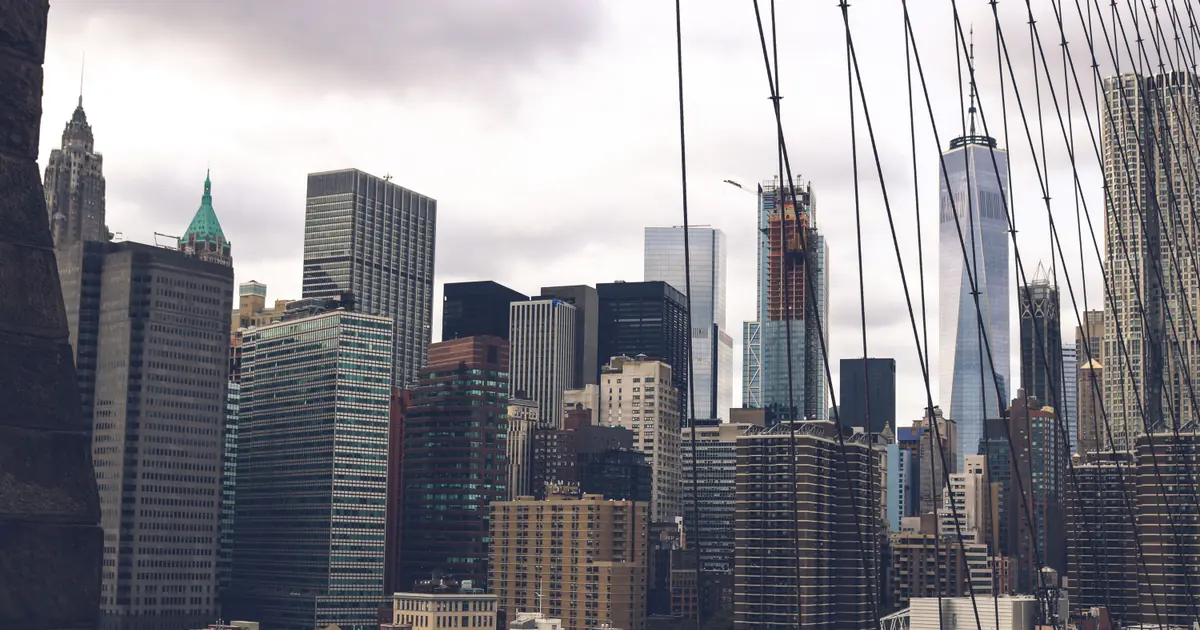
Pebble Beach and the Main Street pier give you the Brooklyn Bridge with lower Manhattan behind. Best at blue hour when the buildings light up and the water goes calm.
Jane's Carousel photographs well after dark from outside, glowing in its glass box against the skyline.
One walk, best done between 6am and 8am, and it is the single most productive hour in the city.
Brooklyn Heights Promenade
Ten minutes from DUMBO, elevated, with an uninterrupted view of the financial district across the water. Better for portraits than the waterfront because the railing gives you a clean line and the crowds are thinner.
Sunset here puts the light behind Manhattan, so expose for the sky and let the skyline go graphic, or shoot the people with the city as a soft backdrop.
The High Line and the Meatpacking District
Elevated park, industrial architecture, planting, and views down the avenues. The section around the Standard Hotel gives you a road running underneath the building, which is a strong graphic frame.
Go early. It is narrow, it gets extremely busy, and there are rules about tripods and organised shoots.
Nearby: the cobbled streets of the Meatpacking District, and the Vessel and Edge area at Hudson Yards for hard modern geometry.
Gantry Plaza State Park, Long Island City
The best skyline view in the city, and by some distance the least crowded. The whole of midtown across the East River, the Pepsi-Cola sign in the foreground, and space to work.
Sunset, then stay for blue hour. A 24-70mm covers everything, and a longer lens compresses the buildings into a wall of light.
Central Park, in four spots
- Bow Bridge, cast iron over the lake, best in the first hour of light or in autumn colour.
- Bethesda Terrace, the arcade underneath with the tiled ceiling, which is even light all day and works in rain.
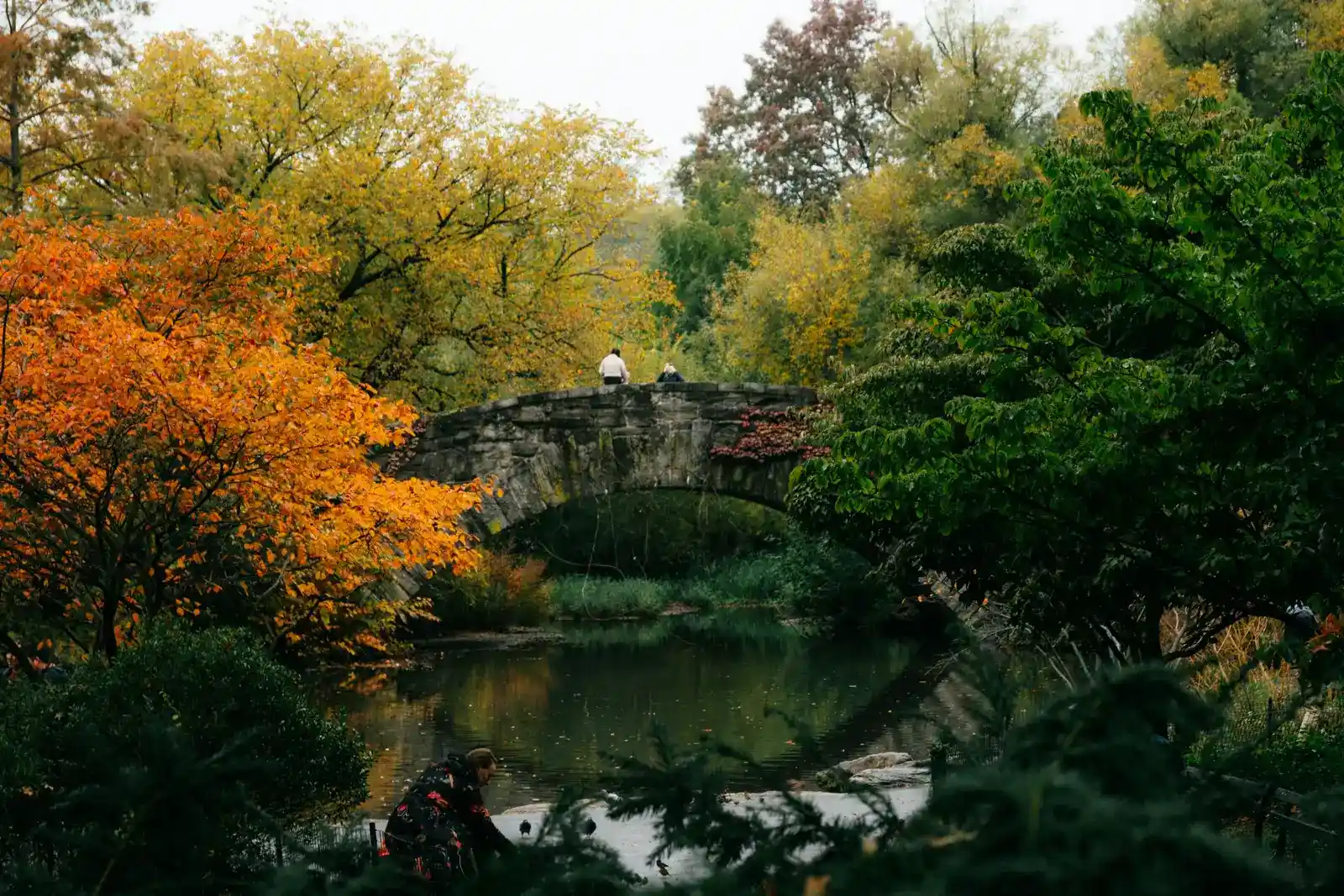
- Gapstow Bridge, small, stone, with midtown rising behind it.
- The Mall, the avenue of elms, at its best in late October or under snow.
Central Park requires permits for commercial shoots with equipment. A handheld portrait session generally passes without comment. A crew, lighting, and a large group does not.
Grand Central Terminal
The main concourse with light coming through the arched windows, best in the morning when the shafts land on the floor. The balcony gives you the elevated angle over the whole hall.
Rules matter here: handheld photography is fine, tripods and professional shoots require permission from the terminal, and the same applies across the subway system, where tripods and flash are not permitted.
Chinatown and the Lower East Side
Doyers Street, a curved lane with painted murals, is the best-known frame. Around it, fire escapes, neon signs, produce stalls, and steam. This is the part of the city that most rewards a walk with a 35mm rather than a list of addresses.
Overcast days suit it, because the narrow streets are in shadow anyway.
The Oculus and the Financial District
The white ribbed interior of the transit hub is dramatic and symmetrical, best around midday when light pours through the spine. Outside, Wall Street's narrow canyons give you strong verticals, and Stone Street is a rare cobbled corner.
Note that this is private property with active security. Handheld yes, tripods and shoots no, without arrangement.
Roosevelt Island and the tram
The tram ride itself gives you a moving elevated view over the East River for the price of a fare, and the island's southern point has the Manhattan skyline from an angle almost nobody shoots.
Williamsburg waterfront and Domino Park
Sunset over Manhattan with the Williamsburg Bridge to one side. Domino Park's elevated walkway gives height, and the surrounding streets have the murals and warehouse walls that suit fashion and portrait work.
Times Square, honestly
Only worth it as a deliberate long exposure with people blurring, or at 5am when it is nearly empty and the signs are still on. Otherwise it photographs as chaos.
The rules that actually catch people out
Public sidewalks and parks: handheld photography, including of people, is legal, and you do not need a permit to take pictures.
Tripods: allowed on most sidewalks if you do not obstruct pedestrian flow, but not in the subway, and restricted in many parks and privately owned plazas.
Commercial shoots: if there is a crew, lighting, or props, the city's film and media office runs the permit process, and the parks department has its own for park locations. A photographer with one camera and a couple is treated very differently from a shoot that looks like production.
Privately owned public spaces: a great deal of midtown plaza space is private. Security can ask you to stop, and they will.
Planning a day that works
The city runs north to south, so light comes down the cross streets rather than the avenues, and the good windows are short. Shoot Brooklyn at sunrise for Manhattan skyline light, then move into Manhattan for the middle of the day where shade and interiors do the work, then finish in Long Island City or Williamsburg for sunset back across the water.
Two locations per session, not five. Getting between neighbourhoods eats more time than anyone plans for, and the hour you choose matters more than the location. If you are shooting a paid session here, confirm the meeting point, the subway stop, and the wet weather alternative in writing beforehand, which is what a proper pre-shoot confirmation covers.
The locations on a map
- Washington Street, DUMBO: sunrise, and cars do come through
- Brooklyn Bridge Park: blue hour from the piers
- Brooklyn Heights Promenade: sunset, cleaner than the waterfront
- The High Line: early, tripod rules apply
- Gantry Plaza State Park: sunset then blue hour, least crowded
- Bow Bridge, Central Park: first hour of light
- Bethesda Terrace: even light all day, works in rain
- Gapstow Bridge: midtown rising behind
- Grand Central Terminal: morning light shafts, handheld only
- Doyers Street, Chinatown: overcast, 35mm and a walk
- The Oculus: midday, private property rules
- Roosevelt Island Tramway: elevated view for a fare
- Domino Park, Williamsburg: sunset over Manhattan
For the European version of this problem, London has the same private-land trap and an even shorter winter day.