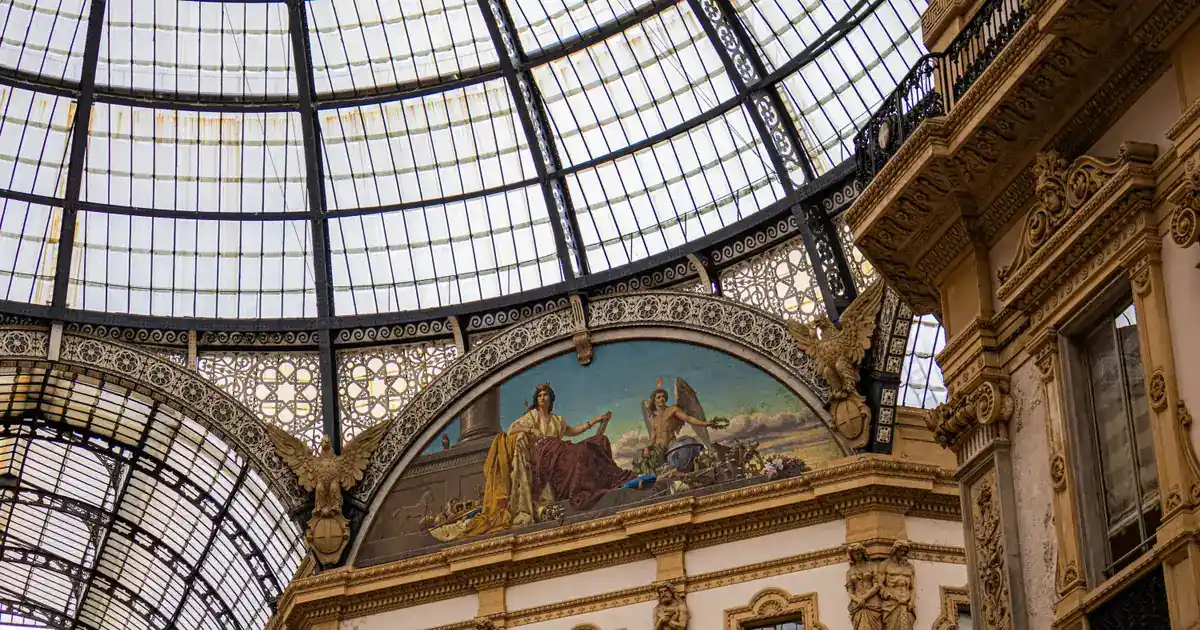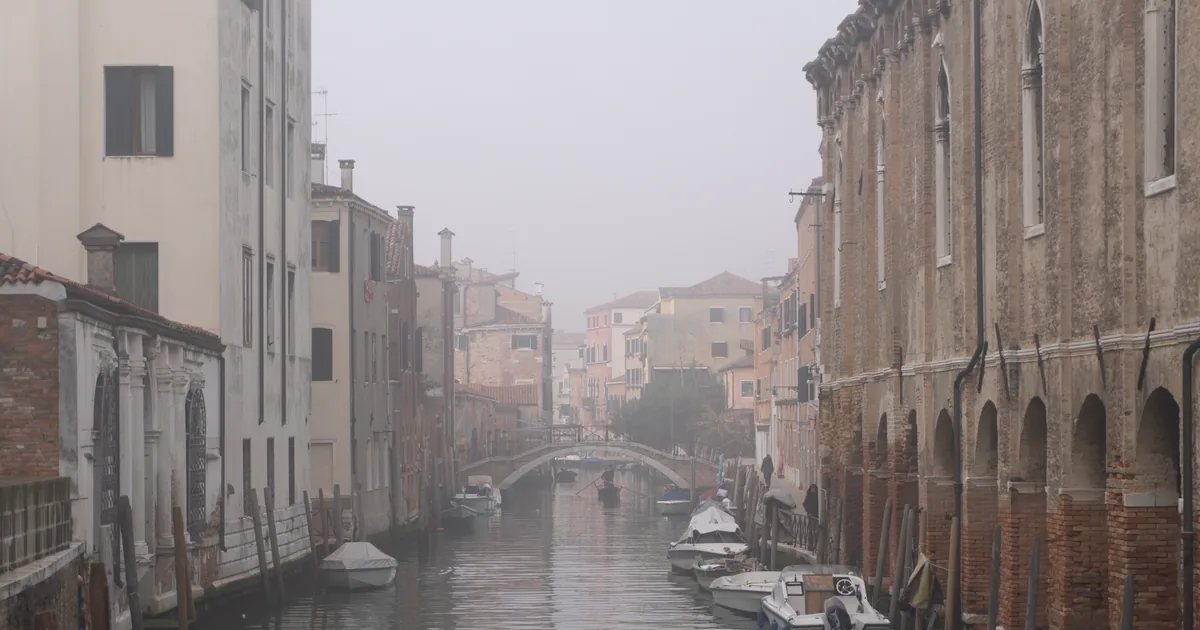
Venice is the clearest example in Europe of a city where the hour beats the location. The same alley that is impassable at midday is silent and misted at six in the morning, and every photograph worth having here is taken before the first vaporetto crowds arrive or after the day trippers have left.
Plan around that and the rest is straightforward.
Piazza San Marco, at dawn
The square empties overnight and fills by nine. At sunrise you get the arcades, the wet stone, and reflections in the acqua alta if the tide is high, with almost nobody in frame.
Shoot the colonnade repeating along the Procuratie, the basilica facade from the far corner, and the view out between the two columns towards San Giorgio Maggiore.
San Giorgio Maggiore, for the view back
Take the vaporetto across and climb the campanile. It gives you the best view in Venice, looking back at San Marco and the whole city laid out, and it is far less crowded than the more famous tower in the square.
Late afternoon light hits the city facade from this angle.
The Rialto Bridge, from the water side
The bridge itself is a scrum. The photograph is from the Riva del Vin below, or from the Fondamenta on the opposite bank, looking along the Grand Canal with the bridge as the frame.
Blue hour, when the lights come on and the water goes still, is when this location works.
Punta della Dogana and the Salute
The point where the Grand Canal meets the Giudecca, with the domed church behind. Sunrise puts light on the facade of the Salute, and the wooden mooring posts in the water give you foreground for a long exposure.
Libreria Acqua Alta, for the odd one
A bookshop with a gondola full of books inside and a staircase built from ruined volumes in the courtyard. Small, dark, and impossible to shoot without other people in it, but visually unlike anywhere else.
Go on opening. A wide lens and a high ISO.
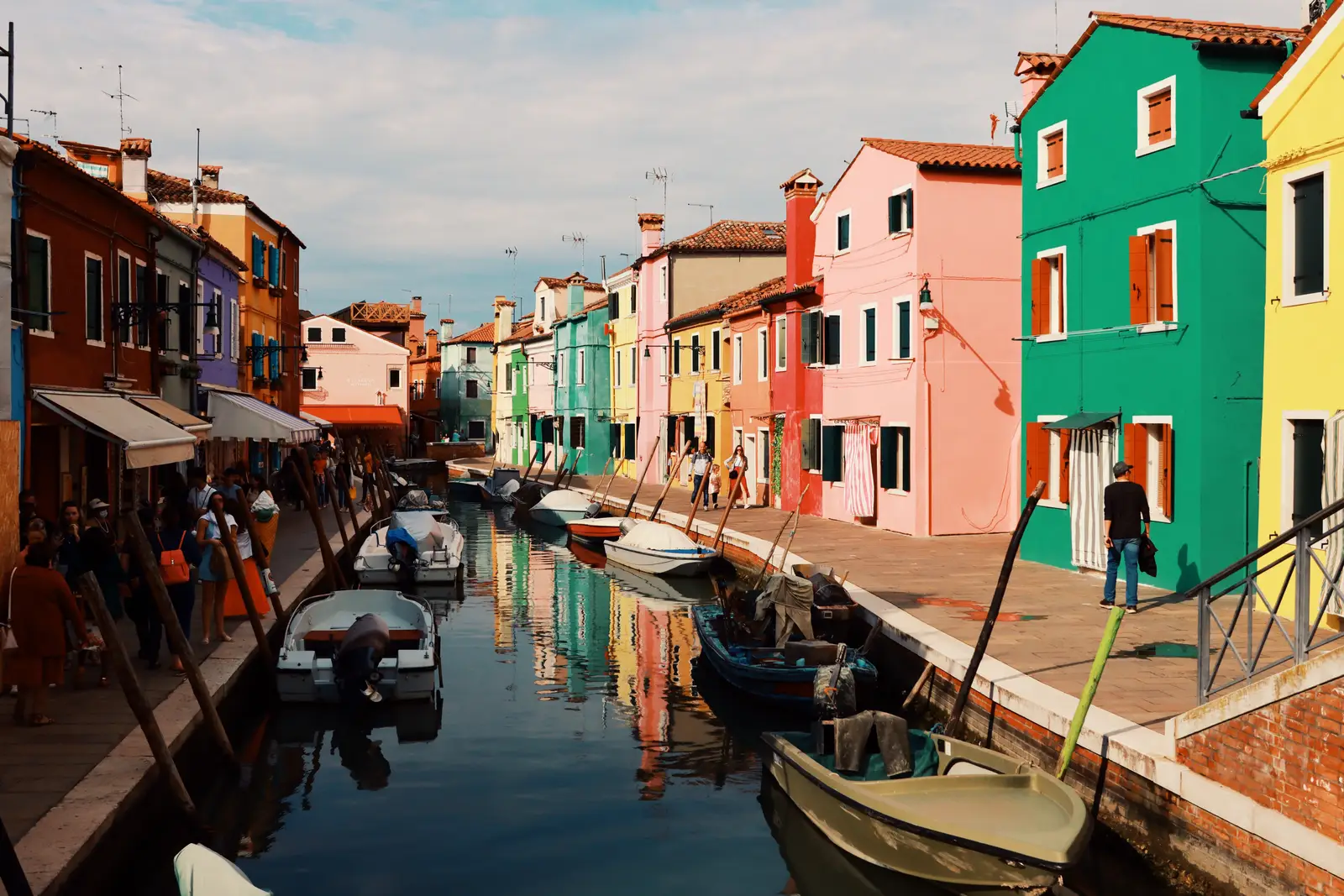
Burano, all morning
Coloured houses, canals, laundry, and a leaning tower. It takes about forty minutes by boat from Fondamente Nove and it is worth a full morning.
Overcast days suit it better than sun, because the colours are already saturated and hard light pushes them past believable. The far end of the island, away from the main square, is where the good frames are.
Bridges without crowds, in Cannaregio and Dorsoduro
The two districts where people live rather than visit. Washing lines, moored boats, and a canal at the end of most streets. This is where to spend the middle of the day when San Marco is impossible.
Fondamenta della Misericordia and the streets around Campo Santa Margherita are good starting points.
Gondola workshops and the boatyards
Squero di San Trovaso is the best known: a working yard where gondolas are repaired, visible from across a small canal. Photograph it from the far bank, and respect that it is a business rather than an attraction.
The Bridge of Sighs, from Ponte della Paglia
The famous view. Get there before eight or accept a hundred people. The alternative angle from the water, on a vaporetto, is a better photograph anyway.
Zattere at sunset
A long southern-facing promenade along the Giudecca canal, with space to work and the sun going down over the water. The most practical location in the city for a couple's session: wide enough for a photographer to move, and open enough for real light.
Practical notes
Tripods are restricted in Piazza San Marco and in most churches, and organised photo shoots in the square require authorisation from the city. Handheld photography is unproblematic almost everywhere.
Commercial and wedding shoots on public land in Venice have been subject to permits and fees, and rules change. Anyone shooting a paid couple's session in the city centre should check the current requirements rather than assume, since enforcement in the main squares is real.
Acqua alta floods low areas in autumn and winter, mostly around San Marco. Reflections in a flooded square are the best photographs Venice offers, and rubber boots and a plastic bag for the camera are the entry fee.
Drones are effectively prohibited over the historic centre.
The light is short in the alleys. Most of Venice is in shadow for the majority of the day, which is why the water and the open squares carry the good frames. Plan for reflected light rather than direct light, and shoot the interiors and narrow streets when the sun is high, since matching the location to the hour is the whole game in a city this dense.
Two more things. Get lost deliberately, because the photographs here are in the streets nobody has a reason to walk down. And stay overnight if you possibly can: the day trippers leave at five, the city empties, and for a few hours in the evening you have one of the most photographed places on earth largely to yourself.
The locations on a map
- Piazza San Marco: dawn, and acqua alta if you are lucky
- San Giorgio Maggiore campanile: late afternoon, the best view in the city
- Riva del Vin, Rialto: blue hour along the Grand Canal
- Punta della Dogana: sunrise on the Salute
- Libreria Acqua Alta: on opening, wide lens, high ISO
- Burano: a full morning, better overcast
- Fondamenta della Misericordia: midday, where people actually live
- Squero di San Trovaso: from the far bank, it is a workplace
- Ponte della Paglia: before eight for the Bridge of Sighs
- Zattere: sunset, room to work
On the mainland, Milan is the opposite kind of Italian city: modern, working, and best photographed in winter when the air is clear and the Alps show up on the horizon.
For a European city with no historic core to point a camera at and far more space to work in, Berlin is the opposite proposition.