Lisbon is a city of viewpoints and tiles, and both are best in the first two hours of the day. The light here is famously clean, low humidity and a river throwing it back up at the buildings, and it turns pale limestone gold in a way that no other European capital quite matches.
Here is where to be, and when.
Miradouro da Senhora do Monte, at sunrise
The highest viewpoint in the city, looking over the whole of Alfama with the castle to the left and the river beyond. Sunrise puts the light directly onto the rooftops from behind you.
It is quiet early and packed at sunset. If you only get one viewpoint, make it this one, and go before seven.
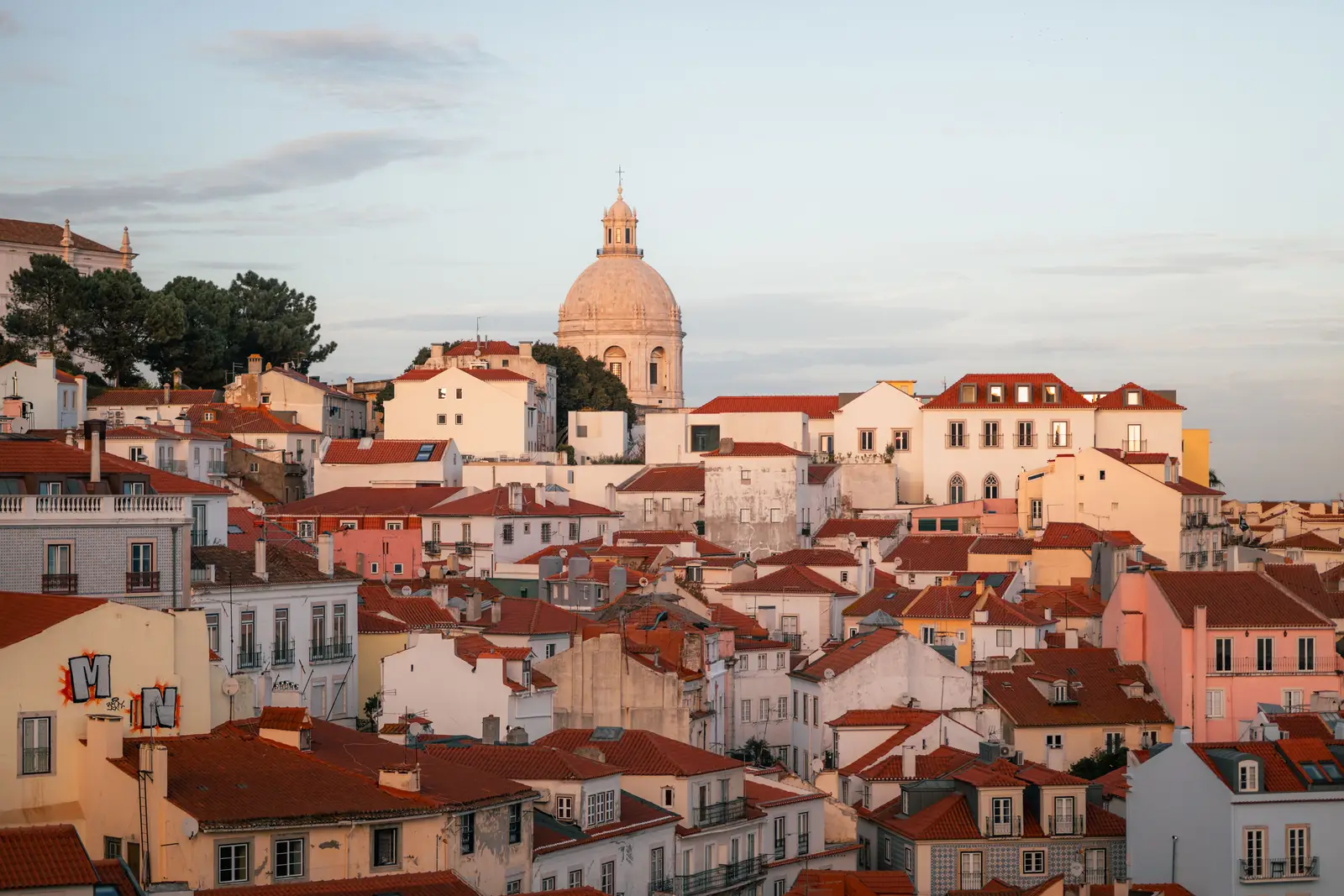
Miradouro das Portas do Sol, for the postcard Alfama
Terracotta rooftops tumbling down to the water, with the dome of São Vicente de Fora on the left. The classic Lisbon frame.
Morning light is best, and the terrace has space to work. Just below, the steps down into Alfama give you narrow lanes, washing lines, and tiled facades within a two minute walk.
Alfama's lanes, all morning
The old quarter's streets are too narrow for the sun to reach, which makes them usable for hours after the viewpoints have gone harsh. Tiled doorways, stone steps, cats, and laundry.
Best approach: pick a direction downhill and stop looking at the map. A 35mm handles the width of these streets. Anything longer and you are shooting fragments.
The 28 tram, without the wait
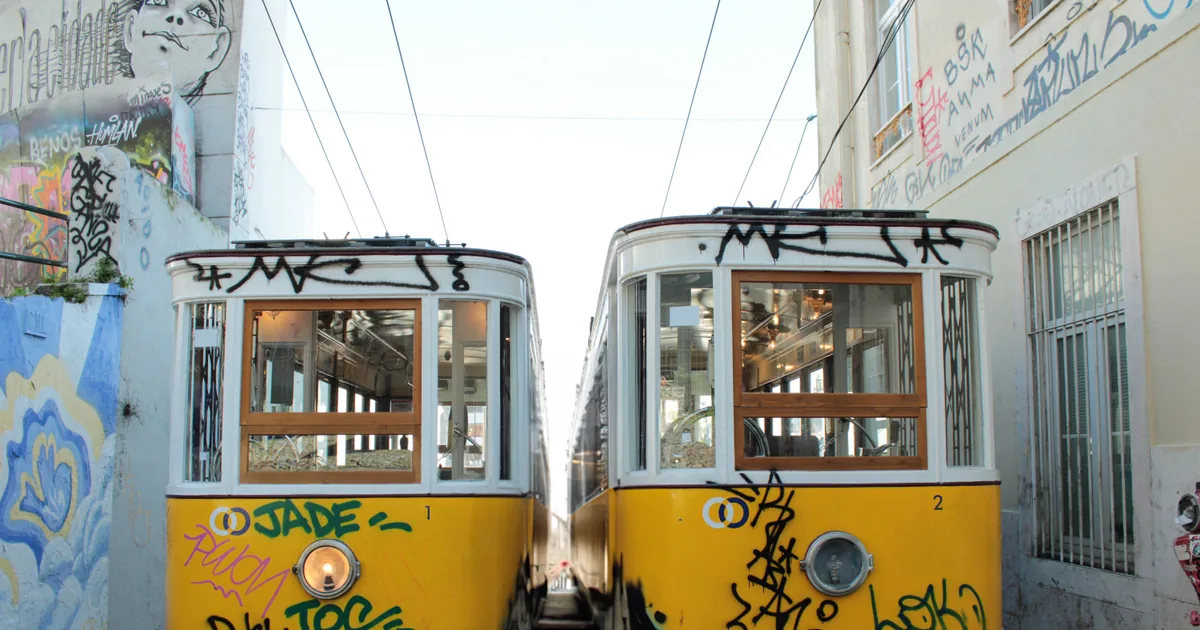
The famous yellow tram, and the photograph everyone wants is it climbing a narrow street. Two practical spots: the curve on Rua das Escolas Gerais in Alfama, and the stretch below the Santa Luzia viewpoint.
Trams come every few minutes in the morning, so you do not need to wait long if you are there before eight. Stand where you can see it approach for a decent distance, pre-focus on where it will be, and shoot as it fills the frame. In the middle of the day the tram is full, there is a queue of tourists in every frame, and the street is busy with cars.
Praça do Comércio and the riverfront
A vast open square opening onto the Tagus, with the triumphal arch on one side. It works at both ends of the day: sunrise for empty space and low light coming up the river, and blue hour for the arch lit against a dark sky.
Walk east along the river for the Ribeira das Naus steps down to the water, which is the best place in central Lisbon to shoot people with the river behind them.
Rua Augusta arch, from below
The arch itself photographs well shot straight up from beneath, and the terrace on top gives you a view down the length of the street and across the square. A small ticket, rarely busy.
Elevador de Santa Justa and the Carmo ruins
The wrought iron lift is the shot from below, looking up through the structure. Skip the queue to ride it and walk up through Carmo instead, where the roofless convent ruins give you gothic arches open to the sky. Midday actually works there because the light falls in through the missing roof.
LX Factory and Alcântara
Industrial buildings under the bridge turned into shops and studios: murals, graffiti, iron staircases, and the underside of the Ponte 25 de Abril overhead. The best location in the city for anything with an editorial or fashion angle, and it stays interesting in flat light.
Belém, early or not at all
The tower, the monastery, and the Padrão dos Descobrimentos. All three are heavily visited from mid morning, so this is a sunrise trip. The tower at low tide with reflections in the wet sand is the frame worth getting up for.
Parque Eduardo VII and the Estufa Fria
The formal park gives you a long symmetrical view down to the river, best in late afternoon. The greenhouse next to it, a shaded garden under slats, is one of the better portrait locations in the city on a hot day, with soft striped light and plants everywhere.
Pink Street and Cais do Sodré
A short painted street that photographs brightly and reads as fun in the morning, when the bars are closed and it is empty. At night it is a nightlife strip, which is a different photograph and a different kind of evening.
Practical notes
The hills are real. Plan a route that goes downhill, and expect any session involving heels or small children to move slower than you think. Two locations per session, not four.
Tiles need flat light. Azulejo facades photograph best in open shade or on an overcast day, since direct sun blows out the glaze and kills the colour.
Trams and tuk-tuks appear in every frame. Wait ten seconds. There is a rhythm to it and the gap always comes.
Commercial shoots at monuments have their own rules, and organised sessions in busy areas can attract attention. A handheld camera and a couple is fine essentially everywhere on this list.
The pattern here is the same as every city worth photographing: the locations are public knowledge and the hour is the differentiator, which is why choosing the time of day deliberately is worth more than any list of addresses. Shoot the viewpoints and Belém at sunrise, work the shaded lanes through the middle of the day, and finish on the river.
The locations on a map
- Miradouro da Senhora do Monte: sunrise, before seven
- Miradouro das Portas do Sol: morning, the classic Alfama frame
- Alfama: all morning, streets stay in shade
- Rua das Escolas Gerais: tram 28, before eight
- Praça do Comércio: sunrise and blue hour
- Rua Augusta Arch: shoot up from below, small ticket for the terrace
- Convento do Carmo: midday works, roofless
- LX Factory: flat light, editorial and fashion
- Belém Tower: sunrise, low tide for reflections
- Estufa Fria, Parque Eduardo VII: shaded, striped light, hot days
- Pink Street: morning, when the bars are shut
Further north, Amsterdam turns the weather into the advantage, where wet cobbles and low cloud produce better photographs than a blue sky ever does.