Vienna is compact, ornate, and organised, which makes it one of the easiest European cities to photograph well in two days. Almost everything is inside or just outside the Ringstraße, the public transport runs on time, and the architecture rewards a long lens as much as a wide one.
Here is the list, with what each location needs.
Schönbrunn and the Gloriette, at sunrise
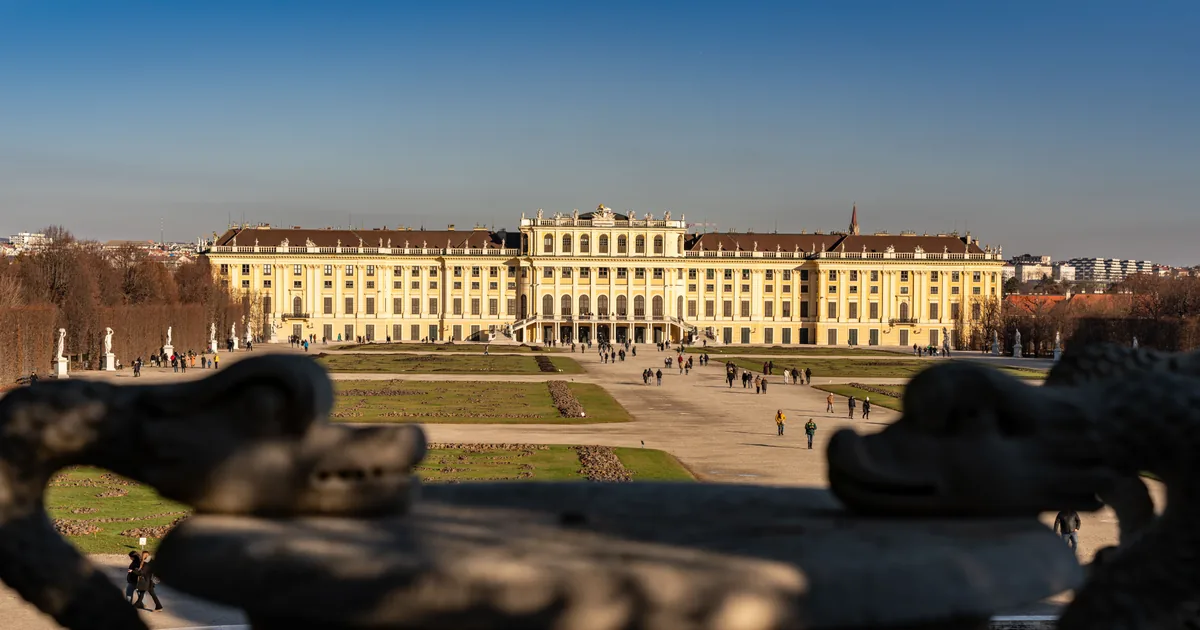
The palace gardens open early and are free to walk. Climb to the Gloriette on the hill behind and you get the whole palace laid out below with the city beyond, in low light and with almost nobody in it.
By ten the terrace is full. The formal parterre gardens below photograph best from the palace steps with a longer lens to compress the pattern.
Belvedere, for the reflecting pool
The Upper Belvedere across its ornamental pond, mirrored on a still morning, is the cleanest palace photograph in the city. Go early, before wind ruffles the water.
The gardens between the two palaces give you symmetry, hedges, and sphinxes for portraits.
Karlskirche and its pool
A baroque church with two enormous columns and a dome, with a modern reflecting pool in front of it. Blue hour, when the facade is lit and the water is dark, is when this works.
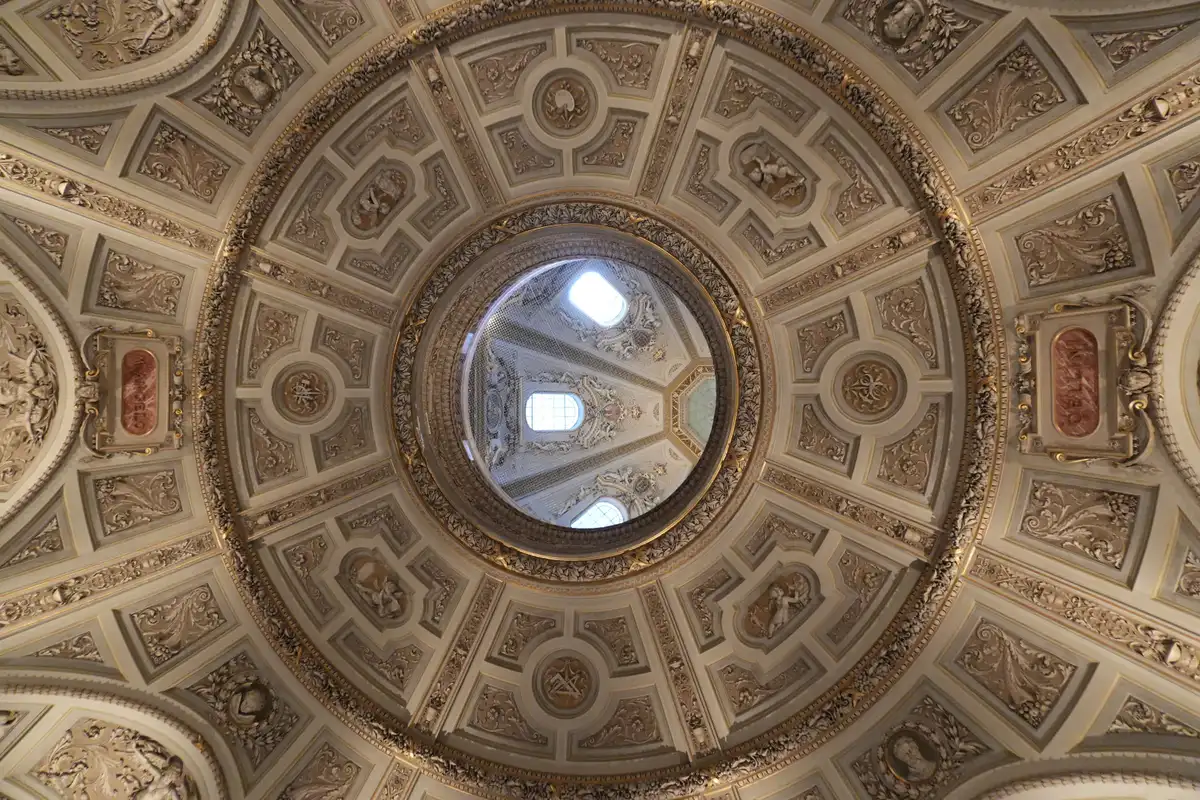
The Austrian National Library State Hall
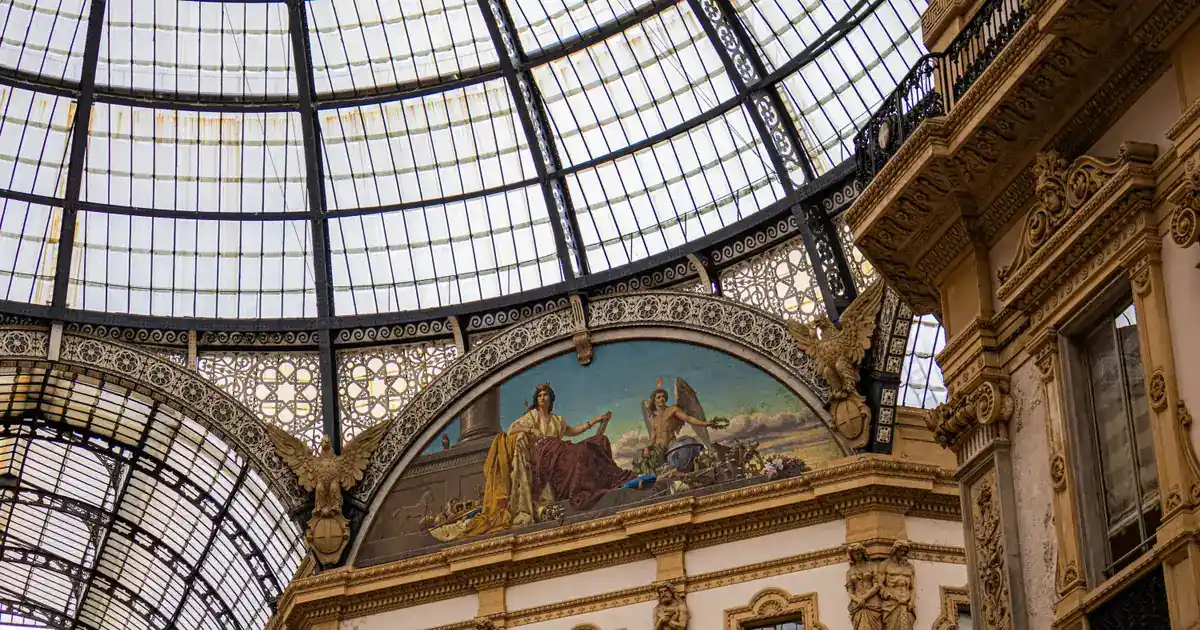
A baroque library interior with wooden galleries, globes, and frescoes, and one of the great photographic interiors in Europe. Ticketed, dim, and worth a fast lens. Check the current rules on tripods, which are usually not permitted.
The Hofburg and Michaelerplatz
The palace complex and its domed entrance. The curved facade on Michaelerplatz photographs best in late afternoon, and there are Roman excavations in the middle of the square for a foreground.
Naschmarkt and the Otto Wagner buildings
The market for colour and people, and immediately beside it two art nouveau apartment buildings, the Majolikahaus with its floral tiled facade and its gilded neighbour. Shoot the facades flat-on from across the road with a longer lens.
Stephansplatz and the cathedral roof
The cathedral is too big and too close for a wide shot from the square. The photograph is the patterned tiled roof, best from the Haas Haus opposite, whose curved glass gives you a reflection of the whole cathedral.
Prater and the Riesenrad
The old ferris wheel, best at blue hour when it is lit, shot from the plaza below with a wide lens. The park behind, the Hauptallee, is a long tree-lined avenue that suits portraits in autumn.
Donauturm and the Danube
For a wide city view. Alternatively, the modern bank of the Danube gives you a skyline that contradicts everything else in the city, which is useful for variety.
Zentralfriedhof and the Jugendstil chapel
An enormous cemetery with a domed art nouveau church at its centre. Quiet, atmospheric, and best in mist or under bare trees.
Where to actually shoot a client session
The palaces are for the city set. For a portrait or couple session, three locations do more work and involve less negotiation with security.
The Belvedere gardens, between the two palaces, give you hedges, gravel paths, symmetry, and open shade for most of the day. The Prater's Hauptallee is a long avenue of trees that turns gold in autumn and stays walkable in any weather. And the Volksgarten, with its rose beds and colonnades, is central, free, and quiet enough to work in without an audience.
All three have the thing that decides whether a session is pleasant: somewhere to sit, a toilet, and a coffee within five minutes. That matters more to how the photographs turn out than the architecture does, because a client who is comfortable for the full hour gives you the last twenty minutes rather than enduring them.
Practical notes
Tripods are restricted inside almost every palace, museum, and church here, and photography is sometimes prohibited entirely in ticketed interiors. Ask at the entrance.
Commercial shoots in the palace gardens and at ticketed sites require authorisation, and this is enforced at Schönbrunn.
The Ringstraße trams are a cheap way to scout: ride the loop once and note where the light lands, then walk back to the two or three spots that worked.
Winter and shoulder season are better. Low sun through the middle of the day does far more for baroque stone than a high summer noon, and the hour you choose still decides more than the address.
The locations on a map
- Schönbrunn Gloriette: sunrise, free entry to the gardens
- Upper Belvedere: early, for the still reflection
- Karlskirche: blue hour
- Austrian National Library State Hall: ticketed, fast lens
- Michaelerplatz: late afternoon
- Majolikahaus, Naschmarkt: flat-on, longer lens
- Haas Haus, Stephansplatz: cathedral reflection
- Wiener Riesenrad, Prater: blue hour
- Donauturm: wide city view
- Zentralfriedhof: mist, bare trees
North of here the register changes completely: Copenhagen trades baroque for colour and water, and its light lasts far longer at both ends of a summer day.