Berlin does not photograph like other European capitals. There is no pretty historic core to point a camera at, and the city is enormous and low. What it has instead is space, concrete, colour, and a lot of visible history, which suits a photographer far better than another cathedral square would.
Here is where to go, and when.
Oberbaumbrücke, at blue hour
The double-decker brick bridge between Kreuzberg and Friedrichshain, with the U1 running across the top of it. Shoot from the riverbank on the Kreuzberg side just after sunset, when the arches are lit and the sky still has colour, and time the frame for a train crossing.
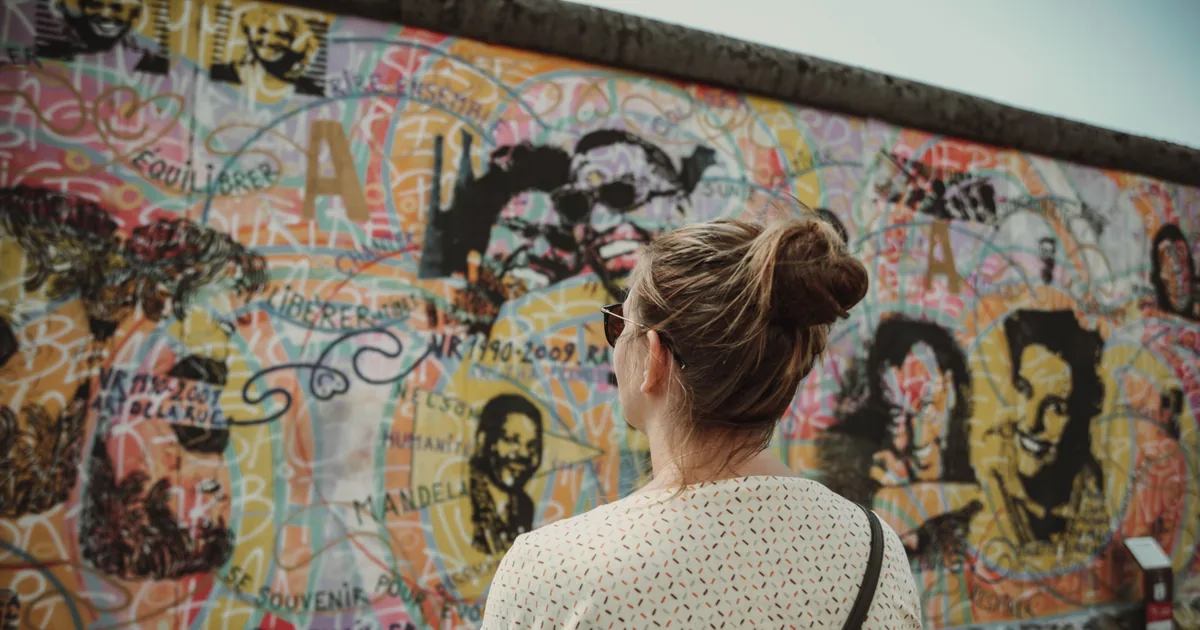
East Side Gallery, early
The longest surviving stretch of the Wall, painted end to end. It is a photograph at seven in the morning and a queue by ten. The murals face roughly north, so light is even for most of the day, which makes it one of the few places here where flat weather helps.
Brandenburger Tor and Pariser Platz
Impossible to photograph originally and worth ten minutes anyway. The better version is at night with the gate lit and the square almost empty, or from the Tiergarten side looking through the columns.
The Reichstag dome
Free with an advance booking, and the spiral ramp inside is the photograph, not the view. Glass, mirrors, and repeating curves. Book a slot at dusk and you get the interior lit plus the city outside.
Alexanderplatz and the TV tower reflections
The tower itself is best photographed reflected: in the glass of the surrounding buildings, in puddles, or framed at the end of a street. From Rosa-Luxemburg-Platz and along Karl-Marx-Allee you get it rising above wide socialist-era avenues, which is the most Berlin composition available.
Karl-Marx-Allee, for scale
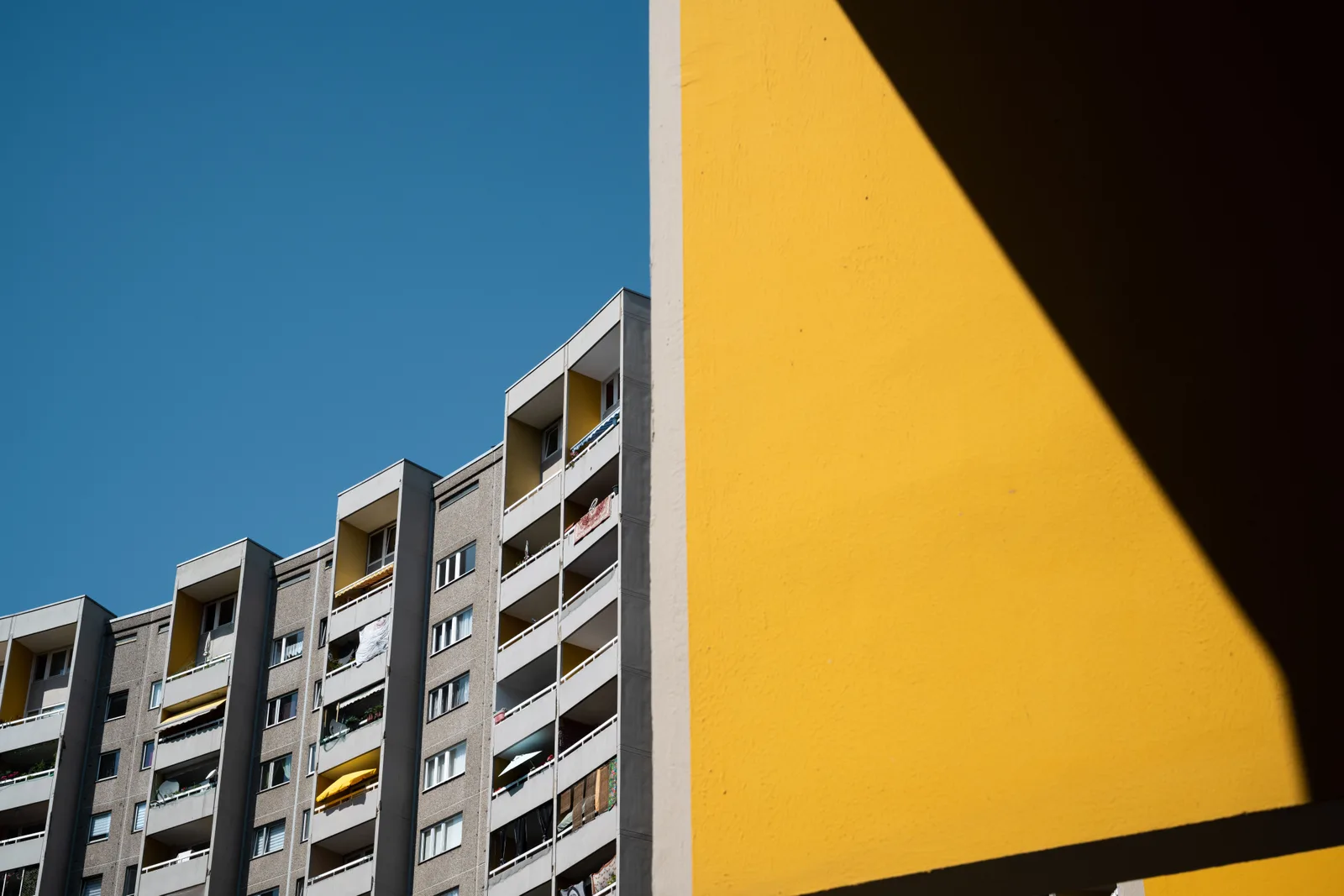
A two kilometre boulevard of monumental 1950s apartment blocks, with towers at Frankfurter Tor. Enormous, symmetrical, and almost empty of people, which makes it a strong location for fashion and editorial work.
Hackesche Höfe and the courtyards
A connected series of art nouveau courtyards off Rosenthaler Straße, tiled and decorated, and one of the few genuinely ornate spaces in the city. Nearby, the graffiti-covered Haus Schwarzenberg courtyard is the opposite register and works in the same afternoon.
Tempelhofer Feld, at sunset
A decommissioned airport turned into a public park, with runways you can walk down and an uninterrupted flat horizon, which is rare anywhere in a city. Enormous skies, long shadows, and space to work without anyone near you. The best portrait location in Berlin.
Museum Island and the Spree
The colonnades of the Alte Nationalgalerie and the Berliner Dom across the water. Sunrise for clean light on the dome, blue hour from the bridges for the reflection.
Teufelsberg and the abandoned edges
A former listening station on an artificial hill in the Grunewald, covered in graffiti, with geodesic domes and long views. Entry is ticketed and access arrangements change, so check before travelling. It is the most distinctive location on this list and the one that dates a set of photographs least.
Practical notes
Photography in public is legal, but Germany's rules about publishing identifiable people are stricter than in the UK or the US, and consent matters particularly for commercial use. Get a release for anything you will license.
Commercial shoots at ticketed sites and inside the Reichstag need permission, and tripods are restricted in most museum interiors.
The city is huge. Two locations per session, and check the S-Bahn rather than assuming a walk. Kreuzberg to Charlottenburg is not a stroll.
Winter is grim and useful. Low flat light, bare trees, and grey concrete suit the subject matter better than summer sun does, and picking the hour deliberately matters less here than picking the weather.
The locations on a map
- Oberbaumbrücke: blue hour, from the Kreuzberg bank
- East Side Gallery: before 8am
- Brandenburger Tor: after dark
- Reichstag dome: book ahead, dusk slot
- Alexanderplatz: reflections, any time
- Karl-Marx-Allee: morning, for the symmetry
- Hackesche Höfe: midday, courtyard shade
- Tempelhofer Feld: sunset, portraits
- Museum Island: sunrise and blue hour
- Teufelsberg: check access before travelling
For a completely different European register, Vienna is Berlin's opposite: ornate, compact, and best photographed in the hour after the palaces open.