Toronto photographs better than its reputation suggests, provided you get off the main streets. Downtown is glass and scale, which is fine but generic. The material that makes a Toronto set look like Toronto is on the islands, in the alleys, and along the lake.
Here is where to go, and when.
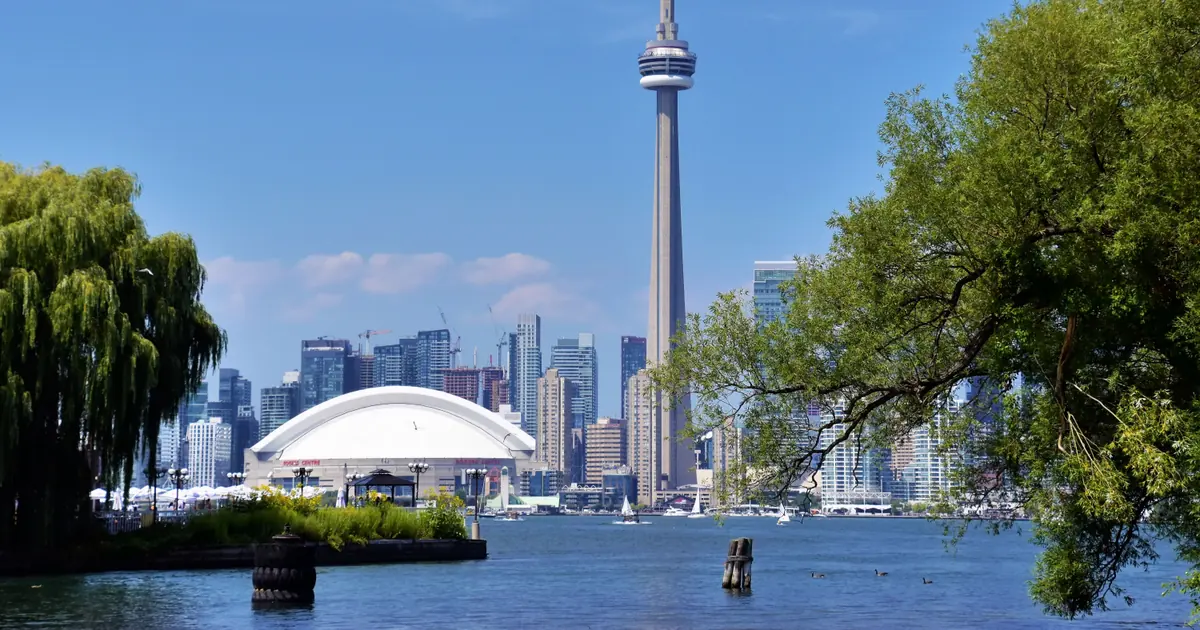
Toronto Islands, for the skyline
The ferry across to Ward's Island or Centre Island gives you the full downtown skyline across the water, with beach and trees in the foreground. This is the view, and it is worth the crossing.
Sunset lights the towers from the west; blue hour turns them into a wall of glass and light. Check the last ferry time before you settle in for the blue hour, which is the mistake everyone makes once.
Polson Pier and the Portlands
The other skyline angle, reachable without a boat, looking back across the harbour from the east. Empty, industrial, and good for portraits with the city behind.
Graffiti Alley, off Queen West
A long painted laneway running behind Queen Street, repainted constantly. Saturated colour, usable in flat grey light, and the most reliable portrait location in the city when the weather is doing nothing helpful.
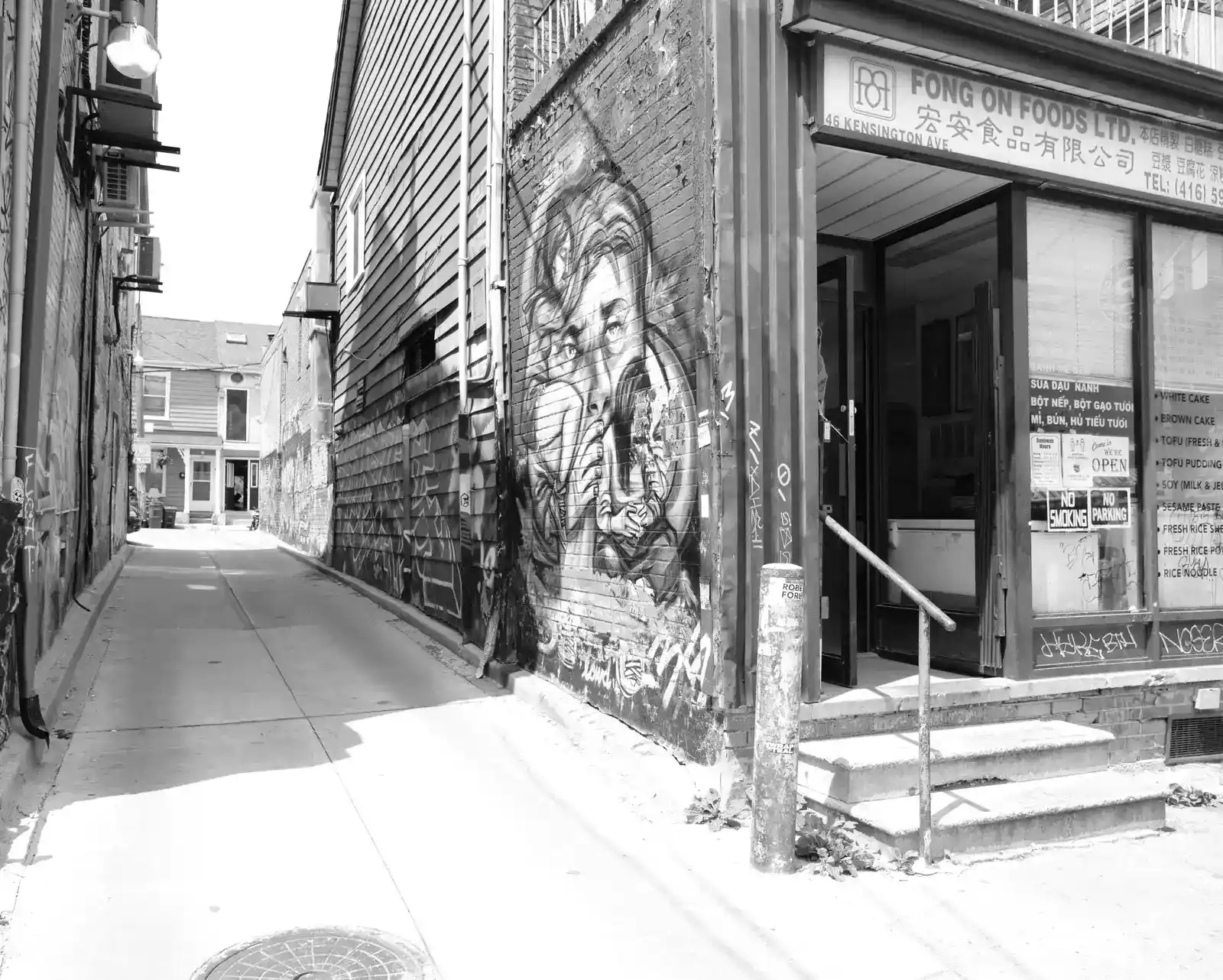
Go early on a weekend morning, since it doubles as a service lane.
Distillery District
Victorian industrial brick, cobbles, and iron, kept pedestrian. It is the closest thing downtown has to an old European quarter, and it photographs well in overcast light. Busy in December for the Christmas market and quiet most other mornings.
Nathan Phillips Square and City Hall
Two curved towers around a low dome, with a reflecting pool below. Strong geometry, and the elevated walkway around the square gives you the whole composition from above. Blue hour with the sign lit is the obvious frame.
The Royal Ontario Museum crystal
The angular glass and aluminium addition crashing into the original stone building. It is divisive architecture and an excellent photographic subject, especially lit at night from Bloor Street.
Scarborough Bluffs
Half an hour east: white cliffs dropping into Lake Ontario, with a park at the bottom and beaches. It looks nothing like the rest of the city and it is the best outdoor portrait location in the area.
Sunrise, over the water. Take the stairs seriously and check access before you go.
The Beaches and the boardwalk
East end lakefront, with a long wooden boardwalk, lifeguard stations, and mature trees. The practical family session location: parking, toilets, shade, and water.
Kensington Market
Painted houses, produce stalls, and layered signage. Best on a weekend morning for colour and life. Handheld, 35mm, and no plan.
The PATH and the financial district canyons
Downtown's glass towers reflecting each other, best in hard afternoon light when the reflections are strongest. The corner around Bay and Wellington gives you mirrored abstractions with a longer lens.
Practical notes
Public streets are fine for handheld photography. City parks, the islands, and the Distillery District all have their own rules for commercial shoots, and permits are required for anything with equipment and a crew.
Winter is long and the light is low, which is good for photographs and hard on hands. The lake produces snow and grey skies in equal measure.
Summer humidity produces haze, which softens the skyline from the islands. The clearest skyline days are usually in autumn and after a cold front.
Everything is further than it looks on a map. Two locations per session, and check the streetcar rather than planning to walk between neighbourhoods, which is the same discipline that choosing the right hour requires.
The locations on a map
- Toronto Islands, Ward's Island: sunset and blue hour, check the ferry
- Polson Pier: skyline without a boat
- Graffiti Alley: early morning, colour in flat light
- Distillery District: overcast, brick and cobbles
- Nathan Phillips Square: blue hour, from the walkway
- Royal Ontario Museum: after dark, from Bloor Street
- Scarborough Bluffs: sunrise, best portraits
- The Beaches boardwalk: family sessions
- Kensington Market: weekend morning, 35mm
- Bay and Wellington: hard afternoon light, reflections
Across the lake and down the coast, Chicago does the same skyline-and-water material with better architecture and considerably stricter park permits.