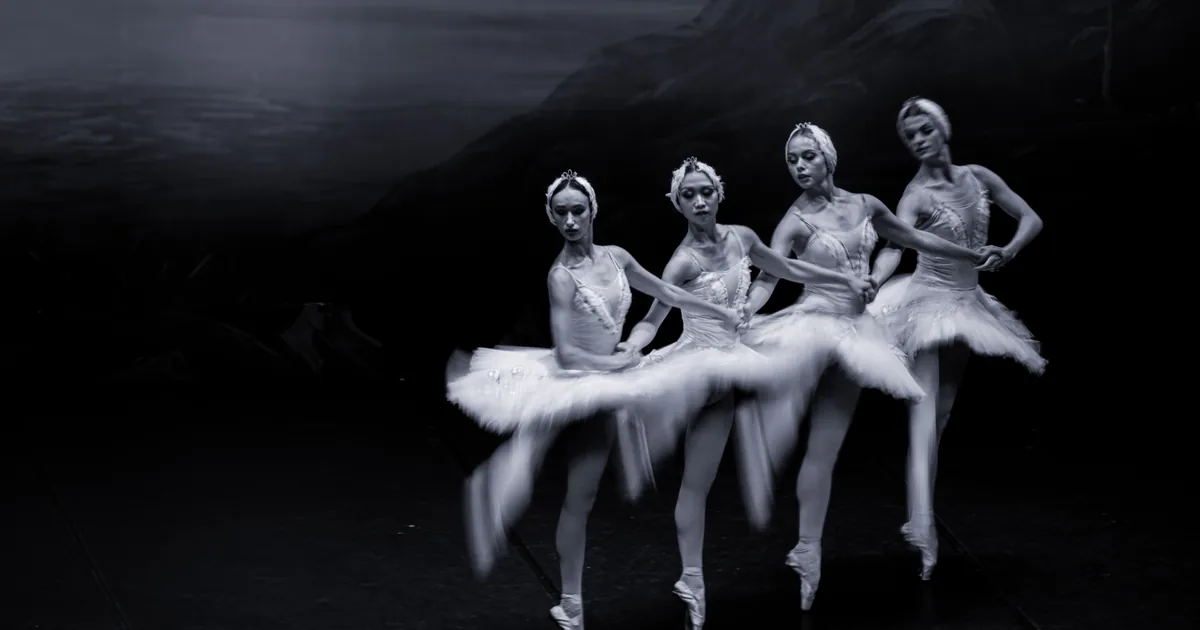
A dance recital is a fast subject under stage lighting you cannot change, with no flash allowed, and a room full of parents who each care about one child out of eighty. The photographs that sell come from the dress rehearsal, shot from the aisle, on manual exposure metered for the spotlight, at around 1/500 second and whatever ISO that takes.
The rest of the job is administration, and it decides whether the shoot pays. Agree with the studio who gives consent, who sells, and when you can move around. Then shoot by routine, file by routine and deliver by routine, because a parent searching 1,200 frames for their daughter's 40 seconds on stage will give up before they buy.
What should you agree with the dance studio first?
Put it in a one page agreement before the season's last term starts:
- Consent for minors. The studio should collect parental consent for photography through its own enrolment or recital forms, and give you a list of dancers who must not be photographed or published. Ask for that list in writing and brief yourself on it before every routine.
- Exclusivity. Whether you are the only photographer allowed to shoot and sell. Without it, you are competing with forty phones.
- Who sells, and the split. Either you sell directly to parents and pay the studio a percentage, or the studio pays you a flat fee and parents get images included. Agree the number, and whether the studio may use images on its own website and social accounts.
- Access. Which rehearsal you shoot, where you may stand, and whether you can shoot class group photos backstage.
- Music and video. If parents ask for video, that is a separate job with its own music licensing questions. Keep the agreement to stills.
For pricing the day itself, the event numbers in how much to charge for event photography are a fair starting point.
Why shoot the dress rehearsal instead of the show?
At the performance you are stuck at the back or in a balcony, the audience stands up in front of you, and every shutter click is noise during a quiet solo. At the dress rehearsal the costumes, makeup and lighting are the same, the seats are empty, and you can move.
Shoot from the centre aisle at row four or five for most routines, at the eye level of a seated adult so the stage edge does not cut off feet. Move to the side aisles for a few frames per routine to get profile shots of leaps and lines. If the studio lets you, get on the stage wings for one routine of each age group, but never in a sightline the dancers rely on.
Ask for the running order with every dancer's name and routine in advance. Some directors will re-run a ten second passage if a key moment was hidden; most will not, so learn the routines' big moments from the teacher.
What camera settings work for a dance recital?
Use manual exposure. Stage lighting changes from routine to routine and from dark backdrop to bright spotlight, and auto exposure brightens the black stage until the dancers' faces burn out.
A starting point:
- Shutter: 1/500 second for jumps, turns and anything with arms and hair in motion; 1/250 is enough for slow lyrical pieces and still poses.
- Aperture: f/2.8, or f/2 to f/1.8 with a prime. Stop down to f/4 for large group formations so the back row is sharp.
- ISO: set it last, as high as the exposure needs. ISO 3200 to 12800 is normal on a dim stage. Noise reduction in Lightroom handles a clean, well exposed ISO 12800 frame far better than an underexposed ISO 3200 one.
- Metering: expose for skin in the spotlight and let the stage go black. Check the histogram on the first frames of every routine.
- Autofocus: continuous, with subject or eye detection if your camera has it, and burst for jumps.
- White balance: set a Kelvin value per lighting state rather than auto, so frames within a routine match. Shoot raw.
Lenses: a 70-200mm f/2.8 covers most of the stage from the aisle, and a 24-70mm f/2.8 handles the finale and full cast. The approach is close to concert photography, with the difference that your subjects are children whose parents will scrutinise every frame.
Why can you not use flash at a dance recital?
A flash during a turn or a lift can disorient a dancer, and on a dark stage the burst affects everyone performing. Studios forbid it for safety, and they are right. Flash also flattens the stage lighting the costumes were designed for.
Turn off the autofocus assist lamp too. Its red or white beam is surprisingly visible from the stage. The general approach to working without flash in dim rooms is in indoor photography without flash.
How do you avoid banding under LED stage lights?
Many stages now use LED fixtures, and with a mirrorless camera on its electronic shutter they can produce horizontal stripes across the frame. Three fixes, in order:
- Use the mechanical shutter for the recital, which avoids most of it.
- Turn on your camera's anti-flicker or flicker reduction setting, if it has one.
- If banding persists, try a shutter speed that is a multiple of the mains frequency (1/100, 1/200 or 1/400 in 50 Hz countries; 1/120, 1/240 or 1/480 in 60 Hz countries) and test on the first routine.
Check a frame at 100% after the first routine, not at the end of the night.
How do you deliver photos to dance parents?
Organise by routine from the moment you shoot. Before each routine, photograph a card with its number and name, or the page of the programme, so your cull can split the take at those frames. Cull hard: four to ten strong frames per dancer per routine is plenty, plus the full group.
Then create one gallery per routine, or one gallery with a section per routine, named exactly as the programme names it ("12. Junior Tap, Under the Sea"). Parents look for their child's routine name, not a date. Deliver within two weeks while the costume is still on the bedroom floor, and send the studio a short message with the link and access details to forward to families, so you never handle a list of parents' email addresses you were not given.
Keep access protected. These are photographs of children, and a public link with no PIN gets forwarded beyond the families who consented.
Before next season's recital, send the studio a one page agreement covering consent, exclusivity, the sales split and the rehearsal you will shoot. For delivery, PIN-protected galleries with paid downloads and print sales let parents choose and pay for their own child's frames without you running an order form.