An engagement session is worth more than the fee on it. It is where a couple learns what being photographed by you feels like, and where you learn how they behave in front of a camera, which is the information that makes the wedding day go smoothly.
Treat it as a rehearsal with a deliverable and everything else follows.
Plan ninety minutes, and shoot for sixty of them
The schedule that works, starting about two hours before sunset:
- First fifteen minutes: talking, walking, easy frames nobody will use. This is warm-up time and it is not wasted. Everyone is stiff at the start and the only cure is a few minutes of being photographed badly.
- Next thirty: the main location, when they have loosened up but the light is still workable.
- A short break, a drink, a change of jacket, a move to the second location.
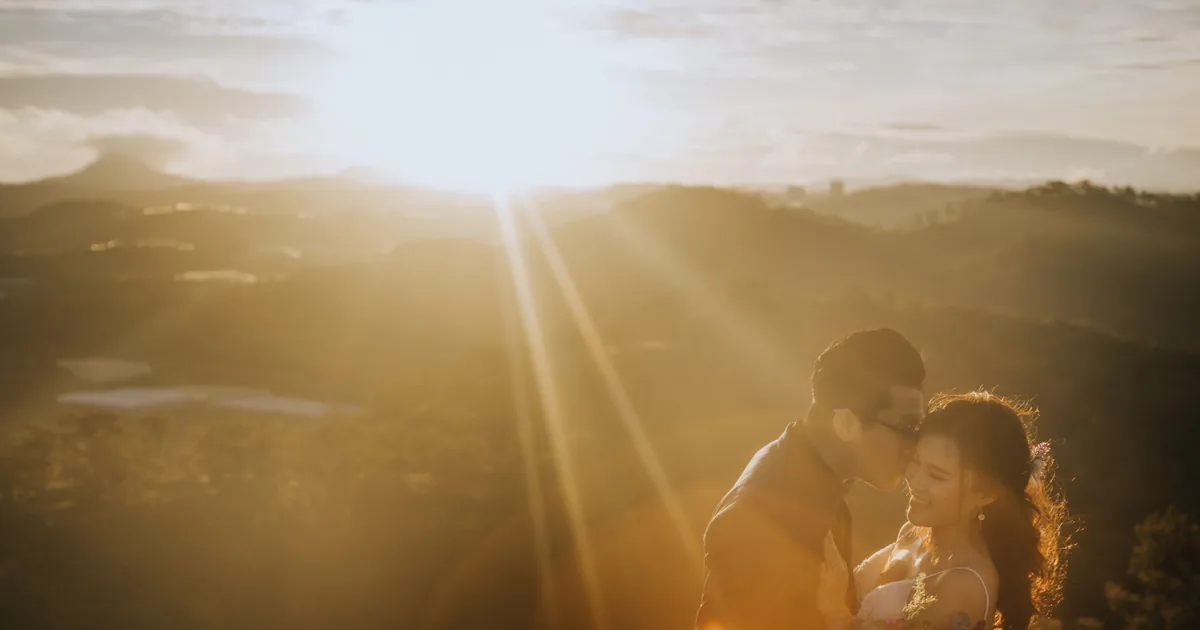
- The last thirty minutes: golden hour, the frames that end up on the wall, and the sun going down behind them.
Two locations maximum. Three sounds ambitious and produces a session that is mostly driving.
Choose locations by light and privacy, not by scenery
The best engagement locations have three things: room to walk, some open shade, and few enough onlookers that the couple can relax.
Self consciousness is the whole battle. A stunning viewpoint with forty tourists produces worse photographs than a quiet lane with decent light, because a couple being watched cannot forget the camera.
Somewhere meaningful to them beats somewhere impressive. The pub where they met, their kitchen, their dog's favourite field. The frames end up warmer and the session stops feeling like a photoshoot.
Prompt, do not pose
Static poses fail because holding a pose is a thing people do with their face. Prompts give them something to do, and the photograph happens in the gap.
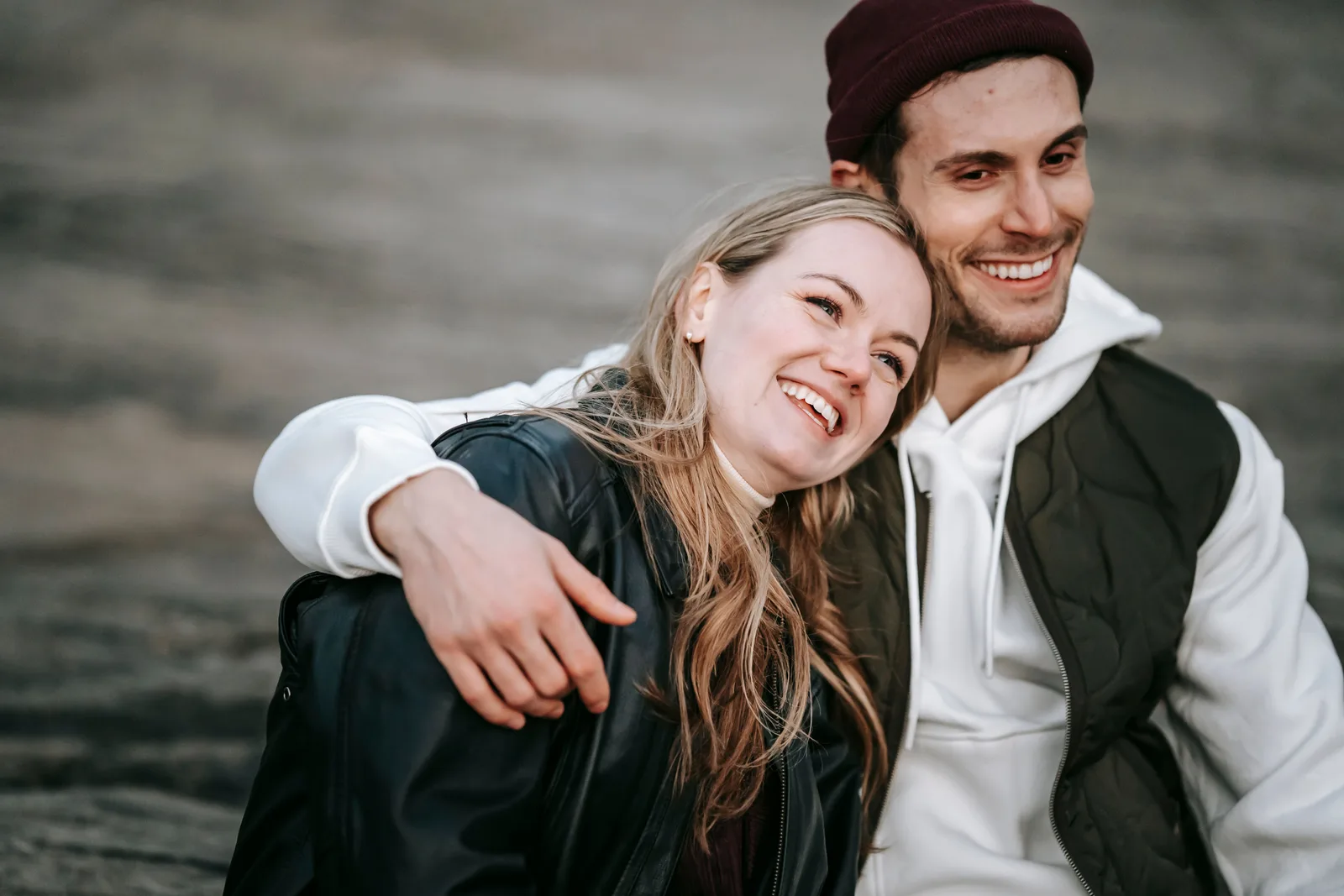
The ones that work almost every time:
- Walk away from me holding hands, talk about what you had for breakfast, do not look back.
- Walk towards me, but look at each other rather than at me.
- Hug like you have not seen each other in a month, then whisper something embarrassing.
- One of you sit, the other stand behind, then both look at something to your left.
- Slow dance without music, and yes it feels ridiculous.
- Forehead to forehead, eyes closed, breathe out.
Say what happens next before it happens, and count them into movement. And take the frame immediately after the laugh subsides rather than during it, since that is when people look like themselves.
The awkwardness handling is the same craft as posing anyone who feels self conscious, just with two people who are also self conscious about each other.
Shoot the ring properly, once
Every couple wants a ring shot and most of them are terrible. Two minutes and it is done:
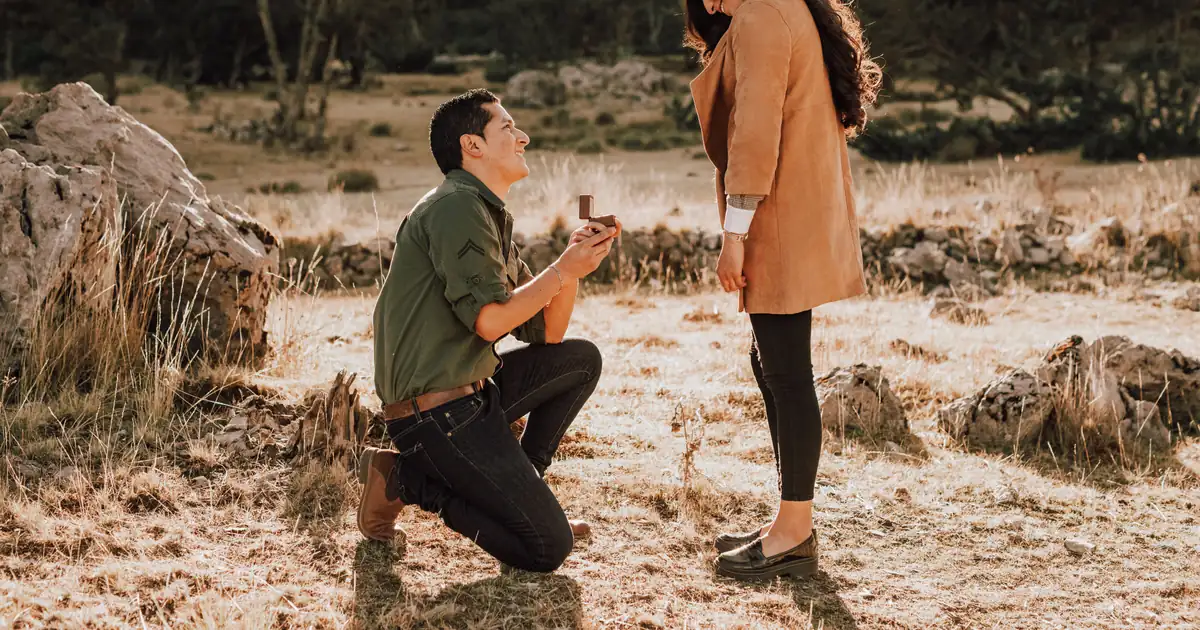
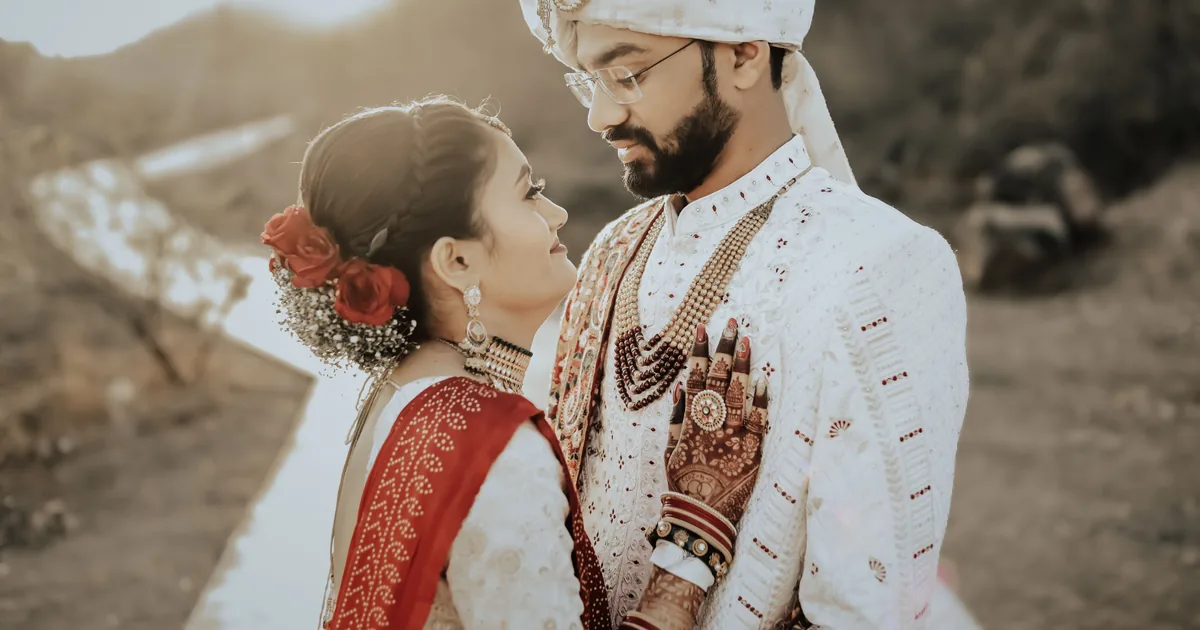
Hands relaxed, fingers slightly curled, one hand resting over the other. Focus on the stone, shoot at f/4 or narrower so the whole band is sharp, and find a clean background: a coat sleeve, a knee, a stone wall. Then get one where the ring is incidental, her hand on his chest, which is the one they will actually post.
The two frames the couple will really use
Everything else is bonus. These two get used:
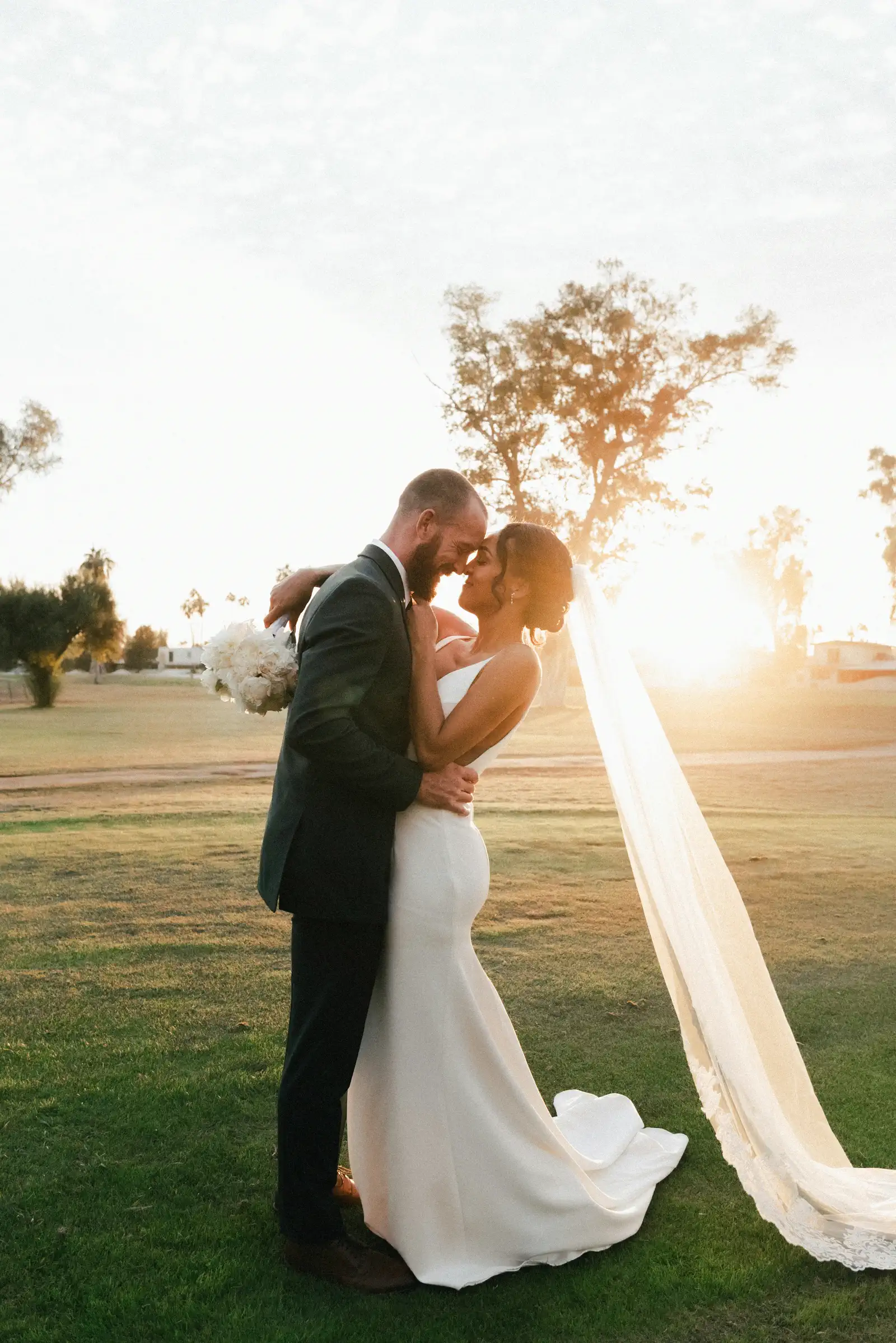
A vertical of the two of them, faces clear, warm light, uncluttered background. This becomes the save the date, the invitation, and the phone background. Shoot it deliberately with space at the top for text.
A wide horizontal with the environment. This becomes the print and the header image on their wedding website.
Make sure you have both before the light goes. It is remarkably easy to spend an hour on creative frames and no time on the two that get printed.
Use the session to plan the wedding
While you have them for ninety minutes, learn:
- Who is camera shy and who takes over. That tells you how to handle the family groups on the day.
- Which side each of them prefers, and whether one of them has a habit, a tightened smile, a hand that goes in a pocket, that you will want to redirect.
- Whether they can take direction from a distance or need you close.
- How long they last before they need a break, which is directly useful when you build the wedding day schedule.
Bring the timeline conversation into the break. Fifteen relaxed minutes about the wedding day, while they are already in a good mood, is a better planning meeting than any email thread.
Practical points that save sessions
- Bring a backup date policy and share it in advance, because engagement sessions get rained off more than any other type. Decide the cutoff with them before the day rather than at 2pm in a car park.
- Ask about outfits at booking, not the night before. Two outfits, one dressed up, one relaxed, both in colours that do not fight the location.
- Bring a blanket if the location involves sitting on the ground, and something to wipe hands.
- Check for hair ties on wrists and phones in pockets before you start.
Delivering it, and what it does for the wedding
Turn engagement sessions around fast, within a week if you can. The couple is excited, they are about to share the images with everyone they know, and every one of those people is looking at your work with a wedding on their mind. This is the highest-value marketing moment you get, and a three week turnaround wastes it.
Deliver a tight set. Forty images from ninety minutes is plenty, and a smaller gallery gets shared more, which is the whole argument for curating hard.
One practical note on delivery: they will want a handful of images sized for social and one or two big enough to print for a save the date. Giving them both options in the same gallery, rather than emailing files back and forth for a month, is the difference between a happy couple and an admin thread that runs until the wedding. That is the sort of thing Xposure galleries handle at download time rather than making you export two sets.
The best measure of whether the session worked is not the gallery. It is whether they show up to the wedding already comfortable with you standing close with a camera. That is what you were actually buying with the ninety minutes.
Some couples arrive at an engagement session having already been photographed once without knowing it. Shooting the proposal itself is a different job with no second take, and it is the earliest point you can enter a couple's wedding year.