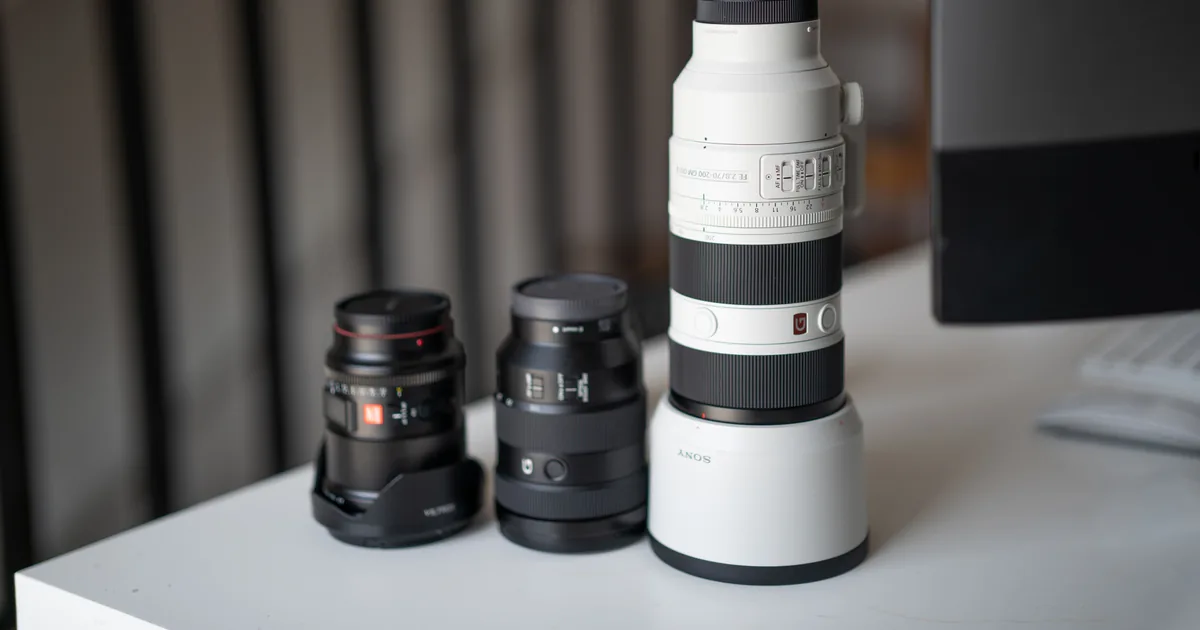
If you want the short version: a 35mm and an 85mm, both fast primes, cover a whole wedding day. If you would rather carry two zooms, a 24-70mm f/2.8 and a 70-200mm f/2.8 do the same job with less swapping and more weight.
Everything else on this page is about which of those to buy first, and what each focal length is genuinely for on the day.
What the day actually demands
A wedding is four different shoots stitched together, and each wants something different:
- Preparations: small rooms, mixed light, no space to back up. Wide.
- Ceremony: you cannot move, you cannot get close, and you cannot use a flash in most of them. Long and fast.
- Group photos and portraits: controlled, outdoors usually, needs flattering compression. Medium to long.
- Reception and dancing: dark, chaotic, close quarters. Wide and fast, often with flash.
A lens choice that handles the ceremony badly is not rescued by being excellent during the portraits.
The focal lengths, and what each one does
24mm and wider. Venue establishing shots, dancefloor from inside the crowd, a packed room. Keep faces away from the edges of the frame, because a wide lens stretches anything near the corners, and a stretched face in a group shot is unfixable.
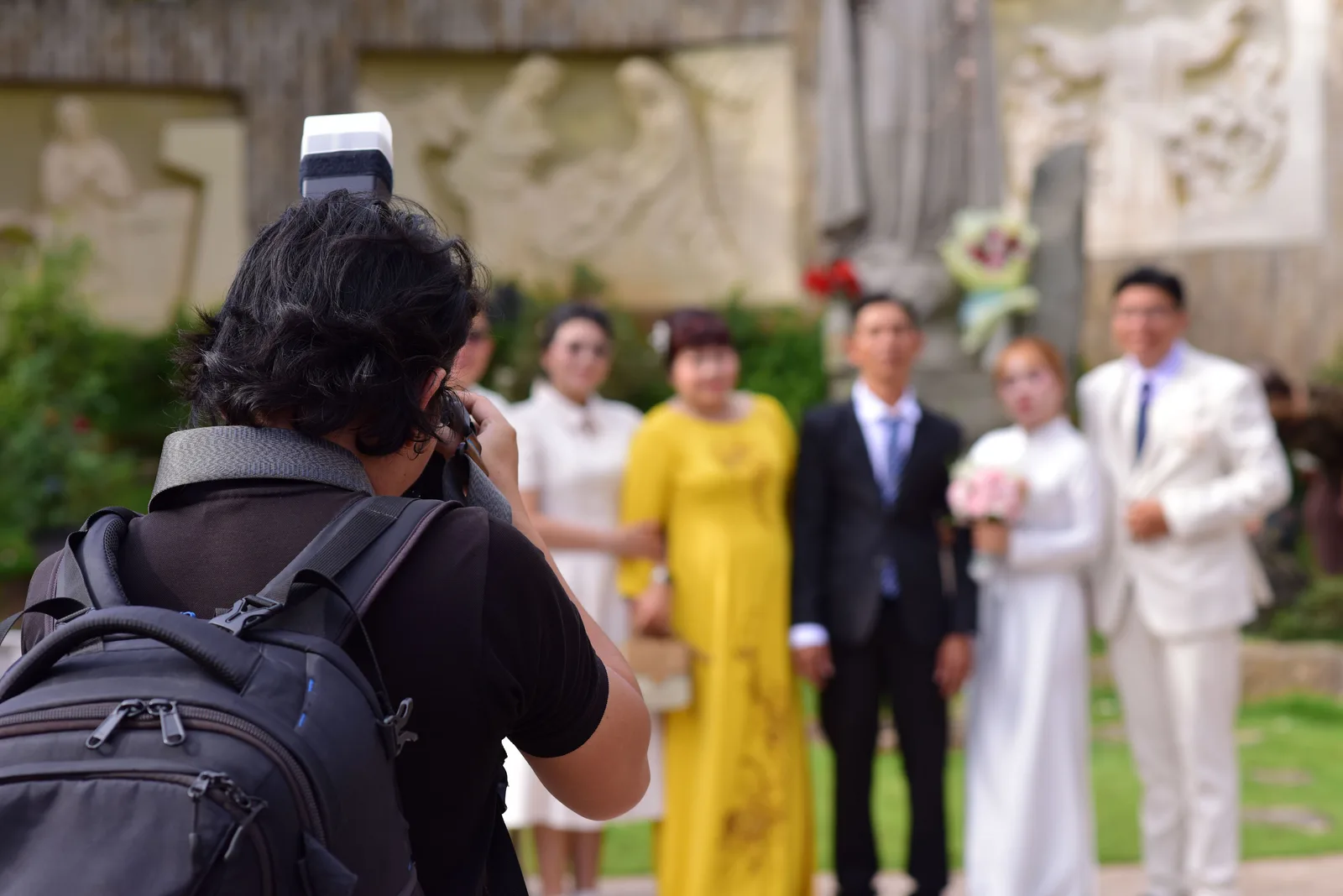
35mm. The most useful single focal length at a wedding. Wide enough for preparation rooms and reception tables, natural enough for people, and close to how the day actually looked. If you own one lens, this is it.
50mm. The cheapest way into fast glass. Slightly awkward on a full frame body during preparations, since you are always a step too close or too far, but it is excellent value and sharp at the price.
85mm. The portrait lens. Compresses features flatteringly, separates a couple from a busy background at f/1.8, and lets you stand far enough back that people stop performing.
70-200mm. The ceremony lens, and the reason to own a zoom at all. It gets you tight expressions from the back of a church without moving, and it is the only practical answer for a ceremony where you are told to stay put.
Macro, around 100mm. Rings, invitations, and details. A nice-to-have rather than an essential, and one you can hire for the day.
Primes or zooms
The honest answer is that both work, and the choice is about how you like to shoot.
Zooms mean fewer changes, less dust on the sensor, and no missed moment while you swap. On a fast-moving day with one photographer, that is a real advantage, and the 24-70 plus 70-200 pairing is the standard professional wedding kit for exactly that reason.
Primes are lighter, cheaper for the same aperture, and generally better in low light by a stop or more. A dark church at f/1.4 is a different experience from the same church at f/2.8. They also force you to move, which tends to produce more considered pictures.
Plenty of photographers carry a 35mm on one body and a 70-200mm on the other, and that combination handles more of the day than any other two-lens setup.
The buying order when money is finite
- A fast 35mm. Covers preparations, reception, and most candids.
- A fast 85mm. Adds portraits and gives you a second body option.
- A 70-200mm f/2.8. Solves ceremonies properly. Buy used, this is a lens that lasts a decade.
- A 24mm or a wide zoom, if your venues are small or you want more dancefloor energy.
- A macro, last, and hire it before you buy it.
Used lenses are the sensible route for everything except the one you shoot most. Optics barely change between generations, and a five year old professional lens with a scratched barrel takes the same photograph as a new one.
Two bodies is more important than a third lens
If you are choosing between a third lens and a second camera body, buy the body.
Two bodies means no lens changes at the ceremony, no missed moment while swapping, and, critically, a working camera when one fails. A wedding cannot be reshot, and "my camera died" is not a sentence with a good ending. It is the same argument as dual card slots and a backup routine: you are paying for the day not being ruined, not for better photographs.
Your backup body does not have to match your main one. An older generation body with a 35mm on it is entirely adequate insurance.
Aperture, and the thing nobody tells you about f/1.2
Fast glass is worth paying for. But shooting a wedding wide open at f/1.2 is how you end up with a gallery where one eye is sharp and the other is not, and where the group shot has the back row soft.
Practical settings that hold up: f/2 to f/2.8 for couples, f/4 or narrower for any group of more than three people, and wide open only when you have decided the subject isolation is worth the risk. A very fast lens is most valuable for the extra light it gathers and the autofocus performance in dark rooms, not for shooting everything at its widest setting.
Hire before you buy
Rental is cheap next to a lens purchase, and one real wedding tells you more than any review. Hire the 70-200mm for a Saturday, shoot a full ceremony with it, and you will know within an hour whether it belongs in your bag or whether you would rather carry the 85mm and move your feet.
If you are still choosing the body these go on rather than the glass, the portrait camera buying order covers the same argument from the other end: buy used, buy two bodies before a third lens, and put the money in the optics.
The same applies before a job with unfamiliar requirements. Turning up to a very dark church with the wrong lens is expensive in a way a rental fee is not, and it is the sort of thing worth confirming when you plan the day's timeline with the couple. If the ceremony is in a church at all, the restrictions on where you may stand often decide the lens for you, which is the first thing to ask the officiant about.