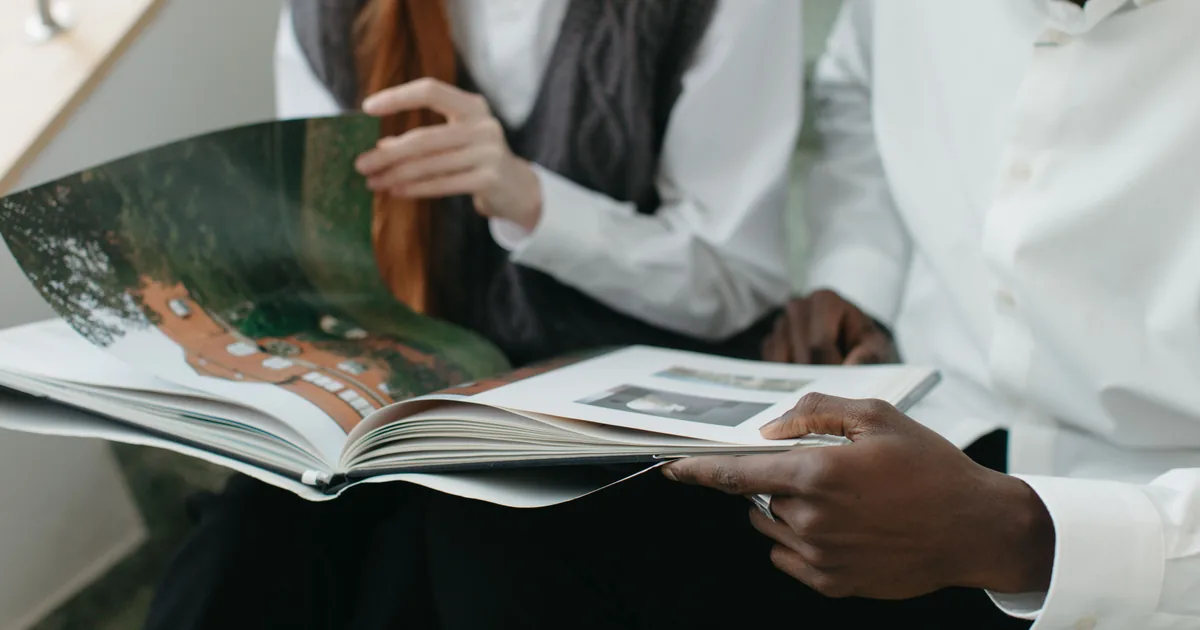
A wedding album sold by the photographer usually costs the couple $800 to $2,500 in the US for a 10x10 or 12x12 layflat with 15 to 30 spreads. Luxury albums with leather, a presentation box and heavy pages go past $3,000. In the UK, a 30x30cm album with 15 to 20 spreads typically sells for £450 to £1,200, and in much of Europe for €500 to €1,500. Extra spreads run $50 to $125 each (£25 to £60), and parent albums sell at 15 to 25 percent off the main album.
Your cost for the same album from a professional lab is roughly $150 to $450, which is why some couples assume the markup is pure profit. It is not. The lab bill is the smallest part. The design, the revision rounds and the chasing are what you are charging for, and if you do not count them, the album is the least profitable thing you sell.
What does a wedding album actually cost you to make?
Write down four numbers before you set a price:
- Lab cost: $150 to $450 for a 10x10 or 12x12 professional layflat with 20 to 30 spreads, depending on cover material and paper. Each extra spread at the lab is usually $7 to $20.
- Design time: 3 to 6 hours for a first draft, faster with a template you trust, slower for 30 spreads.
- Revisions: 1 to 3 hours across two rounds, plus the emails.
- Shipping and packaging: $20 to $60 including a box or bag if the lab does not supply one.
At a modest $75 an hour for your time, a 25 spread album that costs $280 at the lab and takes 7 hours of design and revisions has a real cost of about $845 before shipping. Selling it for $900 loses money once you count the evening you spent on revision two. Run your own hourly number through the hourly rate calculator before you trust any of this.
How do you turn cost into an album price?
Two methods, and the second is safer.
Markup on lab cost. Multiply the lab bill by three to five. A $280 album sells for $840 to $1,400. This is quick, and it is how most album price lists are built, but it hides your design hours inside the multiplier and fails on small albums where the design time is the same and the lab cost is lower.
Cost plus time, then margin. Add the lab bill, your design and revision hours at your hourly rate, and shipping. Then multiply by 1.4 to 1.8 for profit and overhead. The same album: $280 plus $525 of time plus $40 shipping is $845, times 1.6 gives about $1,350.
Both methods land in the same range for a standard album. The second one tells you when a cheap small album is not worth offering at all, which is useful to know. If your 8x8 cannot clear your hourly rate, sell it only as a parent copy.
Should the album be in the package or sold after the wedding?
There are three common models, and each changes what the album earns.
- Included in the top package. The album's price is folded into the collection, usually adding $800 to $1,500 to the package compared with the one below it. This sells the most albums, because the decision happens once, at booking. The cost is that some couples never pick their images and the album sits unfinished for a year.
- Sold separately after the gallery. Fewer couples buy, but those who do pay full price and are engaged. Expect a lower take rate unless you show a sample album in person.
- Album credit. A $500 or $750 credit in the package, applied to any album. Most couples spend past the credit because the base album is small and the spreads they want cost extra.
The credit model is the one to try if you are moving from no albums to albums. It gets the album into the conversation without loading the whole price into the package. How the middle collection should be built is covered in how much to charge for wedding photography, which puts a 30 spread album at $900 to $1,600 as a package line.
How much should you charge for extra spreads and upgrades?
Extra spreads are where the album makes its margin, because your design time per spread is low once the album exists. Price them at $50 to $125 each in the US, or £25 to £60 in the UK, against a lab cost of $7 to $20.
Set the base album smaller than most couples want. A base of 15 spreads at $1,100, with extra spreads at $75, means a couple who wants 25 spreads pays $1,850. That is still a fair price, and it is far easier to sell than an $1,850 headline.
Upgrades to price on the same list:
- Cover: linen as standard, leather or a photo cover at $75 to $200 more.
- Presentation box: $75 to $150 (UK £50 to £80).
- Acrylic or cameo cover: $60 to $120.
- Thicker or fine art pages: 15 to 25 percent on top of the album price.
Keep the list to five upgrades. A couple faced with fourteen cover swatches puts the decision off for months.
How do you price parent albums?
Parent albums are copies of the main design in a smaller size, usually 8x8 or 10x10. Since the design is already done, the cost is the lab bill, so price them at 15 to 25 percent off the equivalent album, or as a flat price for the pair. Typical numbers are $300 to $700 each in the US and £200 to £400 in the UK.
Sell them only at the same time as the main album, and only as copies of the same design. A parent who wants a different set of images is ordering a new album with new design time, at full price. Say that before the couple approves the design, because mothers ask after.
How do you stop design revisions eating the profit?
Most album losses come from the calendar, not the price. A couple who takes nine months to choose their images, and then asks for a third round of swaps, has turned a $1,400 sale into an hourly rate below minimum wage.
Write these into the contract or the album order:
- The couple picks their favourites within 60 days of the gallery going live. After that, you design from your own selection.
- Two revision rounds are included. Each further round is $75 to $150.
- Swaps are image for image within the agreed spread count. Adding images means adding spreads.
- Approval is final once given, and the order goes to the lab.
If you do not yet have a contract clause for this, the structure in what to put in a photography contract covers where it goes.
When is the best time to sell a wedding album?
Two moments sell albums: the consultation before booking, and the two weeks after the gallery is delivered. After that the couple's attention moves on, and an album offered at month four is an album that stays on their to do list.
At the consultation, put a real album in their hands. At delivery, send the album offer with the gallery and a date: "Album orders placed before the 30th include a free upgrade to the presentation box." A deadline with a concrete reason moves more orders than a discount. The lab choice matters here too, because a sample that arrives with warped pages ends the conversation; there is a guide to what separates a good lab from a cheap one.
The other piece is how the approval and payment actually happen. Let the couple open and approve the design inside their own gallery, pay for it there, and check the order yourself before it goes to the lab.
Before your next consultation, price one album both ways: lab cost times four, and cost plus time times 1.6. If the two numbers are more than 20 percent apart, your design time is the line you have been leaving out.