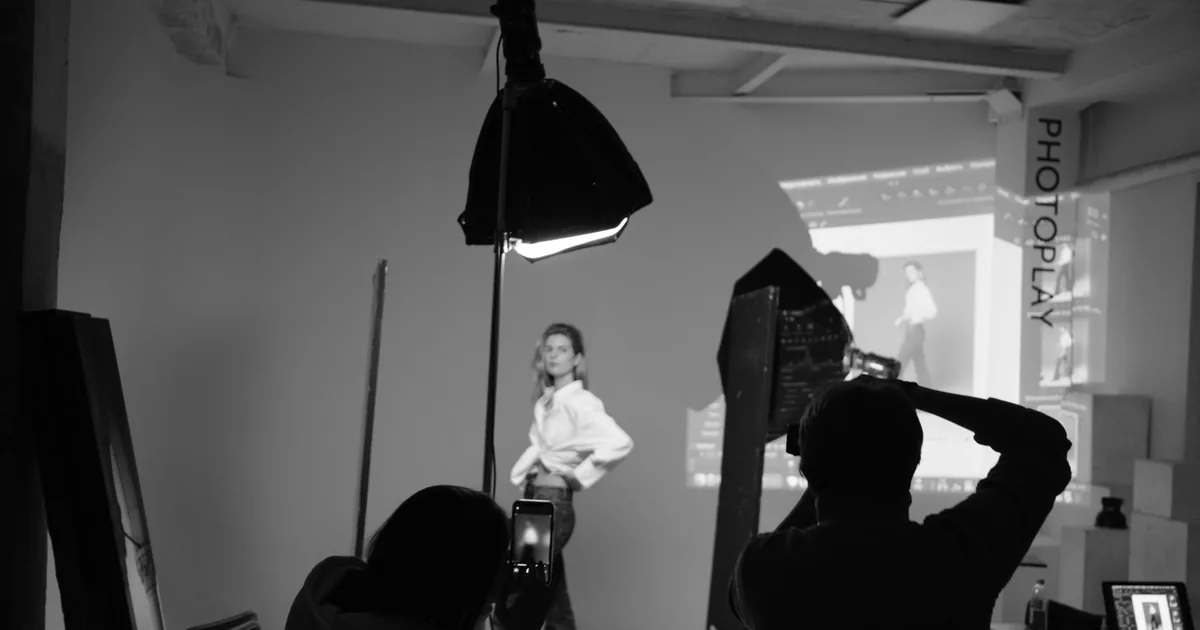
TFP stands for time for print, or trade for photos: a shoot where the model gives their time, the photographer gives their time and skill, and each walks away with images instead of money. You will also see TFCD and TFI (time for CD, time for images), which mean the same thing with digital delivery. Make up artists, stylists and hair stylists often join on the same terms.
The arrangement is simple, and that is why it goes wrong. Nobody pays, so nobody writes anything down, and three months later the model has posted an image with a heavy filter and no credit while the photographer has licensed another frame to a brand. A one page TFP agreement, signed before the shoot, prevents almost every one of those arguments.
What does each side get from a TFP shoot?
The photographer gets portfolio images in a style they choose, made with a person who knows how to pose, plus a signed model release. The model gets a set of edited images for their own portfolio, comp card or agency. The make up artist and stylist get images showing their work, and a credit.
The trade works when both sides are building the same kind of portfolio. A fashion photographer and a model aiming for fashion agencies make a good match. A wedding photographer asking a commercial model to pose as a bride for free is asking for a favour, not making a trade, and it shows in the model's enthusiasm on the day.
Who owns the copyright on TFP photos?
The photographer does. In the US, the UK and the EU, copyright belongs to the person who made the photograph unless a written agreement assigns it to someone else. A TFP agreement does not change that: it gives the model a licence to use certain images in certain ways. If a model asks for "the rights" to the images, what they usually want is permission to use them on their portfolio and social media, which you can grant without giving up ownership.
That distinction matters the day a model's agency or a brand asks to use a TFP image. It is your image to license, and the usage rights conversation is yours to have.
What should a TFP contract include?
Keep it to one page, so people actually read it. These are the clauses that cover the arguments that actually happen:
- The parties and the shoot. Names, date, location, concept and the number of looks. If the concept includes lingerie, implied nudity or anything the model might be uneasy about, write the limit in.
- How many images, and by when. "Ten edited images, delivered within 21 days of the shoot" is a clause. "Some edited images" is a future argument.
- Who selects. Either the photographer picks, or the model picks from a proof set. Name a number either way.
- Usage for the model. Personal portfolio, comp card, agency submissions and their own social media. Not for sale, not for a brand's advertising without the photographer's written agreement.
- Usage for the photographer. Portfolio, website, social media, competitions and editorial submissions. State whether commercial use, such as stock or advertising, is included or needs a separate agreement and fee.
- Credits. The exact handle or name each person is credited under, and where (in the caption, not buried in a comment).
- No re-editing. The model may crop for a platform but may not apply filters or retouch, and may not post unedited proofs. This is the clause most photographers wish they had added.
- Cancellation and no-shows. What happens if one side cancels within 48 hours, and that a no-show ends the agreement.
- Age. The model confirms they are 18 or over; for anyone younger, a parent or guardian signs and attends.
Do you still need a model release for a TFP shoot?
Yes. The TFP agreement covers what the model gets and how they may use it. The model release covers how you may use their likeness, and it is the document an editor, a competition or a stock agency will ask to see. You can put both on the same page, but the release wording has to be there.
Write the release to match the usage clause: portfolio, website, social, competitions and editorial is a narrow release that most models sign happily. A release that also covers commercial use is a different conversation, and many models with agency representation cannot sign one without their agent. Do you need a model release covers what a release must contain to be worth anything.
How many images should a model get from a TFP shoot?
There is no standard, but five to fifteen edited images from a two or three hour shoot is the range most photographers work in. Fewer than five feels like a bad trade to the model; more than fifteen turns your free shoot into a day of retouching.
Set the number by looks, not by hours. Three looks with three to four images each gives the model variety for a portfolio, which is what they need. Put the number and the deadline in the agreement, and deliver on or before the date. A model who receives their images in two weeks recommends you to the next model; one who chases you for two months warns them.
What do you do when a TFP agreement is broken?
Start with a short, specific message that quotes the clause: "The agreement we signed on 4 March says images are posted unedited and credited to @yourhandle. Could you update the caption and replace the filtered version?" Most breaches are carelessness, and a polite message with the clause fixes them in a day.
If it is not fixed, you can report the post to the platform, since the image is yours, or withdraw the model's licence if your agreement allows it. On your side, the commonest breach is late delivery. Missing your own deadline damages your reputation with every model in that local scene, because they talk to each other.
When should you stop doing TFP shoots?
When you have the portfolio you set out to build. TFP is a tool for a specific gap, usually a new genre or a new style, and it stops paying once your portfolio shows twenty strong images in the work you want to be hired for. Past that point, keep TFP for genuine creative collaborations, such as a styled shoot with a concept you could not shoot for a client, and charge for everything else.
If you are building a portfolio from scratch rather than adding to one, how to build a photography portfolio without clients covers the other routes.
Delivery is where TFP shoots usually slip, so keep it simple: send the model a PIN-protected proofing gallery, ask them to favourite the agreed number of frames, and the selection comes back to you as a list to edit.
Before your next TFP shoot, write the one page agreement with the image count, the 21 day deadline and the no re-editing clause, and send it to the model with the call sheet, so it is signed before anyone arrives.